I see them here, I see them there, I see Cranky Ladies EVERYWHERE!

Since we started this project, I’ve noticed more brilliant cranky ladies of history than I even have before! It seems like everything I read or watch references another awesome lady, and it’s fabulous. I recently flicked through a copy of The National Library of Australia Magazine, and was impressed to see the page space devoted to cranky ladies there! You can read the magazine free online, but here is a summary of the 19th century ladies examined in its pages:

Rose de FreycinetRose de Freycinet: in 1817, Rose cut her hair, dressed in men’s clothes and famously stowed away on the French naval ship Uranie to accompany her husband, Captain Louis de Freycinet, around the world.

Mary GilmoreMary Gilmore: born in 1865, teacher, poet, journalist and activist Mary Gilmore approached life with a keen sense of social justice. She was the first woman member and executive member of the Australian Workers’ Union, and certainly did not conform to the usual standards of the time, moving for a time to a utopian community in Paraguay, where she married. A contemporary and close friend of Henry Lawson, Mary continued to work after the birth of her son, and wrote for many publications. Her popularity was huge and she fought throughout her life for a better standard of living for all.

Nettie HuxleyNettie Huxley: born in 1825, Nettie wrote two children’s books late in the century, but her life was more adventurous than most fictional characters! Descendant of a Caribbean pirate, and possessed of a pioneering spirit, Nettie travelled extensively, including spending over a decade in Australia. With a colourful family history (even in recent generations), Nettie’s life must have been exciting from the very beginning, and I want to know more about her!

Have you found Cranky Ladies of History in unexpected places?

Cranky Ladies logoThis post is written as part of the Women’s History Month Cranky Ladies of History blog tour. If  you would like to read more about cranky ladies from the past, you might like to support our Pozible campaign, crowd-funding an anthology of short stories about Cranky Ladies of History from all over the world.

Cranky Ladies of History guest post: Ellen Davitt

A Cranky Lady of Crime History:  Ellen Davitt

Guest post by Lucy Sussex

“Was this Ellen Davitt contentious?” said the Archivist to me.

An interesting question.  I was in the reading room of the National Archives, deep in nineteenth-century Education files from the colony of Victoria. The woman I was looking for had a chequered history, but in the 1850s she had been the most powerful female in the colony’s secular education system. I was trying to find out why a (male) historian had described her as having “overbearing self-esteem”.

“Yes, she was contentious,” I decided to say.

“Then try the Special Case files!”—in which I would find that Ellen Davitt fully qualified as cranky, and for excellent reasons.

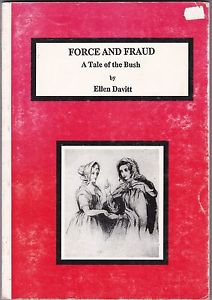
Force and FraudEllen Davitt (1812-1879) wrote Force and Fraud (1865) the first Australian murder mystery novel, at a time when the crime genre was in the process of formation.  For this distinction, the Davitt award of Sisters in Crime, for Australian women’s crimewriting, is named after her. Force and Fraud will be reprinted as an e-book this year. But in a long career, in which as a widow she was obliged to be self-supporting, Ellen Davitt was a teacher, exhibited artist, public speaker, something at the time which was daring for women, journalist and novelist. She was also feisty and tough, particularly with overbearing males. Had she not had a healthy self-esteem, she would have been crushed.

Her entry in the Australian Dictionary of Biography only cites Ellen as an educationalist, with no mention of her other interesting work, only rediscovered in the 1990s.  She was born in England, the daughter of Martha and Edward Heseltine, a (dodgy) bank manager, the eldest of five daughters. Her sister Rose married famous novelist Anthony Trollope. Ellen married Irishman Arthur Davitt, who worked in education, and the pair emigrated to Australia in the 1850s, to run the ModelSchool in Melbourne.  It was a difficult job; and changing politics and an economic recession saw the Davitts’ positions terminated. Arthur died in 1860, of tuberculosis. Ellen vigorously sought compensation, indeed sought to address the Victorian Parliament—an extraordinary move for the time, which was refused.

Her journalism, public speaking and fiction writing were all a means of supporting herself, as a widow, without family in Australia. Force and Fraud was serialised in the Australian Journal. It was a mystery of real ability, without a central detective, rather a group of people banding together to find justice, a common device of the time.  The narrative was a sophisticated whodunnit, as well as being a close observation of colonial society. Other notable works include the short story “The Highlander’s Revenge”, a powerful story of Aboriginal massacres in the Gippsland region, probably based on an eyewitness account.

Conditions for writers in the Australian colonies were poor in the 1800s, it being particularly hard to earn a living. It seems Ellen Davitt contributed anonymously to the press for some time, then returned to teaching. She had the ill-luck to be sent to a rural school outside Bendigo, where she faced a headmaster with a bias against female teachers, and a low salary, which did not take into account her previous experience. It destroyed her health but not her spirits—hence a gold mine of letters to and from the Education department, in which she sought compensation. She was refused again, and in 1879 died of cancer and exhaustion.

Was she contentious? Oh yes!  But with excellent reason, as she fought against the male authorities who sought to contain and control her.  She and Mary Fortune (an even more cranky lady, a bigamist who consorted with criminals, and had a jailbird son) are the mothers of the Australian crime genre. That both of them have been marginalised, in Fortune’s case nearly lost to history, shows the importance of revisiting the lives of women, which are so often braver and less conventional than the official male historians allow.

History is written by the winners. Herstory is stranger and wilder than we can possibly imagine.

Long live the Cranky Ladies!

Cranky Ladies logoThis post is written as part of the Women’s History Month Cranky Ladies of History blog tour. If  you would like to read more about cranky ladies from the past, you might like to support our Pozible campaign, crowd-funding an anthology of short stories about Cranky Ladies of History from all over the world.

Guest post: Marianne de Pierres on Jeanne d’Orléans


Peacemaker Tour Banner

We’re killing two birds with one stone with this post, as it not only celebrates the launch of Marianne’s fantastic new Angry Robot novel Peacemaker (you can see where Peacemaker started, in Marianne’s short story in Australis Imaginarium!) but it’s about one of history’s most famous cranky ladies! Enjoy!

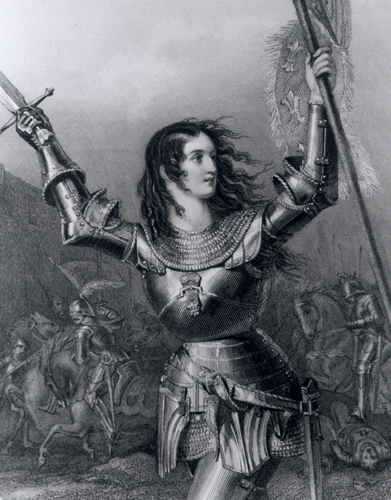
joanJeanne d’Orléans

Maybe it’s my French ancestry that flagged Jeanne d’Orléans in my tweenage consciousness, but her story has always intrigued me. On reflection, I believe that it was her apparent fearlessness and single-mindedness that was so interesting. I find, more and more, I tend to write about characters that are committed to a purpose. I’m attracted to female fictional characters who fit the same mould: Sarah Lund, Grace Hanadarko, and Olivia Dunham.

Our lives are full of distractions, and intent is so easily diluted by demands on our time and energy. It has become important to me to know that there are people who can negotiate through the web of mediocrity to pursue their purpose in a pure and uncompromising manner. Women in my era (I’m fifty plus), were raised to be compromising and conciliatory caregivers. While admirable qualities, they can also affect our ability to remain faithful to our beliefs. We were a generation of placaters and second-guessers.

Wiki says this about Jeanne:

The extent of her actual military leadership is a subject of historical debate. Traditional historians, such as Édouard Perroy, conclude that she was a standard bearer whose primary effect was on morale.[33] This type of analysis usually relies on the condemnation trial testimony, where she stated that she preferred her standard to her sword. Recent scholarship that focuses on the nullification trial testimony asserts that the army’s commanders esteemed her as a skilled tactician and a successful strategist. Stephen W. Richey’s opinion is one example: “She proceeded to lead the army in an astounding series of victories that reversed the tide of the war.”[29] In either case, historians agree that the army enjoyed remarkable success during her brief career.[34]

Naturally, I chose to accept the latter interpretation because there is no reason why it should not be the case. In the end though, Jean fell victim to politics. Her executioner is quoted as saying “he feared damnation” for burning her alive.

So he should have.

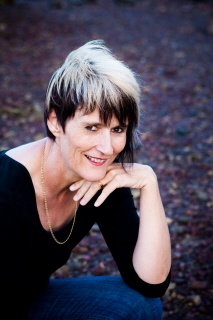
GR author pic_webMarianne de Pierres is the author of the acclaimed Parrish Plessis, the award-winning Sentients of Orion science fiction series and the upcoming Peacemaker SF Western series. The Parrish Plessis series has been translated into eight languages and adapted into a roleplaying game. She’s also the author of a teen dark fantasy series.

Marianne is an active supporter of genre fiction and has mentored many writers. She lives in Brisbane, Australia, with her husband and three galahs. Marianne writes award-winning crime under the pseudonym Marianne Delacourt. Visit her websites at www.mariannedepierres.com and www.tarasharp.com.au and www.burnbright.com.au

Cranky Ladies logoThis post is part of the Women’s History Month Cranky Ladies of History blog tour. If  you would like to read more about cranky ladies from the past, you might like to support our Pozible campaign, crowd-funding an anthology of short stories about Cranky Ladies of History from all over the world.

The final countdown! Seven days to go…

Cranky Ladies logoThis is it! The final week of the Cranky Ladies of History Pozible campaign is underway! We are at  $9900 with an amazing 180 supporters on board the Cranky Ladies train, and Tansy and I are just delighted with the result so far. We have smashed our first stretch goal of more art by the brilliant Kathleen Jennings, and we’re aiming high — if we can hit $12,500, we can add another 25,000 words to our book! That’s more stories and more great authors to enjoy, which would help make the book even more awesome.

But what’s in it for you? Why back a crowdfunding campaign that is already funded? There are lots of good reasons (including the fact it makes us do a little dance!) and I wrote about some of them here — exclusive campaign rewards! Publisher dancing! All good things 🙂

In case you missed it on the weekend, we got some more mainstream media notice with Linda Morris from the Sydney Morning Herald writing a great article about the cranky ladies, which was published on Sunday. We’re so pleased to see that our Cranky Ladies are receiving such attention, and with the previous ABC News Online article and radio appearances and everything, have to say it’s pretty cool. Stay tuned for a few more interviews/articles to come!

I might sound a bit like a broken record, but I really can’t thank enough everyone who has pledged and signal-boosted the campaign over the past three weeks. You’re amazing. And thank you as well to the very excellent people who have taken part in our Cranky Ladies Blog Tour — it’s been such a fantastic response, and it’s still going! Check out the posts so far, and keep an eye out for more to come.

Cranky Ladies, storming the world!

Cranky Ladies of History guest post: Tarenorerer

Tarenorerer. Tasmania. Born 1800. Died 1831.

Guest post by Bess Lyre

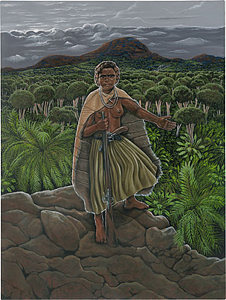
Tarenorerer, called Walyer by the sealers who purchased her with flour and dogs, was born a Tomeginee / Plair-Leke-Liller-Plue woman of the north-east Tasmanian coast.

Tarenorerer
Painting of Walyer by Julie Dowling

“Sealers took Aboriginal women for labour and as sexual commodities. During her time with the sealers, Walyer learnt English and how to use firearms.

She escaped in 1828 and joined the Lairmairrener group of Emu Bay. In 1830, colonial authorities reported that Walyer was leading violent attacks against settlers and other Aboriginal groups.

She and her group used muskets in these assaults, which was previously unprecedented in Aboriginal attacks.” – Julie Dowling

“In her teens she was abducted by Aborigines of the Port Sorell region and sold to White sealers on the Bass Strait Islands.” (http://adb.anu.edu.au/biography/tarenorerer-13212)

Tarenorerer 1
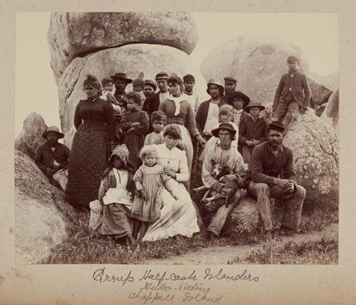
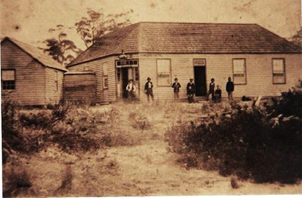
Mutton birders, Chappell Island, 1893

Tarenorerer’s home was not colonised until after her escape and return to her own country; the port of Burnie was founded in 1827. By the time of her death a mere four years later, from influenza, at the young age of 31, Taranorerer had become infamous.

“Walyer’s attacks on Aboriginal people brought her to the attention of GA Robinson, the chief protector of Aborigines. In a letter to Colonel George Arthur, Robinson wrote,

“From several aborigines, I received information respecting an amazon named Tarerenore, alias, “Walyer”, who was at the head of an aboriginal banditti.

This woman speaks English, and issues her orders in a most determined manner. Several cattle belonging to the company have been speared, and several petty thefts have been committed, which I have traced to this woman. The Amazon is at war with several nations of aborigines, and many aborigines have been slain by her party.

The Amazon is an athletic woman, middle aged, and is a native of the East Coast. She has collected together the disaffected of several nations, and roams over a vastylent of country committing dire outrages.”” – http://www.convictcreations.com/history/walyer.html

Tarenorerer 2
Burnie, 1881

Vicki maikutena Matson-Green writes:

“Tarenorerer fought with bravery and tenacity in ‘a war for which there are no [visible] memorials’. The Tasmanian Aboriginal community honours her memory and acknowledges her as a true warrior of the cause which has continued to today. Her memorial is the example she set for the future generations of her people who have survived, adjusted, and grown stronger in the example set by their forebears.” – (http://www.utas.edu.au/library/companion_to_tasmanian_history/W/Walyer.htm)

I have been to Burnie quite a few times and never met anyone who has heard of Tarenorerer. The history of the pulp mill industry is celebrated; there is a town smothered in penguin-themed statuary. Some sort of recognition of Australia’s true first war seems important to me, not to mention some variation of a treaty with Tasmania’s original owners.

When World War One was over, and our side had won, our former enemies were treated with respect – German sovereignty was permitted by the Treaty of Versailles, even though they had to pay reparations for starting the war, and under the Treaty of Lausanne, Turkey had new sovereign borders drawn up, even if they were smaller than the borders of the old Ottoman Empire.

And even though some 8700 Australians had been slaughtered by Ottoman Turks during the Gallipoli Campaign, we recognised them as a worthy foe; we recognised that when all was said and done, about a quarter of a million Turks had been killed, and when we go on our Anzac Day pilgrimages to Turkey, not only do we attend the dawn service at the Lone Pine Memorial, we doff our caps in the direction of the Turkish cemeteries and war memorials spread along the shoreline.

Wouldn’t it be nice if we could pay similar respects to Tarenorerer and her fellow fallen warriors?

Cranky Ladies logoThis post is written as part of the Women’s History Month Cranky Ladies of History blog tour. If  you would like to read more about cranky ladies from the past, you might like to support our Pozible campaign, crowd-funding an anthology of short stories about Cranky Ladies of History from all over the world.

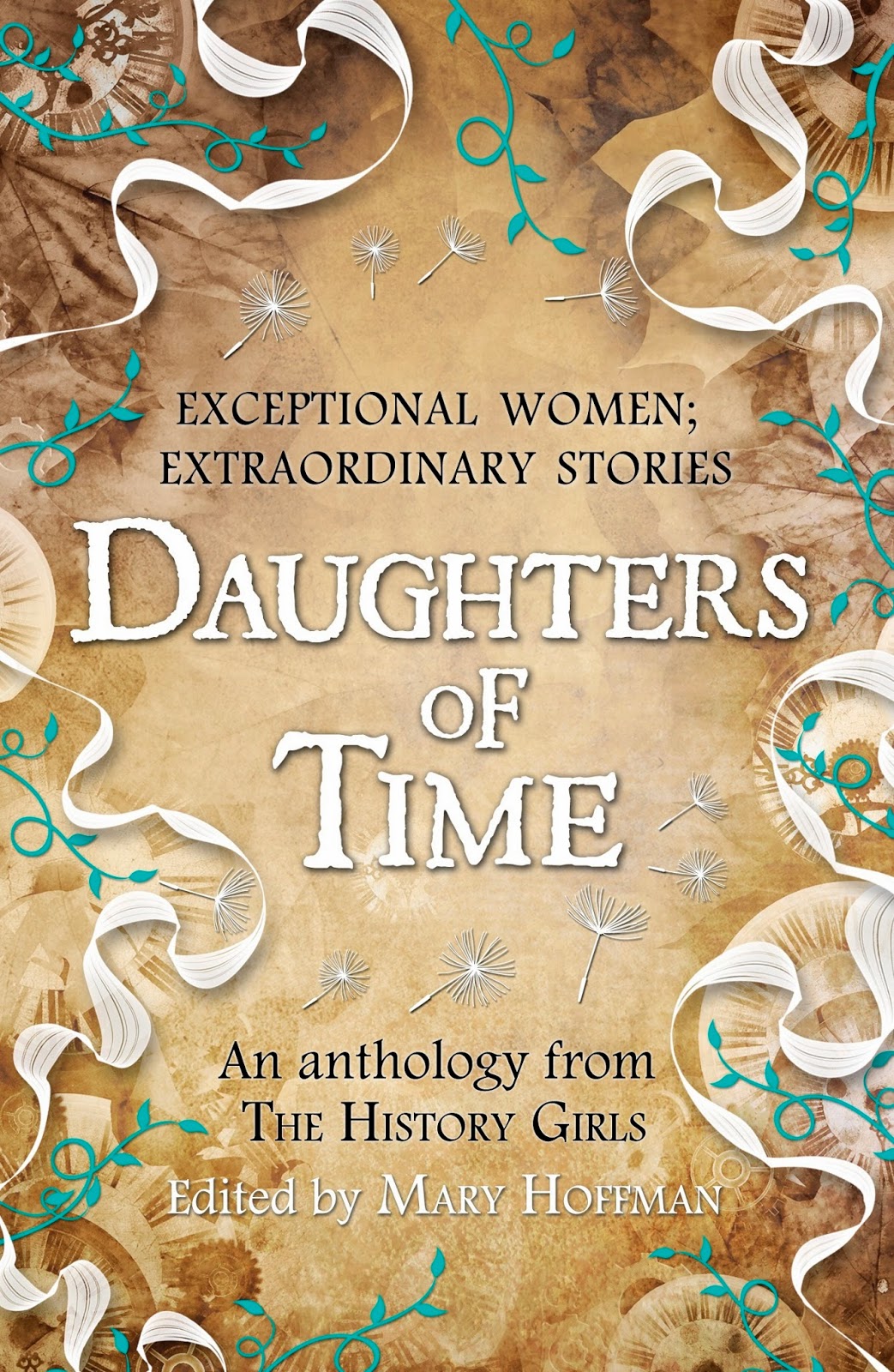
Daughters of Time by The History Girls

The History Girls is a blog run by Mary Hoffman and a group of best-selling, award-winning writers of historical fiction. Some of the “Girls” write for young adults, some for fully fledged adults, some for younger readers. Among them, they cover every period from the Stone Age to World War II. Geographically, their novels will take you from Trondheim to Troy, and the Caribbean to the Wild West, via Venice, Victorian England and Ancient Rome. Individual, entertaining, sometimes provocative: on The History Girls blog they share their thoughts on writing, research, reviews, and all aspects of their work. They love what they do and they want to talk about it!

The History Girls kindly agreed to join with us in talking about Cranky Ladies during March, as not only are we crowdfunding our anthology, but they have just launched their own! I’ll let Mary tell you all about it…
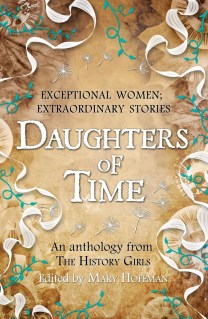

Our first ever publication, Daughters of Time was published by Templar on 1st March 2014 and is a collection of stories written by some of our number about remarkable women, from Boudica to the protestors at Greenham common.

It’s intended for readers of 9+ years and so our contributors are thirteen of those History Girls who write for children (some of us do both of course). It took a while after Templar approached us to work out which women we wanted to cover and who would write about whom but by the beginning of the year we had an outline that has now morphed into a book that is at the printers!

Of course we could have done it all differently: there were so many subjects to choose from. So we have added a list of further women for readers to explore.

The anthology sprang from a post by Adèle Geras, a History Girl who was writing about the influence of the book Our Island Story on a whole generation of children. In the comments, another History Girl, Louisa Young, suggested that we should create a modern version of Our Island Story, with each of us writing one story and Adèle editing it.
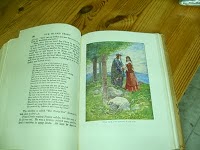
An illustration from Our Island Story by H.E.Marshall

Adèle quickly rejected the editing suggestion but the idea of our producing an anthology one day got itself lodged in a few minds and Templar enterprisingly called our bluff. After that, the rest was details. Oh, and writing it of course, but it’s always like that with books (I currently have one announced in another publisher’s catalogue consisting of a title and cover and not yet much else).

In the end, I edited Daughters of Time and a dozen other History Girls contributed to it with me. Adèle’s story was about Eleanor of Aquitaine, a very remarkable woman indeed, who was Queen of first France and then England. But we see her here in a private capacity, comforting a sick girl.
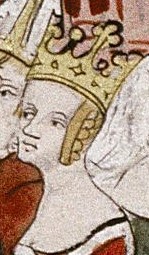
Eleanor of Aquitaine

We begin with Boudica – or rather with her resourceful and brave daughter, written about by Katherine Roberts, move on to Aethelfled, a rather less well known ruler, who was daughter of Alfred the Great and inspired Sue Purkiss to write her story, Lady of the Mercians. But it’s not all about royal women.

We have Kath Langrish’s touching story of the unhappy maid to Dame Julian of Norwich, Dianne Hofmeyr writing about Elizabeth Stuart, who escaped being both victim and puppet of the Gunpowder Plot and Marie-Louise Jensen on playwright Aphra Behn.
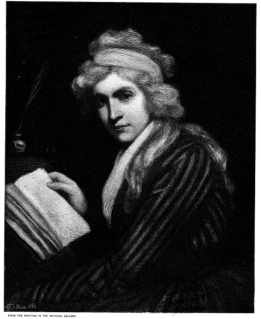
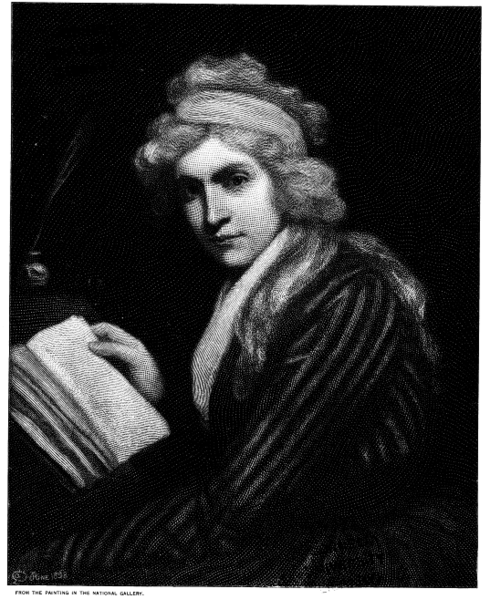
Mary Wollstonecraft, by John Opie

Penny Dolan introduces us to Mary Wollstonecraft and Joan Lennon takes us back to the childhood of fossil-hunter Mary Anning. Catherine Johnson completes a trio of Marys with the one called Seacole, a heroine of the Crimean War. Celia Rees writes about Suffragette Emily Davison, Anne Rooney about daring aviator Amy Johnson and Leslie Wilson – from her own experience – about the women anti-nuclear protestors of Greenham Common.

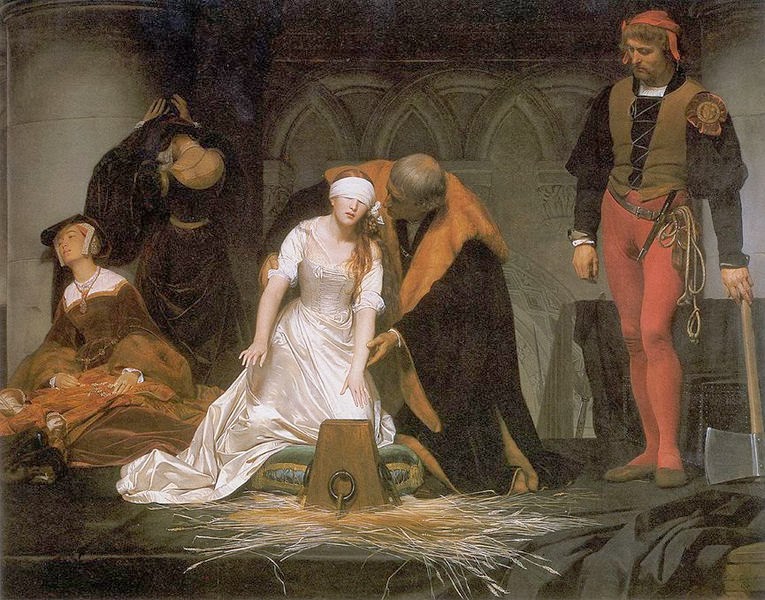
So a pretty varied bunch of subjects. I chose Lady Jane Grey, to liberate her reputation from the passive victim as portrayed  by Paul Delaroche in the famous and inaccurate painting of 1833, now in the National Gallery in London.
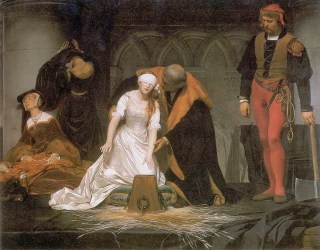
The Execution of Lady Jane Grey

I wanted to show how much she was still in charge of her own fate, however much the powerful men around her wanted her to be their political pawn. As a sixteen-year-old with a mind of her own and a will of steel.

In many of the stories, History Girls have introduced and created young women alongside the historical figures, to provide a way in for young readers, allowing them to see through the eyes of girls from the Middle Ages to the end of the 20th century, who found themselves part of events bigger than themselves.

We are launching Daughters of Time at the Oxford Literary Festival on Sunday 30th March at 2pm, when I will chair a panel consisting of Celia Rees, Penny Dolan and Leslie Wilson. And there will be several other contributors there to sign copies. We hope to see you there but, if you can’t make it, then we hope you will read the book.

Daughters of Time by The History Girls, Edited by Mary Hoffman Templar, £7.99 paperback,
ISBN: 9781848771697 March 2013.

For further details and review copies, please contact Laura Smythe on laurasmythecontact@gmail.com or 07881555530

A version of this post originally appeared on The History Girls blog.
Backing a funded crowdfunding campaign

Cranky Ladies logoWe’re very fortunate to be in the exciting position of reaching our funding target with half the campaign still left to run, and some people might be wondering what use backing a campaign that has reached its target might be. There are lots of reasons to still be part of the crowdfunding that you might not know, so here are a few of them!

1. Exclusive rewards! Many of the Cranky Ladies campaign rewards are exclusive to the Pozible crowdfunding campaign. They will never be offered for sale in any other way, because we wanted something that made our backers special. For example, the Cranky Ladies of History 2015 calendar will be created by Tansy (mostly),  just for our backers — no other copies will be made available! The same goes for our art prints and the beautiful brollies at varying levels — exclusive stuff is cool!

2. Pre-ordering books is hugely helpful to boutique publishers — pre-orders help us decide on print runs and for boutique press, this is essential information. Even ebook pre-orders help us work out the interest in advance, and it’s all appreciated.

3. Being part of the story — I’m a geek in this way. We might not have quite the same coolness quotient that the Veronica Mars movie campaign or the Amanda Palmer Kickstarter, but it’s fun to be able to say, “I helped that happen” — just me? 🙂

4. Future-you will thank you! When the book arrives in your inbox/post box in February 2015, you can exclaim delightedly over it because it’s like a present from the past! Wait, that’s not just me too, is it?

5. Tansy and I both do little dances of joy when we get a new pledge — you can’t see it, but trust me, it happens!

The Cranky Ladies team of editors, authors and artist are hugely grateful for all the support the campaign has received, in pledges and signal-boosting, and can’t wait to bring this book to life — our backers have made that happen, and we thank you!

Cranky Ladies is funded!

Wow. Just. Wow. Tansy and I are in a bit of shock right now, I think. It’s so very VERY exciting to reach our target, and even more so that we’ve done in it just under half the campaign time. We are so SO grateful to everyone who pledged and signal-boosted the campaign so far! Right at this moment, at $8555, we have 163 supporters, 16 days still to travel in the campaign, and according to the Pozible stats, 406 Facebook mentions and 318 tweets. That’s just astonishing, and more appreciated than I can adequately articulate, I think!

But thank you. So much!

Screen shot 2014-03-16 at 8.21.29 PM

Cranky Ladies in the NEWS!

Cranky Ladies logoI managed to completely forget to post all the exciting media we’ve been getting! Partly that’s because I’ve been so darn busy this past two weeks, partly it’s because Tansy remembers to do all that over at her blog, partly it’s because I DO generally tweet and Facebook it, but I must put things here too!

First up was a little interview with ABC Radio Northern Tasmania, about 3.10pm last Tuesday afternoon. That warmed me up for a great chat with Rosanna Ryan from ABC News Online, who wrote the most wonderful article about our Cranky Ladies – I feel almost respectable having being quoted by the ABC News! That was followed by a spot on the Sydney 2UE radio night show on Friday, which was also great fun.

This week we’ve been interviewed for another newspaper article, which we think will see print on Monday next week – more details when we have them, but Kaaron Warren and I are having a real live photo shoot for it tomorrow morning!

And you know what? The Pozible campaign has reached 85% this evening! That’s so cool – thank you to all the amazing supporters and signal-boosters. You rock!

If  you would like to read about cranky ladies from the past, you might like to support our Pozible campaign, crowd-funding an anthology of short stories about Cranky Ladies of History from all over the world.

Cranky Ladies guest post: Helen Leonard

Guest post by Gillian Polack

Helen Leonard always said to me that the best way to enter a meeting was late and with a camera around your neck, because it meant that one instantly defeated the biggest problem women have in meetings: being seen. She then explained her theory that women should be stroppy. I was one of many women to whom she said these things, but for me it was a pivotal moment in our relationship. It defined Helen for me.

I had arrived late to a meeting, and she had saved me a place next to her. It was a rare chance for representatives for women’s groups to talk to the Attorney-General about a range of things. There weren’t many of us, and the AG actually turned up, and Helen was right – because I’d come a bit late, the staffers noticed me when my hand went up. That was the thing about Helen, she had a tendency to be right.

She was just two years older than I am now when she died. I took her death to heart and thought about what I really wanted to do with my life. Helen was trying to turn me into a stroppy woman, someone who could fight where others would give up. I’m good on committees and get big events arranged without too much fuss, but I needed my inner stroppiness brought out. Helen did that. Her death taught me to fight harder and to pick my battles and to leave idiots to stew with other idiots and I rather suspect that these days I don’t look as gentle as I really am. I now carry a camera, too. I don’t do the things Helen wanted me to, for she taught me another lesson: all lives are important. I had been a ‘yes-person’, doing things for others because I was good at it and because they asked me. Helen’s particular sweet crankiness taught me that it’s possible to change the world without sacrificing yourself.

Helen had a knack: she dragged women from little lives and showed them the bigger world. She reminded us that we were entitled to walk in this bigger world. Under Helen’s tutelage, I had so many remarkable experiences. I’ve talked about the experiences elsewhere. I’ve even fictionalised some of them. Their common element was Helen.

Helen had a little black book. When we were working out the program for Australia’s first Women’s History Month, I said, “We can’t get attention without big names. I can ask my writer-friends and some of my friends from various committees, but that’s not nearly enough people.” My friends helped out in three different countries and have helped me celebrate Women’s History Month ever since. Several of them will appear on my blog throughout March. Their enthusiasm and support didn’t magically turn them into enough people for a national celebration. “This is impossible,” I said. “How can we get Women’s History Month started with such a small committee and just a half dozen guests?” We had a webhost and a complete technical support team already – my US publisher had volunteered all of this. We just needed a programme.

We were sitting on rickety chairs at the National Women’s Media Centre. Around us the air was hazy with cigarette smoke, and every now and then Helen’s partner would hazard a comment from her desk across the room. She didn’t add anything at this point. She knew about the black book.

Helen and I spent two hours working through that book. At one stage it disintegrated entirely. It did the job, though. It peopled our programme. We’d put together ideal panels from the names in it – my favourite never eventuated,  ‘women who Helen went to school with who are now mothers of internationally famous women’ – and Helen would ring them up and leave messages or talk them instantly into joining us. Some were travelling. Some had computer fear. Some got back to Helen later. In that one session, though, we developed a schedule of chats and panels for the following March. Anne Summers joined us, and Dale Spender, and many others.

What struck me just then was that the big world Helen was introducing me to was already there. It is for most of us, but it’s perhaps obscured by our small sense of self. We’re shy, or submissive, or polite, or reticent, or don’t want to bother people. That’s why Helen was my choice for the Cranky Women of History column. She taught me that it didn’t matter if I were all those things, I should ask my friends and acquaintances, “Would you like join me in celebrating Women’s History Month?”

I live a small life now. I live in a small flat and don’t get out much. Most people don’t even know about my strange past life. My current existence is really not so tiny, though, when you stop to look.  My inner world and my friendships give me a much vaster existence than the size of my flat. Being stroppy means asking people, listening to people, paying attention to them and to oneself.  And then those people become your friends. This is how Helen grew our lives. It’s hard to shrink into nothing after having known her.

This is what Helen Leonard taught me. That women’s issues are about all of us. They’re for all of us.  We need to find our personal equivalent of walking into major meetings late, carrying cameras. We need to all become Cranky Women of History.

Cranky Ladies logoThis post is written as part of the Women’s History Month Cranky Ladies of History blog tour. If  you would like to read more about cranky ladies from the past, you might like to support our Pozible campaign, crowd-funding an anthology of short stories about Cranky Ladies of History from all over the world.