I was delighted last night to see Thoraiya Dyer be awarded the Aurealis Award for Best Fantasy Short Story for her wonderful After the Rain contribution, “Fruit of the Pipal Tree”! Well deserved, and well done!
Category: Miscellaneous
April added value!
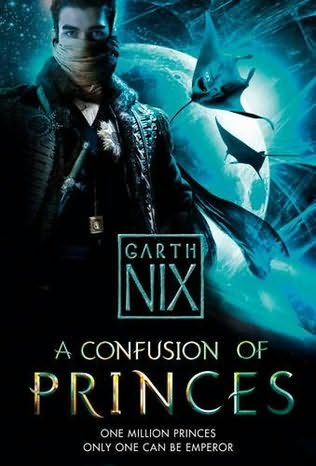
 Buy any FableCroft book from now until the end of April, and go in the draw to win a copy of either Karen Healey’s awesome book, The Shattering, OR Garth Nix’s new novel (equally if differently awesome), A Confusion of Princes! Yup, two prizes, with the first person drawn getting first choice of book! Each book purchase will increase your chances of winning – buy three books, get three entries!
 Check out our stock over at the FableCroft Shop, and don’t forget the special Aurealis Awards price on After the Rain (here!) and the class set special prices for Worlds Next Door (here!).
Goodreads giveaway – To spin a Darker Stair!

Congratulations to the 2011 Aurealis Awards shortlistees
The shortlists were announced tonight and there are some wonderful works on the lists. We’re delighted to see Thoraiya Dyer’s fabulous story “Fruit of the Pipal Tree” from After the Rain shortlisted for Fantasy Short Story. Well done Thoraiya! The shortlists can be found here. Congratulations all!
Ditmar nominations are now open
Please take a look at the eligible works list for the Ditmar Awards, and nominate! You don’t need to nominate in all categories, but if you liked something in 2011, why not show it some love? 🙂
I’ve posted FableCroft’s eligible works here.
Guest Post: Andrea Cremer
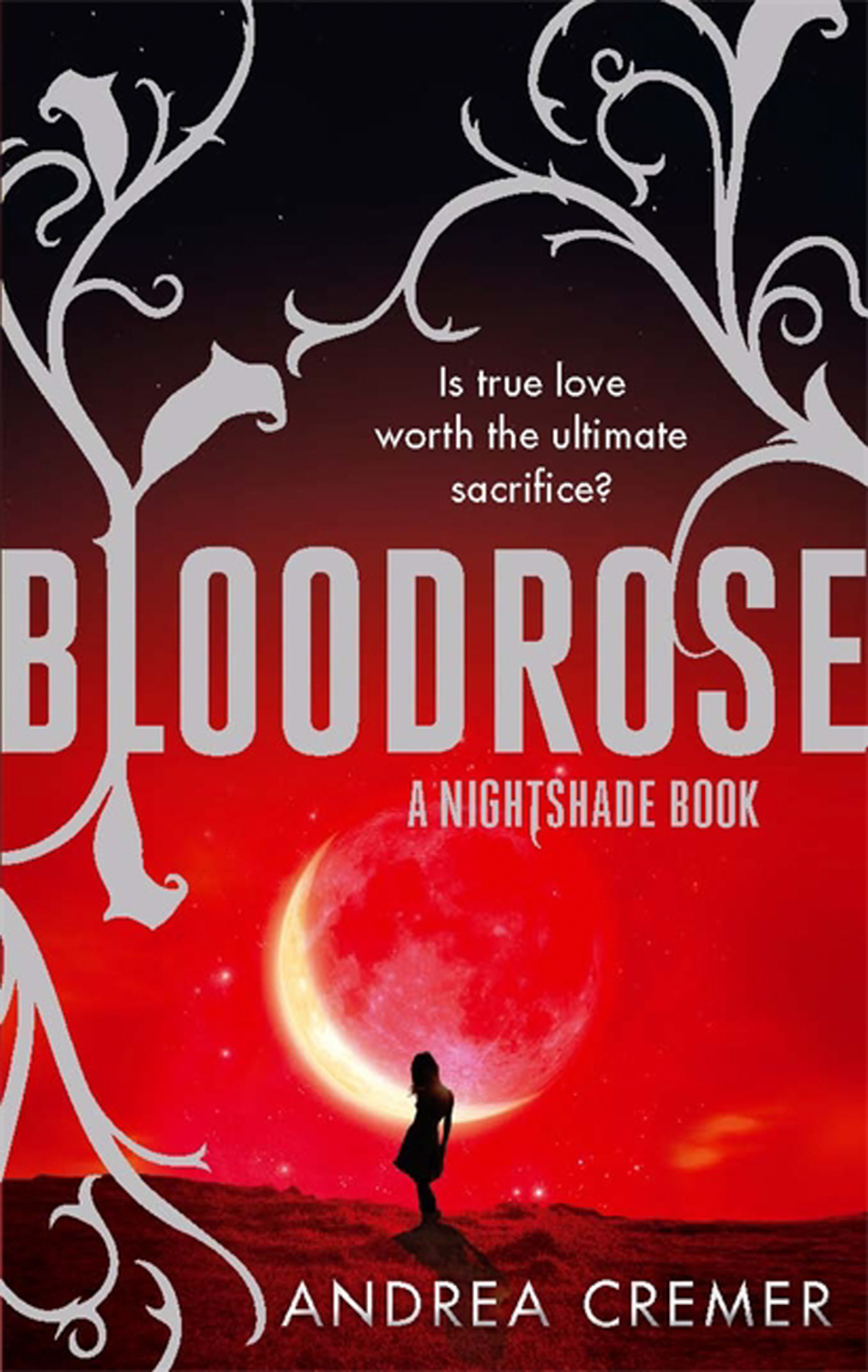 I’m delighted to host author Andrea Cremer, as part of her blog tour to celebrate the release of her new book, Bloodrose (book 3 of her supernatural YA fantasy series which began with Nightshade and Wolfsbane – all available from Atom).
I asked Andrea this question: There are a lot of young adult novels out there these days – how do you write a paranormal book that stands out in the crowd? – this post is her response. Thanks for guesting with FableCroft, Andrea!
A common response to Nightshade from readers is the comment that it’s one of his or her favorite werewolf books. As much as I understand where that idea comes from, I think it’s time for me to take and stand and say Nightshade and Wolfsbane are not werewolf books. Here’s what I mean:
I’ve lived long in the realm of paranormal/fantasy proudly bearing my badge of vampire girl. That’s right; I came on board as a fan of vamps, not werewolves. I was Team Edward for all four books of Twilight. I prefer Bill and Eric to Sam in True Blood. But before you start throwing tomatoes, let me tell you why.
Friends who knew I was a vampire girl presumed that meant I love ALL forms of paranormal, so they’d push werewolves at me enthusiastically. I wasn’t interested, and I couldn’t figure out why. After all they were fierce, strong, magical – all things I liked. So what was the problem? And then it hit me – I didn’t like werewolves because I love wolves.
That’s right – I’m a wolf girl, but a real wolf girl. I grew up so far north in Wisconsin that it’s practically Canada. Wolves roamed the forests of my homeland. I also loved National Geographic television specials even more than cartoons. So by age 9 I could rattle off biological and ecological info like a pro. Wolves to me were beautiful, intelligent, social, and graceful.
 Werewolves seemed to be none of these things. The werewolves I’d encountered on page and screen were hideous – half man/half beast, usually ugly, often unintelligent, driven only by rage or bloodlust.
And worst of all: they didn’t want to be wolves. Lycanthropy occurs as a curse, or a disease. The endgoal of most werewolf tales was to kill the wolf or free the affected person of the wolf curse.
I couldn’t come to grips with that idea. If someone asked me – hey wanna turn into a wolf? I’d say, “Heck, yeah!” Wouldn’t you rather be a wolf? From what I know of wolves, the answer is indisputably YES.
Nightshade’s Guardians are my way of coming to terms with my love of wolves and my trouble with classic werewolf tales. Calla – the alpha female who narrates Nightshade – is powerful and revels in her life as a wolf.
Her troubles arise not from her ability to shift, but from the ways in which her masters try to limit her power, to restrain her freedoms.
 Wolves also inspire me because of their sociability.
Pack relationships offered a wonderful way to explore a world of friendship, servitude, loyalty, and betrayal. While Nightshade is about Calla’s journey, it’s also the story of her pack. The other wolves in the book play key roles throughout the trilogy. Wolves offered a wonderful framework around which to explore relationships, love, fear, and rivalry.
Wolves carry a magic and mystery to me that captured my heart and hasn’t let go. It was just a matter of finding my own way to tell their story and I believe that staying true to those feelings and letting them lead me was the key to creating a different kind of paranormal tale, one that revisits traditional mythologies, making them new again.
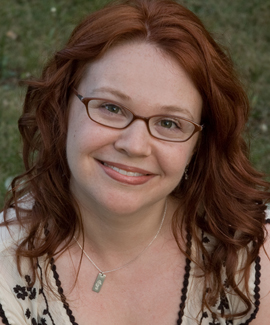
Andrea Cremer spent her childhood daydreaming while roaming the forests and lakeshores of Northern Wisconsin. She went to school until there wasn’t any more school to go to, ending up with a Ph.D. in early modern history – a reflection of her fascination with witchcraft and warfare. She currently lives in Minnesota with her husband, two dogs and a parakeet.
Bonus competition for pre-orders of To Spin a Darker Stair

It occurred to me today that I have a marvellous opportunity to give readers (even more) incentive to pre-order their copy of FableCroft’s forthcoming gift book, To Spin a Darker Stair. The book features stories by Catherynne M Valente and Faith Mudge, and is illustrated by Kathleen Jennings.
Last month I accidentally ended up with an extra copy of Sea Hearts, the newest novel from the marvellous Margo Lanagan (I reviewed it here). I highly recommend it, so I’m offering it up as a pre-order prize! One lucky person who pre-orders To Spin a Darker Stair before March 15, 2012, will win Sea Hearts as well (drawn randomly from all pre-orders).
So, for just $7.95 (Australia), $8.95 (New Zealand) or $9.95 (rest of the world) you have the chance to get not just one but TWO awesome (beautiful) books! Don’t miss out on your chance to win – pre-order now! **
** Winner will be drawn from all pre-orders prior to March 15, 2012, including those already placed.
Perth YA Fans Unite
Came across this via Marianne de Pierres today – a fledgling movement, but one I support wholeheartedly. In fact, the WA School Library Association is already working towards this goal in some ways. The more people who agitate for speakers and authors to visit our side of the island, the more chance people will listen!
Let’s not forget our local writers either though – we’ve got some great ones!
QWC writing courses (a public service announcement!)
 Writing Science Fiction Short Story
Six-week course in July and October
Cost $150
Join one of Australia’s most successful authors of science fiction, fantasy and horror, Lee Battersby, for a journey through the fantastic art of the science fiction short story. Over six weeks you will learn how to build worlds, character, voice and mood in this challenging and rewarding form.
Kim Wilkins’ Year of the Novel led by Trent Jamieson
Year-long course starting August 2011
Cost $445
Challenge yourself to complete the ultimate writing journey in Kim Wilkins’ Year of the Novel under the tutelage of author of Dust, Christine Bongers. Christine will guide you through this course created by Kim Wilkins and help you get that manuscript finished in a year!
Pitching to Publishers with Tiana Templeman
Four-week course in October
Cost $150
This four-week course, starting 9 May, will show you how to push all the right buttons to attract a publisher’s eye. Discover what commissioning editors love and what they loathe.
From writing a captivating synopsis to deciding where to send it, learn about all facets of the proposal process for a range of writing including non-fiction, fiction, and children’s.
Introduction to Creative Writing
Six-week course in August and October
Cost $130
There are a lot of us out there who write, scribbling ideas on bus tickets, boarding passes and coffee shop serviettes, but who never seem to turn these notes into anything. If you have been scribbling away quietly but have never taken the leap to finish anything or call yourself a writer, clear a few hours a week in your schedule to sit down and rediscover the art of creative writing in this practice-based series of online activities and resources.
For more information on any of the courses, or to book your place, contact the Queensland Writers Centre!
Guest blog: Ian Irvine – writing for children and young adults
 We are delighted to welcome highly acclaimed Aussie author Ian Irvine to the FableCroft blog, for a guest post on writing for children and young adults. Thanks Ian!
Tehani asked me if I could post about writing for children and young adults. Though I’ve written a lot of books (27, in fact) and most of them are read by young adults, I’ve never written a book specifically for that age group, so this post will focus more on what I know about writing for children.
I’m best known for a long epic fantasy sequence set in the Three Worlds, though in recent years I’ve also written three quartets for younger readers – the Sorcerer’s Tower, Runcible Jones and Grim and Grimmer series’. However, writing for children covers a vast range of ages, abilities and interests, and each of my children’s quartets has been aimed at a different audience. I always keep the audience in mind while writing, and each series had to be written differently.
The Sorcerer’s Tower books, published in 2008, were part of Scholastic’s illustrated Fantastica series for mid-primary readers (the other quartets in this series were written by Kim Wilkins, Fiona McIntosh and Richard Harland) and were only 10,000 words each. My books were illustrated by DM Cornish, incidentally, and he did a magical job. For such a young audience I restricted the stories to a handful of characters, linear story lines, only one viewpoint, simple language, and of course concepts suitable for this age group.
You might think that such little books would be easy to write, but I found them a real challenge. In one sense they were easier – being much shorter, I could keep the whole story and all the characters in mind while writing each book. This isn’t possible in an epic fantasy quartet which can total 800,000 words or more, and where every editing task, even getting all the inconsistencies out, is a cosmic labour. On the other hand, big fantasy novels offer the writer more freedom, because readers are more tolerant of diversions and many fans love huge, complex plots. For children, however, the writing has to be tight, focused and clear.
Because I was used to writing the epic Three Worlds novels, it wasn’t easy to adjust my writing style to small, simple books. Simple can be surprisingly difficult to write – you have to create engaging characters, with a degree of complexity, and tell an exciting, fast-paced story, within a very small canvas. However reviewers and librarians have said that the Sorcerer’s Tower books are ideal for reluctant readers in primary school, and I’m delighted that they’ve encouraged some children to read who might otherwise have not done so. In doing these books I also learned a tremendous amount about writing economically, and that’s changed the way I’ve written since.
My first children’s series was Runcible Jones (published 2006-2010). These are much longer works, written for 9-14 year olds but also read by YA and adults. Here I could write more complex stories with strongly developed characters, though I still simplified the language, used a single viewpoint character and avoided ‘adult concepts’ such as sex, graphic violence, crude language, and strong crime and horror. These are okay in YA literature (with some limits) but rarely acceptable in children’s books. I spent a long time developing the story world for this series – an Earth where magic is illegal twinned with the world of Iltior where science is banned but magic routine – though in retrospect I think the canvas was too broad, the story world too large. Also, at 105,000 words each, these books were a bit long for the target audience. 60 – 80,000 words is the ideal length for younger readers, because a lot of children are daunted by the size of big books.
Why did I want to take time off from my very successful epic fantasies to write for children anyway? Good question. The eleven books of the Three Worlds sequence run to 2.3 million words and, though I love doing them, they’re mentally and creatively exhausting. At the end of each series I need a writing escape and after the last, The Song of the Tears, was finished in 2008 I longed to write something completely different. And much shorter.
Another reason – if a writer only ever does one kind of book, he or she tends to become typecast by both publisher and readers. Readers are reluctant to read something quite different by that writer, and publishers understandably reluctant to publish it. For this reason, all my writing life I’ve alternated epic fantasy with other kinds of books, to give me the flexibility to write whatever I feel like (within reason).
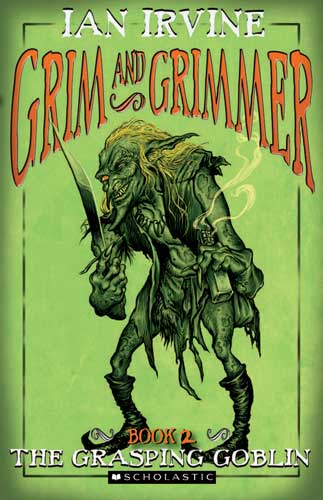 After finishing Song of the Tears, I wrote a proposal for a series of relatively short, humorous adventure stories called Grim and Grimmer (published by Scholastic in 2010 and 2011). Each book was to be around 25,000 words, and aimed at readers 8-13. This was going to be a real challenge because I’d never written humour before – well, not intentionally! – and wasn’t sure I could do it. It would be highly embarrassing if my attempts were unfunny.
I’d also noticed that, while there are plenty of humorous books for children, and plenty of adventure fantasy too, there aren’t many books that successfully combine humour with a strong, compelling plot. The really successful series that do both, such as Artemis Fowl, Skulduggery Pleasant and Bartimaeus, are for older readers. A gap in the market, I thought, ha!
I originally planned six of these books though, in the middle of the global financial crisis, my publisher could only commit to four. However when it was time to write them, Scholastic wanted longer books, 40,000 words or more each, and I was happy to make this change because the added length offered more scope for the stories I was developing. Such is the give and take in developing a series.
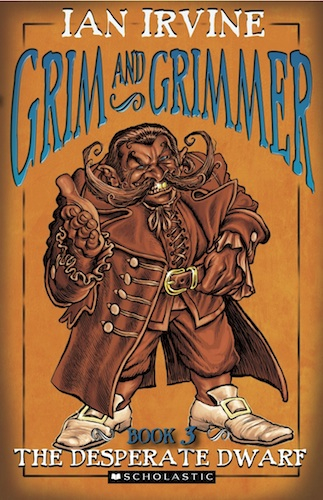 There’s oodles of fantasy adventure around for this age group and, for the Grim and Grimmers to succeed, I had to find a way to make them stand out. This wasn’t going to be easy, since they’re set in a fairly traditional world of children’s fantasy, with stock characters like goblins, trolls, dwarves and so forth. Don Maass (a top NY agent) wrote, in The Fire in Fiction, that most stories his agency sees fail because they’re too familiar, too bland, and too much the same as all the others. It’s the same with characters – most characters fail not because of too much exaggeration, but too little. And exaggeration and hyperbole is particularly important in writing humour, so I decided to indulge my zany side for once. I also acknowledge the assistance of John Vorhaus’ The Comic Toolbox here. It’s not just the best book on writing humour, it’s better than all the others put together.
To make stereotypical characters fresh, I twisted the stereotypes. My goblins are still greedy and calculating, but in Grim and Grimmer the entire goblin nation is under an enchantment that drives their flaws out of control – they’re so obsessed with gambling that they neglect their homes, children, personal hygiene and even the kingdom itself. The mournful goblin king, Dibblin the Doughty, constantly accepts responsibility for everything that’s gone wrong in his kingdom, then turns back to the gaming table without doing anything. The villainous Aigo bets on whether Useless Ike (the hero of the series) will survive various deadly ordeals he puts him through.
The dwarf Con Glomryt (all the dwarves are named after rock types), who challenges Ike to a contest, isn’t a typical dwarf warrior with an axe and chain mail, but a gold-toothed, smirking conman who resembles the lowest form of TV game show host. The huge, handsome demon Tonsil is as dumb as a doughnut and sweats crude oil by the barrel – he’s a real fire hazard at a party! The apparently kindly old lady, Fluffia Tralalee, who lives in a cave carpeted in pink shag pile, with fluffy bunny wallpaper, turns out to be a bloodthirsty old bat with an armoury big enough to start World War 3. And Tonsil’s sister, the demon Spleen, specialises in psychological pain. She doesn’t just get inside Ike’s head, she actually puts her head inside his head (via another plane), to identify his secret terrors and see how to best torment him. And so on for the entire cast of characters.
But were the books funny, you ask. Well, they had lots of reviews and all the reviewers thought so. Writing these books was the first time I really let go, and it was worth it. Grim and Grimmer is the most fun I’ve ever had writing, and I’m sorry that the series is finished.
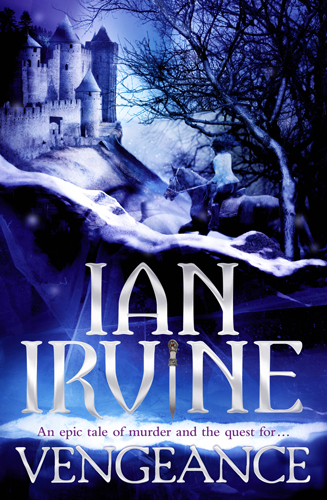 However, epic fantasy calls. I’m presently doing the final edits for Vengeance, book one of a brand new series, The Tainted Realm, out in Australia in November and the UK and US in 2012.
Ian Irvine is a marine scientist who has developed some of Australia’s national guidelines for the protection of the marine environment and still works in this field. He has also written 27 novels, including the internationally bestselling Three Worlds fantasy sequence, an eco-thriller trilogy and twelve books for children. Website: http://www.ian-irvine.com/
On his Facebook author site, Ian is giving away three sets of his trilogies and quartets every week for the whole of 2011, plus other great prizes. To celebrate the publication of Vengeance, there’ll be another iPad2 giveaway later in the year.
To enter any of the comps, go to http://www.facebook.com/ianirvine.author.
 FableCroft