I’ve invited a number of people who have published in indie press and gone on to become professionals in the field to write about their experiences. Here, Tansy Rayner Roberts shares her experience.
 Indie press caught me when I fell.
We didn’t call it indie press so much back then, in the early days of the new millennium. Before a firm rebranding, it was small press and proud. But after my first professionally published novels sank, crashed and burned and I found myself having to reassess whether I was a writer or not, it was small press that gave me a community to belong to while I built my skills up to the next level.
I embraced the short story, and wrote a bunch of them, mostly published in tiny little ‘zines that few people had heard of then, let alone now. I also joined the Andromeda Spaceways collective and learned about publishing a magazine from the ground up (spoiler: it’s really hard work). Later I edited YA e-zine Shiny and played in the New Ceres paddling pool, two projects that were integral to the launch of (World Fantasy Award nominated) Alisa Krasnostein’s indie publishing house, Twelfth Planet Press. My goals kept shifting: I wanted to make sure I had something published somewhere, every year, and then it was all about getting that novel career back, and one of the things that had to be sacrificed was my involvement in making small press happen for other people.
Also, there were babies. Actual babies that needed my time and attention. (spoiler: they are hard work too. Who knew?)
Then, finally, the novel career came back, and contracts were signed. Deadlines. Real books with actual distribution and publicists and that sort of thing. I was playing in the Big Kids Playground again.
But just because I had promised myself not to get involved in the making of small or indie press again didn’t mean that some of my work didn’t have a place there. As Alisa built up Twelfth Planet Press into something that was attracting global attention, my stories found a home there, one after the other, until I realised that what with all my novel deadlines and baby juggling, I was pretty much only writing short fiction when Alisa asked me to. And it seemed, I had finally got good at it – after years of writing short fiction that sank without a trace, the stories I sent to Twelfth Planet Press started to get attention. Award nominations. Positive reviews. When you haven’t had those things for a long time, they make you giddy!
I wrote a story I loved, “Siren Beat”, for a friend’s charity anthology project, and when that didn’t get picked up by a publisher, Alisa gave “Siren Beat” a home. It won me my first international award. When she asked me to produce a four story collection for her Twelve Planets project, I knew that I had to do it, even if it meant taking a chunk of precious time out of my novel deadlines, which had become a little bit deadlier upon the birth of my second daughter.
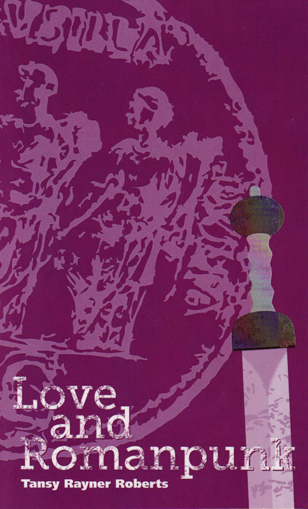
Without the existence of Twelfth Planet Press, I wouldn’t have written those stories, into which I poured all of my love and obsessions and annoyances with Roman history, the other career path that I had been passionate about, a decade ago. Love and Romanpunk is a beautiful book, and one that has absolutely no place with a big pro publisher. It also gave me a breath between big fat fantasy novels, and serves as a wonderful introduction to the kind of work I write, for those people who are likely to balk at a big fat fantasy novel or three.
I get so irritated that the current wave of self-publishing has taken on the label ‘indie’ and devalued it. To me, indie publishing involves a publisher who finds the work that will appeal to a niche audience, the editor who hones it and makes it better, the cover artist and designer, the proof readers. And sure, some of those are the same people, and it’s very likely none of them are getting paid for their work (yet) but it’s a business that contributes some amazing work to the field. To me, indie publishing is the field that brought me the gorgeous restaurant novels by Poppy Z Brite, the collections of Kelly Link, Glitter Rose by Marianne de Pierres, and the WisCon Chronicles. Maybe I’m just some grumpy old pedant railing against the internet, but I don’t see why self-publishing needs to take terminology that means something else, not when the stigma is peeling away from the self-publishing process in big wet chunks.
Self publishing is hot right now. But it’s not indie publishing, to me.
All this is not to say I haven’t had my dramas and disasters with indie publishing. Contracts to e-publish with no end clause, and a publisher who refused to negotiate any detail of said contract, forcing me to remove the work for publication. A publisher who dropped out of contact more than half a decade ago and yet still think they have the rights to put my work on the Kindle. Publishers who never produce the actual product, editors who don’t understand how the editing process works, and on one particularly awful occasion, a friendship lost because the author-publisher relationship became so deeply damaged.
But it’s a rare author who has a career longer than a decade and hasn’t picked up some horror stories along the way, and I can tell you that I have quite a few traumas attached to my experiences with pro publishers too (though not, thank goodness, recently).
Indie press doesn’t offer the big money, and it doesn’t offer major distribution, especially not in Australia. But for those works that are never going to appeal to the big business side of major publishing, it can lead to beautiful books, and the promotion of work that helps to build a writer’s reputation. For me, at a time when my pro novels are still confined to Australian and NZ territories, it’s rather glorious to have a little book that can fly to every corner of the world. Also, it’s purple.
I love Harper Voyager for everything they have done to relaunch my career, putting my heart and soul (and falling naked men, and frocks, and shapechanging animals, and magical cities) on bookshelves around the country, but they never gave me purple.
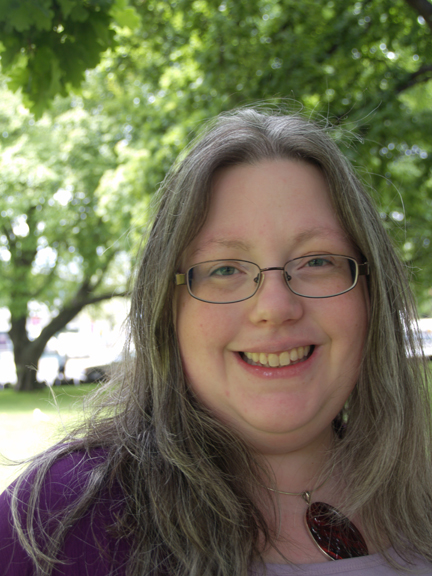
 Tansy Rayner Roberts is the author of the Creature Court trilogy (HarperCollins Voyager) and short story collection Love and Romanpunk (Twelfth Planet Press). In the last year she has won the Washington SF Association Small Press Short Fiction Award, the Ditmar for Best Novel, the William Atheling Jr Award for Criticism and Review, and the Aurealis Award for Best Fantasy Novel, among other awards. It’s been that kind of year. Tansy blogs at http://tansyrr.com and can be found on Twitter at @tansyrr. You can hear her every fortnight on the Galactic Suburbia podcast.




 FableCroft