The Magic of Elli: Ethan of Athos and Labyrinth

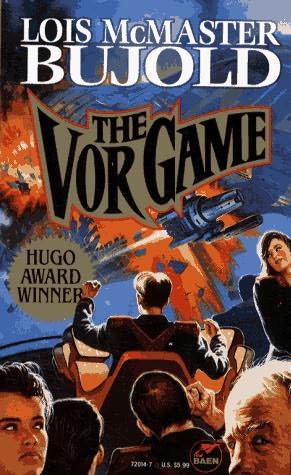
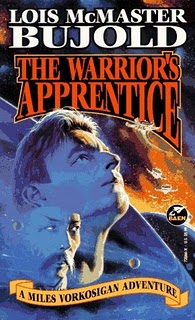
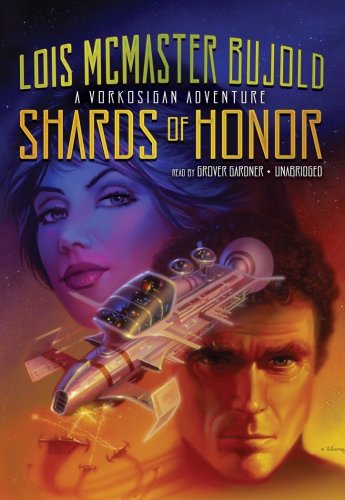
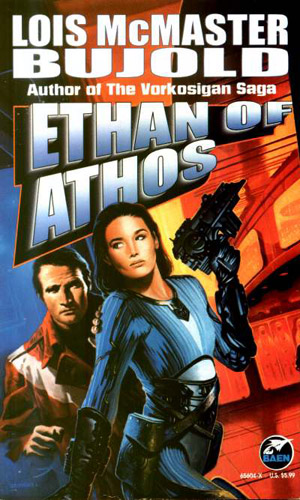
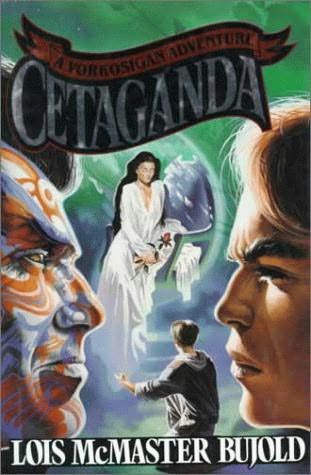
Alex and I carry on with our review series of the Miles Vorkosigan saga with the novel Ethan of Athos and the novella “Labyrinth” (published with Cetaganda in the omnibus Miles, Mayhem and Mystery). We have discussed Cordelia’s Honor (Shards of Honor and Barrayar) and the Young Miles omnibus (The Warrior’s Apprentice and “The Mountains of Mourning” and The Vor Game) previously.

Ethan of Athos and “Labyrinth”

By Lois McMaster Bujold

ALEX:

This novel started enjoyably enough, if weirdly, what with the discussion of uterine replicators – it is an unusual enough thing to encounter in SF that imagining a roomful of the things with an attending physician is weirder for me than reading about FTL! Anyway, things then got even weirder, and for me way harder to read, when it’s revealed that these replicators are being used because Athos is a world populated entirely by men.

TEHANI:

It’s really clever, the way it starts out. We know about uterine replicators because of Cordelia’s story (and Elena’s too, in fact), and so we naturally assume these are simply gestating children for some parents of the “usual” type. It’s quite a shock when we find out differently! It was a good introduction to the world though, setting us up to be fond of the main character.

ALEX:

The opening few chapters, those set on Athos, were quite a trial for me to read. The misogyny was so believably portrayed that, were this my first encounter with Bujold and/or I thought it was written by a man, I would probably have given up in disgust and never touched the series again. I swallowed my bile and continued because I figured a) Bujold deserved some trust after the characters of Cordelia and Elena, and b) neither Tehani and Tansy would have put up with that sort of crap. Turns out, thankfully, that this was a fair decision. Of course.

TEHANI:

Of course! Would we steer you wrong? I think Alisa might have stumbled into that problem though – have a feeling it may be the books she tried to start with, which really isn’t a good idea. Readers, be warned! Ethan of Athos is NOT the place to start reading this series!

ALEX:

Whoa, I cannot imagine starting with this book.

TEHANI:

Having said that, I didn’t have the same reaction as you. For some reason, I wasn’t offended that this was a lifestyle choice made by a group of men a couple of centuries earlier. I guess I read it as that while yes, some of the men making up the colony originally might have been women haters, others would have joined for different reasons. And many years later, there is that whole whisper game that’s gone on about what women are like, causing both inaccuracies and naivity in the current generation. Ethan’s own reaction probably demonstrates that best, when he reads the scientific journal and can’t tell which articles are by men and by women! (Hilarious, by the way, in light of recent discussions on just that!). I was more cross that the children growing up on Athos weren’t educated about the outside world, and women, in any sort of way other than to dismiss or demonise them. Hmm, maybe that’s what you mean!

ALEX:

I think I find the very idea of men wanting to escape from women in this permanent way – since that’s what the planet is all about – irrational and offensive, when they also want to ensure continuity of their genes. They’re not giving their sons the chance to make the choice for themselves. There are some lines that really struck me – the “revolted silence” that greets the idea of growing female fetuses to harvest their ovaries, for example. It is a revolting idea, but the men are revolted by the idea of women being present in any real way on their planet. The way that some of the characters spoke of genetic choice I also found uncomfortable.

Anyway, the ovaries that Athos has been using for 200 years to develop their foetuses from are coming to the end of their productive lives. Ethan is an … obstetrician, I guess … who discovers that the replacements they’ve purchased are not what they thought. In turn, he gets sent on a mission off-world, to get some more. This of course means that he has to deal with that sin-inducing entity, Woman. His first encounter on the station where he disembarks is with just such a personage … who turns out to be Elli Quinn! Tehani, she is back in my life, just as you promised! Ethan ends up getting involved in a Cetagandan mess concerning genetic experiments with telepathy. He learns that women are not (necessarily) the enemy – although he does end up going home, to Athos, and mostly happily.

TEHANI:

Yep, it’s an overdose of Elli! She’s so awesome, and I think this book is fantastic because it really sets her up as an intelligent and resourceful person all on her own, not just as a sidekick to Miles. Well played Bujold!

ALEX:

Yeah, I am definitely an Elli fan.

Athos as a planet is a really interesting place. I’m very interested to hear, Tehani, what you think of it coming from a mother’s perspective. Like I said I found the misogyny hard to deal with. As a society, though, I was fascinated. The idea of earning social credits so that you can become a Designated Alternate – and the idea that being a parent is actually, hugely, valued in society. Ethan’s shock and horror that parenthood should be treated as unpaid labour was quite welcome coming from a male character! The idea also that celibacy is an accepted part of society was nice to see, as was the genuine love for children and Ethan’s desire to have a large, connected family.

TEHANI:

I think the actual societal model is brilliant! There are some people who really shouldn’t have kids, and parenthood is definitely undervalued in our society – to have both issues dealt with (in what I think is actually a very smart and sensible model) was a delight. Somebody make that world with women and I’ll be there! 🙂

ALEX:

Cetaganda does not come off well in this story at all. Their genetic experiments are shown as just that, experiments, and the idea that they might just possibly be serving an admittedly somewhat dubious greater purpose – as demonstrated in the novel Cetaganda – is barely alluded to. This is one of the disparities between the two stories.

TEHANI:

See, this is where it fell apart a bit for me. Terrence and his background simply don’t fit the Cetagandan societal mould set up in Cetaganda! Here’s a quote (from p 319 in the paperback omnibus) to demonstrate:

“Is Cetaganda – controlled by women or something?”
A laugh escaped her [Elli]. “Hardly. I’d call it a typical male-dominated totalitarian state, only slightly mitigated by their rather artistic cultural peculiarities…”

It goes on to talk about genetics projects headed by men, sponsored by the Cetagandan military. In Cetaganda though, genetics is the sole province of women, right? And telepathy is NEVER hinted at!

Later (p 373), this conversation takes place:

There was no talk at all of ever admitting him to the ghem-comrades, the tightly-knit society of men who controlled the officer corps and the military junta that in turn controlled the planet of Cetaganda, its conquests, and its client outposts.

It all just feels WRONG given what we know from Miles’ adventures on Cetaganda – which surely Elli knows too!

Ethan of Athos was published about ten years before Cetaganda though, and therein lies the problem. Bujold obviously changed her mind about how she wanted Cetaganda to work between the two books, but reading them in close proximity makes the continuity issues very apparent. I like the Cetaganda version better (as I mentioned in the last review) and I think comparing the two, it’s pretty easy to see why Bujold changed track there. Terrence’s Cetaganda, what we see of it, seems just another male-dominated society, whereas the exploration of the society we see in the novel Cetaganda gives us a very different norm.

Bujold’s afterword in the Miles, Mystery and Mayhem omnibus which contains these stories is interesting for her discussion on the way she let the Cetagandans evolve in their own book, rather than just being the “rather all-purpose bad guys” they started out in the earliest stories. She also talks there about extra-uterine replication and genetic engineering, themes in all three books to one extent or another, making it a great wrap up to the sequence!

To be fair, I think the Cetagandan glitch one of the very few continuity problems with the Vorkosigan saga as a whole, so maybe I’ll simmer down and just let it slide now 🙂

ALEX:

It is indeed an interesting look at lack of continuity. I’d be interested to know what sort of notes Bujold kept!

Miles does not feature in this story personally. He does get several mentions, though, as Quinn reflects on her ?love/admiration? for him, and the role that she is playing within the Dendarii Mercenaries as an information agent. It’s a curious part of the Miles universe in that sense, and I can’t help but wonder whether Bujold considered a series featuring Quinn in her own right…

TEHANI:

OOOH!! What a GREAT IDEA!! Let’s write to her and ask her for that 🙂

I liked the ending of this book – I think Ethan shows tremendous but believable growth throughout the story, and his admiration of Elli is expressed in the most important way he can. Perhaps taking Terrence back with him and the little hopeful romance projected are a bit trite, but overall, it works pretty well.

ALEX:

I was shocked at first by Ethan’s request/suggestion I was shocked at first by Ethan’s request/suggestion that he take one of Elli’s ovaries, but came around to your point very quickly – that it’s an expression of immense respect, actually. Terrence is the character we haven’t spoken of much yet – he’s quite the enigma, since Elli and Ethan have slightly different takes on him and the Cetagandan has a very different view. I actually wondered, towards the end, whether the Cetagandan was telling the truth and that Terrence would actually end up betraying Ethan, so I was pleased to discover that he was on the up and up. And I didn’t think the romance was that trite, in the end.
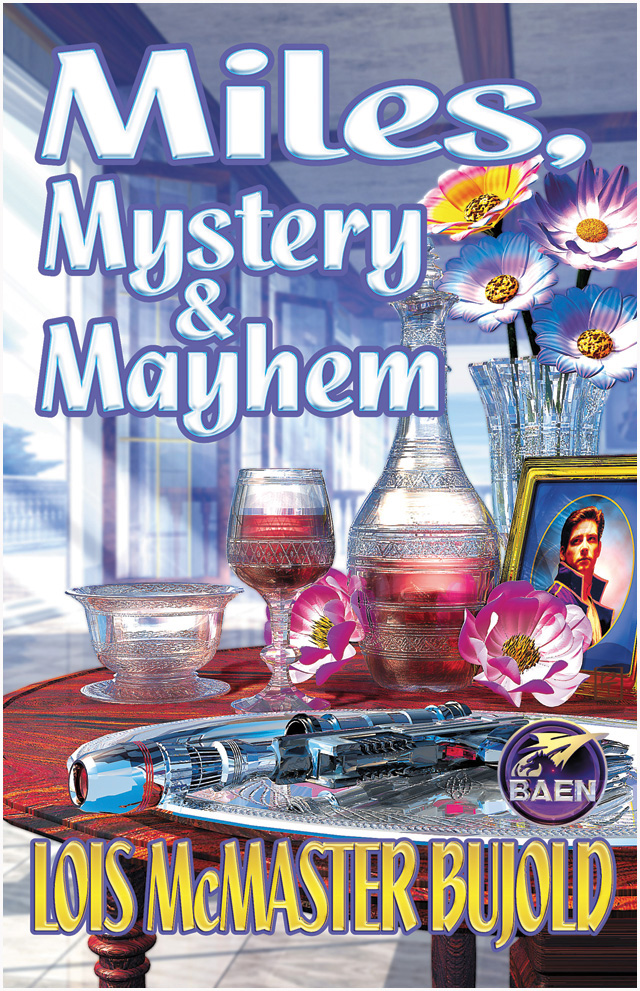
The omnibus is complemented by the novella “Labyrinth” which rounds out quite nicely, I think, a discussion of genetic engineering in the Vorkosigan universe. Miles gets employed to pick up a disaffected geneticist from Jackson’s Whole. Things (of course) go somewhat awry, and Miles ends up having to retrieve a genetic package … which is secreted in the leg of a genetic experiment … which is locked in a dungeon at the bottom of a very nasty man’s research facility. The genetic experiment turns out to be a fanged, clawed and 8-foot-tall 16 year old girl.

TEHANI:

And isn’t it fun how Miles’ adventures ALWAYS go awry? One of my favourite things about the books.

ALEX:

SO MANY DISASTERS.

I enjoyed this story, and it was nice to get back to Miles relying on his wits to get things done – and, this time, actually finding that his lack of height is af advantage, when having to crawl through ducts. I will admit to being a bit uncomfortable about Miles’ sexual encounter with Taura – no matter that she’s huge, she’s still young! And I’m not comfortable with the idea that sex can be used quite so (ahem) mercenarily – not and have both parties apparently enjoy it. Yes yes, perhaps I am confused in my attitude towards this bit; I’ll be the first to admit it!

TEHANI:

Yep, I struggled with that too. So many reasons this is not cool. From one angle, if you squint, it could be said that Bujold is using Miles like women are often used in books – as a sacrifice on the altar of sex in order to get to a higher goal. But yeah, Taura is so young, and naive, and unsophisticated, that it’s just icky. It also makes me wonder why, exactly, the character had to be this age? Miles is 23 in this story, and it’s something that bothers me a lot – if there’s no real reason the character couldn’t be a year or two (or three) older, why not make them that? I mean, Taura has a shortened life span, so making her 16 means Bujold can get more years out of her I guess, but really? It’s her own world building she’s dealing with! And while we aren’t going to read Falling Free in the reread (it’s not a Vorkosigan book, it doesn’t count I tell ya!), Bujold does the same thing with a character there too, which also squicked me (and is one of two main reasons I don’t really like the book – the other being, it’s not MILES!). So yeah, not cool, especially when it’s avoidable. If Bujold gets so much right, should we fuss when we have a problem with one thing?

ALEX:

I guess it’s disappointing to find these sorts of issues in books that we otherwise enjoy – I don’t like finding flaws in those I admire!

Anyhow, I also enjoyed this story for its greater exploration of Bel Thorne, the Betan hermaphrodite, and other Dendarii. I can see the crew developing in further stories, and I look forward to it greatly.

TEHANI:

Ah, Bel. I’m a fan of Bel – it is such a complex character, and Bujold draws it so well. Its emotional and physical journey is a highlight. Overall, I liked “Labyrinth”, and, no spoilers, but this story actually sows a lot of seeds that will grow hugely over the coming books!

ALEX:

Of course it does. Look forward to their growth and harvest!
Call for submissions: Apocalypse Hope

Submissions are now open for the next FableCroft anthology, tentatively titled Apocalypse Hope (we toyed with After the Apocalypse, but Maureen McHugh has already pinched that one!).

The world is ending: climate change, natural disaster, war and disease threaten to destroy all we know. Predictions of the future are bleak. But does the apocalypse really mean the end of the world? Is there no hope for a future that follows?

FableCroft Publishing is seeking speculative fiction stories on the theme “Apocalypse Hope”. The stories must in some way address the idea that after the apocalypse (whatever and wherever in your universe that might be), there is a future for the peoples who survive it. The rest is up to your imagination.

Stories should be between 2,000 and 8,000 words. Please query the editor before sending stories outside those limits.

Original stories are preferred. Please query for reprints.

No simultaneous submissions please.

For multiple submissions, please query first.

Submissions open: July 4, 2011

Submissions close: September 30, 2011

Anticipated publication date: June 2012

Electronic submissions only. Please send story as an rtf or doc attachment to fablecroft [at] gmail [dot] com, with the subject line: SUBMISSION: Title of Story

Please ensure your story file includes your contact details including postal address and email address.

Stories should be formatted to usual electronic submission standard. Times New Roman font of 11/12 point preferred, with at least 1.5 spacing.

Please be cautious to only submit final, proofread copy – ensure you have checked all your edits and removed all track changes in your document.

The editor will respond with a submission received email within 48 hours, but story selection may not occur until up to one month after the deadline. This anthology is open to international contributors.

Payment will be AUD$50.00 and one contributor copy of the print book. Further royalties will apply for e-book revenue.


The magic of mystery: Cetaganda

Alex and I continue our review series of the Miles Vorkosigan saga with the novel Cetaganda. We have discussed Cordelia’s Honor (Shards of Honor and Barrayar) and the Young Miles omnibus (The Warrior’s Apprentice and “The Mountains of Mourning” and The Vor Game) previously.

Cetaganda

By Lois McMaster Bujold

ALEX:

I really enjoyed this story! Miles – and Ivan – are sent on what ought to be a relatively boring diplomatic mission to bear witness to the Cetagandan Empress’ funeral, and of course things go haywire from the first moment. Mischief certainly seems to dog Miles’ footsteps. There’s an attempt to frame him as part of a conspiracy against Cetaganda (Barrayar’s longstanding rival) and several attempts to wound and/or assassinate him – as a result of which Miles ends up investigating a potentially enormous Cetagandan conspiracy, involving the genetic inheritance of that race. Miles falls in love (well, in lust), goes to parties, gets hurt, and meets the Emperor … pretty much a standard fortnight, as far as I can tell, for him. There were a goodly number of twists and mysteries and surprises to keep me guessing and intrigued – it was much more a detective story than a space opera. It just happens to be set on an alien planet with a whole lot of genetic engineering going on (those kitteh plants are just weird). I allowed myself to be carried away by the story and didn’t spend too much time trying to outthink Miles (or Bujold), so the ultimate revelation – that it was a haut woman married to a ghem man, conspiring with a planetary governor – was a surprise, albeit one that made perfect sense.

TEHANI:

I was certain I remembered this as one of my least favourite Miles books, but on rereading, I found it really enjoyable. I think I know the source of my mistaken assumption though – it is very much, as you say, a detective story, with barely any space opera-ish events! Nothing wrong with that, but when read in the wrong order (ie: after a bunch of action-packed Miles adventures), it was a little tamer by comparison…

ALEX:

I can understand that coming at it from a more adventurous story would be weird. For me, it worked – The Vor Game isn’t exactly packed with space battles.

On the gender politics: I though the revelation and discussion of the intricate power balances within Cetagandan society were really interesting from a gender point of view. Miles’ surprise at the power that the haut women had, and the way in which it manifested, was perfectly appropriate: he wasn’t surprised they had it, but the way they had it, I think. The very idea that they have power over the development of the ghem and haut genetic development is a neat twist on the idea of maternal responsibility for children, I think. I’m not sure what to make of the ending, in light of this – the Emperor ‘marrying’ the Handmaiden, attempting to gain control over it? Will Rian give up control, or is the power structure too embedded?

TEHANI:

That’s a good point and I hadn’t really picked it up! I think that Miles, for all that he has grown up in a male dominated society, is pretty damn accepting of women in powerful roles (mainly thanks to his mother, no doubt). So you’re right, that was expressed well here, and it was mostly Miles trying to adjust his own notions of what an imperial society looks like, and who has the power.

To me, it seemed that Rian cemented her power base by “marrying” the Emperor, and I really couldn’t see how it would benefit him more than her. However, it was a smart move by the Emperor, at the same time!

ALEX:

Hmm, perhaps you are right about Rian. Perhaps it’s both being pragmatic about how best to deal with a dangerous situation, and do what is best for the haut, which seems to be the overriding concern for both anyway.

On Cetagandan society: there have been references to the ghem and haut in other novels, if briefly, so it was good to get some greater understanding about what the heck is going on in this society. I still can’t say that I entirely understand it! It’s a fascinating way of thinking about genetic engineering as a way for society to express itself, and as a way of bettering itself too. Miles has some interesting insights into their collective attitude towards expansion which I still need to think about; there’s certainly an assumption – on Miles’ part as well as the Cetagandans – that expansion must happen, but quite why this is so imperative is opaque to me. One of the unfortunate things about the name choices is Bujold’s habit of saying “the haut Rian,” because I couldn’t help but read that as “the hawwwt Rian”…

TEHANI:

It is a really interesting way to consider genetic engineering. Expansion I think is a theme right from the beginning of the saga though – after all, Cetaganda invaded Barrayar when it was rediscovered; Cordelia and Aral met on opposites sides of a planetary claiming of Sergyar. It’s almost like the Wild West – who can claim the most planets, even when (like Komarr and the Betan colony), they are barely livable! But expansion is the reason Earth went a-colonising in the first place I guess, and despite all other advancements, humans are STILL overpopulating their habitats!

We need to talk more about the portrayal of the Cetagandan society when we look at Ethan of Athos – this book was written nine years AFTER Ethan, even though it precedes it in the internal chronology, and I think it’s one of the few places where Bujold mucks up her consistency with all the popping around. I like what she does with Cetaganda here better, for the record.

ALEX:

Ethan of Athos, up next!

On the characters: I so knew Maz was going to end up with the ambassador. Saw it a mile off. I enjoyed Lord Yenaro immensely – the idea of scent-work being a worthy art to pursue is delightful. Rian was … I was going to say impenetrable, but that gives all sorts of nasty implications. She was appropriately hard to fathom, I guess. I liked that she was mysterious and that it made sense for her character. Having Miles fall in love/lust with her makes sense, because of her great beauty and her untouchability. Miles continues to develop here, although it was hard to remember how young he was supposed to be – so much has happened to him! And Ivan isn’t nearly so annoying as he threatened to be in earlier books.

TEHANI:

I loved Maz! And I loved that the Ambassador loved Maz. I think it’s a very clever thing Bujold does with her minor characters – it’s very subtle and I wonder if you’ll notice it. Frequently there’s some little side story or a throwaway characterisation that shows about how some Barrayaran person or other has taken a step outside the old-fashioned, quite restrictive societal norms of the planet. Look out for these! They are showing the progression and modernisation of the planet from a sideways view!

I also loved Ivan in this. You need to watch Ivan closely too, as the series progresses. I want to talk more about him, but I won’t, til you’ve read some more books 🙂

ALEX:

Ooooh you are giving me such teasers! I did wonder whether she was going to keep Ivan in a cute-Obelisk kinda role, or whether he would develop greater diplomatic insights as time went on. On Maz etc, it’s so nice to see secondary characters actually having a life outside of their interactions with the principal cast.

Questions: will Miles indeed have more to do with the Emperor Giaja? Will Miles ever be allowed to leave the planet again? What are Elena Bothari and the Dendarii Mercs up to??

TEHANI:
You know, I can’t remember if Miles runs across the Emperor (or Rian) again! Could they really STOP Miles from going space-side? 🙂 As for the Dendarii, just wait… 🙂

ALEX:
ARGH. Mooooore Miles to come!

Aussies in Dozois’ Year’s Best SF

Congratulations to the many Aussie authors and publications scattered throughout the Honorable Mentions in the new Year’s Best Science Fiction (#28, edited by Gardner Dozois). Apologies if I missed anyone!

Peter M Ball

KJ Bishop

Jenny Blackford

Damien Broderick (also in the ToC!)

Isobelle Carmody

Elizabeth Carroll

Aidan Doyle

Sean McMullen

Garth Nix

Simon Petrie

Sean Williams

The Magic of Miles: what it means to be Vor

Tehani and Alex forge on to the end of the second Vorkosigan omnibus, watching Miles grow up and cause havoc. Alex falls further in love with the universe and Tehani watches gleefully. Spoilers!

“The Mountains of Mourning” and The Vor Game

By Lois McMaster Bujold

TEHANI:

“The Mountains of Mourning” was an early foray into the Vorkosigan world for me. It was available for free from the Baen e-Library and I downloaded it, among a bunch of other stuff. It’s a novella, not a novel, and it is somewhat different to most of the other Miles books. It’s a rather introverted story, in which Miles is given an opportunity to consider the Vor aspect of himself and what it means, at the same time as confronting some ingrained social issues in his society that relate directly to him. “Mountains” gives us a rather more thoughtful Miles than we saw in The Warrior’s Apprentice, and fills out a bit more of his personality, and, again, grounds his honour more solidly. It’s a sad story, but one that ultimately fits in very well with the overall world-building.

ALEX:

I really enjoyed “Mountains,” and thought it worked nicely in the omnibus. It provides a clear bridge between Warrior’s and Vor Game, and allows some great insight into Barrayar home life. I was interested to see the degree to which Bujold makes the mutant-horror real in the life of the Barrayar hicks. I had neither expected that we would meet such back-country types (it’s certainly not typical in space opera), nor that the revulsion would be so real. I enjoyed the characterisation of Harra, the mother of a murdered ‘mutant’, and hadn’t actually expected the culprit to be her own mother; it was nice not to see the husband being responsible. And, of course, it grounds Miles more solidly, as you say Tehani.

TEHANI:

The Vor Game switches speeds again, and does it twice! This feels like two books squished together, because the first and second halves are quite different stories. In her afterword (in the omnibus edition Young Miles) Bujold says people often think that the second half of the book, the more military space opera bit, must have been tacked on to pad out the first half (which was published alone in Analog). It’s not so, she says, as the novel was always written as published. It’s a fair thought though – the initial story is of Miles, newly graduated from the Imperial Academy, given a backwater Barrayar-bound posting to prove that he can submit to authority rather than subvert it. If you really look at it, nothing much happens, plot-wise. Yes, Miles is almost killed (accidentally), he finds a body (accidentally) and he stops a mass torture scenario (on purpose), but all that is quite incidental. It is all designed to set up the second half of the book, which sees Miles return to space, legitimately, under the instruction of ImpSec, and take back his Dendarii mercenary fleet (not quite as legitimately). It’s full of the action and adventure that I associate with the Vorkosigan Saga, but which I’m realising, through this reread, is not always the biggest part of any of the books!

ALEX:

BAHAHAHA Miles kidnaps the Emperor!!

Ahem. That Gregor turned up in this story, having got himself captured by unwitting contractors, and then Miles turns up accidentally … yeah, that was hilarious.

Anyway, yes, there is certainly a change in speed in this book, and I can understand why it might feel like two stories. However, with the continuation of the Metzov character – which I honestly had not expected, and led to groan aloud in horror when he appeared as Cavilo’s right-hand man – it doesn’t feel like it’s unconnected. If anything, it probably reflects the reality of life for an ensign who gets sent willy-nilly on assignments!

Kyril Station is horrendous, and that whole section of the book was just one horror on another. I was initially disappointed by the reality of the drowned body, but I guess it was better than having genuine mystery chase Miles around – that might have strained credibility a little too far. It’s a nicely realised base in all, and with Miles parading around on drain duty Bujold gets to describe the realities of the place in more detail than she might otherwise. I do wonder whether this base will turn up again…

TEHANI:

One of the most appealing parts of The Vor Game is the unfolding aspects of Miles. He’s such a complex character that watching him evolve, grow and really let loose is a great delight. It’s easy to forget, having read all the books and become used to it, that his manic manipulating is something he almost fell into, rather than a strategic gift he always had. I also really enjoyed seeing the relationship between Miles and Gregor – the genuine friendship, tempered by remembrance of the past and concern for the future, is superbly written, and is a counterpoint to the relationships we see of the older men in the books, such as Aral and Illyan.

ALEX:

Manic manipulation is EXACTLY the right description. Mad Miles is about right too. It really, really is like watching someone who in reality is stumbling, but making it look like they’re running. From one obstacle to another … and ending up paid three times for his efforts. There was a bit less emphasis on his disability in this book, which was interesting, although there was one mention of his neck bones being coated in plastic which startled me! Miles’ reaction to Elena was more muted than I had half expected, and yes his relationship with Gregor is great. It also highlights the differences between Miles Vorkosigan and Miles Naismith, on which there is a fair amount of emphasis in this book. I can see this being a major source of difficulty, and skilful character building, in the later books – especially if the Dendarii do end up doing a lot of covert work for Barrayar, and Miles has to interact with ImpSec both as himself (Lieutenant) and as Admiral!

TEHANI:

The character of Cavilo is problematic. In some ways, she’s Miles’ own mirror – highly intelligent, cunning, strategically brilliant. She would have to be, to end up in the position she is in (again, somewhat of a mirror to Miles). But she lacks Miles’s sense of integrity, and of course this means she is also self-centred, deceitful and disloyal. I would have liked to see more of Elena, or something at all of Elli Quinn, in this book, to redeem the balance of this dishonorable female character, particularly as we don’t really have any insight into the reasons WHY Cavilo is like she is. At least in The Warrior’s Apprentice, we can’t hate the elder Elena for her murder of Bothari – we understand it, even if we know murder is wrong. Cavilo gives us no such reason not to despise her just for being a manipulative, self-centred bitch. I kind of would have liked one.

ALEX:

Oh yes. Very problematic. Actually, she wouldn’t have been so problematic if she hadn’t appeared to try and seduce Miles the first time she meets him. Then, it would have been less like Scheming Seducing Manipulative Woman, and more like Scheming Manipulative Mercenary. In other words, even more like Miles’ alter-ego. The thoughts she leaves Miles with – that he might end up like her – are intriguing, and haunting indeed. Like you, I was disappointed there wasn’t very much Elena here, although I did like the development of her personality – particularly the marked lack of deference towards Miles.

TEHANI:

Yeah *sigh*. I wonder if Bujold would have written Cavilo the same way if she wrote that story today?

ALEX:

Questions: WHO IS ELLI?? Did you just let slip something there, Tehani?? Also: will Kyril Base feature again? What on earth is Miles going to do with the Dendarii? Will Cavilo return? And will Miles make Simon Illyan go white-haired by the end of the series? (Let me guess, he dies in the next book…)

TEHANI:

No! Hmm, maybe? Elli is Elli Quinn (mostly referred to just as Quinn) who was the mercenary whose face was obliterated in The Warrior’s Apprentice. Miles took her to his Betan grandmother and paid for her facial reconstruction. Um, and yes, she only had a bit part really in that book, but has a much bigger role as the series goes on. So it really makes no sense that she’s not actually in this one. Has always bugged me. Sorry if I spoiled you for her! You’ll like her, I promise 🙂

ALEX:

Oh, THAT Elli. Yes ok, I remember now. I hadn’t expected her to play a role later so I forgot her name  🙂

TEHANI:

As for the rest, you’ll just have to wait and see!

The magic of Vorkosigan: The Warrior’s Apprentice

Tehani and Alex continue their conversational review of Lois McMaster Bujold’s  Vorkosigan saga – Alex for the very first time. Spoilers ahead.

The Warrior’s Apprentice

By Lois McMaster Bujold

TEHANI:

The Warrior’s Apprentice was actually one of the last Vorkosigan books I read, despite it being the very first Miles book in the internal and publication date chronology. I probably couldn’t tell you which book I actually started with, but I know Young Miles (which contains this novel) was the last omnibus I worked through on my first time read. It was quite strange at the time, reading it with all the knowledge of what was to come but absolutely fascinating to see where the split personality that is Miles – Lord Vorkosigan of Barrayar, and Miles – Admiral Naismith of the Dendarii mercenary fleet, really began. It absolutely encapsulates everything we come to know of this mad little man – the fly-by-the-seat-of-his-pants ingenuity, his hyperactive intelligence, his sarcastic dry wit, his absolute faith in the abilities of those around him to do everything he thinks they can and more. We as the reader can’t help but fall in love with him as he careens from crisis to crisis, almost falling flat on his face more times that we can count but with that incredible brain working ten steps ahead of anyone else.

ALEX:

Well, that answers my question about the significance of the mercenaries! I figured they would continue to crop up; it seemed like too much perfect setting-up to simply have them only play a bit part in the continuing saga. Your assessment of Miles is spot on, and I think his faith in others is one of the more interesting aspects of his capabilities as a leader. It’s a much more realistic view, for a start. I guess you could argue that it allows Miles to get away with stuff that he really shouldn’t, and perhaps he could be seen as grasping too high/too fast; but really the ability to inspire others, and knowing when and how to use others (in good ways) is key to any leader actually succeeding. I was amazed by the careening – it was like watching someone who is just on the brink of falling flat on their face but instead manages to turn into semi-competent running. Also, the speed with which he went from washed-out wannabe officer to recruiting his first fellow-washouts was hilarious. Watching the development of the Dendarii force was mesmerising … like watching an avalanche and not knowing whether this is a good thing or a bad. It’s so unlikely, and yet … it works.

TEHANI:

In this book, we get our first glimpses of the darkness that dogs Miles, a counterpoint to his hyperactivity and seemingly endless hubris. Always the outsider on Barrayar, set apart by his physical deformities as well as his intelligence and questioning mind, Miles suffers greatly when facing rejection or personal failure. This ties into both his sense of honour, instilled by his family and his social environment, and his own desire to prove himself. In Warrior’s Apprentice, he faces down defeat and finally feels like he’s made something of himself. But of course, what he’s made is completely made up! It’s a fascinating premise, and the action and characterisation, of even the most minor characters, is what makes it work.

ALEX:

Honour is clearly going to play a seriously large part in the whole series – the Cordelia books set that up, of course. I was amazed by the fact that he failed his physical, and deliberately within those first few pages! Not exactly an auspicious start for a hero. And the continuing darkness that, indeed, dogs him, is fascinating. It too lends Miles a sense of reality; he’s closer to three-dimensional because of it. I’m going to be really interested to see what Bujold does with that. I can see ways that it could be done badly – wallowing, or using it as a mark of a hero, getting repetitive or eventually letting it slip away without explanation … I hope none of those come about!

I’m assuming at this point that one of the reasons for Miles’ despondency in later books is the loss of the lovely Elena. Their relationship was a really fascinating one. I had assumed from early on that Elena and Miles would end up growing up together, and was curious to see where that went. I was saddened that it didn’t out with her! I really liked the honesty of Elena’s reaction to Miles’ declaration of love, though – that she would be swamped by him, which is I’m sure a fair assessment. To see her develop as a character, and to see Miles encourage her in that even as it means she’s growing away from him, was a really nice touch of character development. It must be said that Elena’s wedding to someone else was not the moment at which I had tears in my eyes, though. No, that was reserved for Bothari’s funeral. It was heartbreaking! And I was surprised that she got rid of him so early in the series, but I guess it would have been awkward for a cadet in the Imperial Forces to have a bodyguard all the time. Connected with Bothari is the other rather raw moment of emotional honesty: when Miles stupidly tries to bring Bothari together with the original Elena. Her hatred and revulsion of Bothari are so appropriate, and it was nice not to have an author thinking that should be smoothed over for … I don’t know what reasons can be used there, but I know it’s been done.

TEHANI:

Oh, Bothari! I always forget that he dies here because Bujold lets him live large in Miles’ life in future books, simply by way of the enormous presence the Sergeant had in his early life. It was a spectacular way to demonstrate that no-one is safe in Bujold’s books, no matter how much of a staple they might appear, and also a very apt way to resolve (sort of) Elena’s mystery. To be fair, it also ties into helping Elena say no to Miles’s mad proposal – knowing the truth about her origins could have only strengthened her knowledge that realistically, a marriage to Miles would in no way be condoned on Barrayar. And Elena too was brought up with the same strict sense of honour that surrounded Miles, so it was something she could no way get around. Poor Miles – with the mother he has, only a certain type of girl is ever going to appeal to him, but finding the one who can cope with him, and his background, is never going to be easy!

ALEX:

I was impressed by Bujold’s treatment of Miles’ disability in this book. I had wondered whether it would simply pop up when it was narratively convenient, but the reader is hardly ever allowed to forget it – like Miles – not because it’s being forced down your throat but because she keeps reminding you that his legs drag, or limp, or that he’s slow and wears braces, and so on. It’s genuinely a part of the story, and that’s really really nice.

Also, one of the nice things I picked up – eventually! – is the fact that the pilot is Mayhew: presumably the same Mayhew who has a cameo as the pilot gulled into helping Cordelia escape Beta Colony. Nice tie in!

TEHANI:

Ooh, I never figured that out! I’m a terrible reader – I am hopeless at noticing cameo characters!

ALEX:

I continue to be hooked. Questions raised: where will the Dendarii fleet end up next? What assignment will Miles end up with at the end of his training? Will Elena feature in the later books?

TEHANI:

Again, I only answer one questions – YES, we will have more Elena! 🙂

The magic of Bujold – rereading and a journey of discovery

Alex has never read anything by Bujold. Tehani is a long-time fan. Welcome to a conversation of discovery and re-reading that will undoubtedly include a lot of squeeing, spoilers, and misdirected guesses from Alex. Also a fair bit of meta-commentary, since we can’t help ourselves.

Cordelia’s Honor (sic) omnibus: Shards of Honor and Barrayar.

By Lois McMaster Bujold

ALEX:

I can’t believe Bujold has never had an Australian print run; are we really that small a market that someone with so many Hugo nominations hasn’t been formally brought to our attention? I only heard about the series from Tehani and Tansy, who raved about it. I am actually quite happy, and lucky, to be able to read these in books in internal chronological order (barring any prequels she may see fit to write!), although a little sad that I don’t get the joy of reading this omnibus as a prequel, since I’m sure most long-time devotees of Miles were immensely excited to read his parents’ story. I’m also immensely pleased that I have so many more books to read, already published, and am not in the position of my friends who pounced on Cryoburn like so many starving wolves. I hadn’t realised just how hooked I was, by the way, until I finished Shards of Honour in two days and just kept ploughing right on into Barrayar almost without realising…

TEHANI:
It’s quite amazing really that this is the first Vorkosigan book (Falling Free, set some centuries prior to the Vorkosigan period, is set in the same universe, but isn’t a Vorkosigan book, so I don’t count it) in both internal and external chronology. Such a huge amount of world- and character-building happens in even the first few chapters, without ever being info-dumpish – it’s an astonishing feat for an author, and just one of the things I adore about Bujold!

ALEX:

I absolutely agree. The universe Bujold has created puts me slightly in mind of the Hainish universe of le Guin – people have been (re)discovered and brought (back) into a galactic-wide society. There is a mention of the Time of Isolation, from which it’s obvious that there’s been some galactic community in the past from which some planets, at least, have been sundered for some period of time. In Barrayar we discover that that planet has only been brought back into communion 80 years ago, which seems a remarkably short period of time for that planet and society to acclimatise to galactic standards and norms – which some individuals actually haven’t managed.

The characters:
Meeting Aral and Cordelia like this, for readers of the Miles-proper books, was surely a fascinating experience. It makes me wonder whether they are known as the Butcher of Komarr and the Killer of Vorrutyer to Miles’ acquaintances, in the later books?

I like Cordelia. I was surprised by how quickly Bujold had Cordelia and Aral fall in love, but I guess it was a case of extreme circumstance.

TEHANI:
It seems the romance between Cordelia and Aral does happen very suddenly, but I think it works, in this instance. Aral’s stumbling proposal is very sweet in his hesitancy, and Cordelia’s reaction to it is wonderful in the way it defies the normal expectations of romance tropes. The relationship development could be viewed to support the idea (posited in the movie Speed!) that pressure forces ties to form more quickly and of stranger bedfellows than the normal course of daily life allows. But the characterisation shown for Cordelia and Aral really allows the reader to see the inherent connection between them.

Aral may have other motives (conscious or unconscious, it’s difficult to judge here – I’d be interested to hear what you say on this, without the benefit of having read the later books!), but his genuine admiration for Cordelia’s strength, wit and intelligence is obvious. In turn, Cordelia is drawn to Aral despite her clear distaste for the society he comes from. This mutual connection is not for the usual romance reasons: there is not an instant physical response – neither are described as classical beauties! – nor is there immediate, unwarranted, trust. Instead, in just a few chapters, trust is earned, insights into each other unfold, and although it takes place in a short span of time, the relationship seems real. It’s a very skilled piece of writing that delicately subverts the romance tropes to become a believable developing relationship.

ALEX:

I can’t so far tell that there might be other motives on Aral’s part to falling for, or choosing, Cordelia. The sap in me hopes that I never get dissuaded of that romanticism!

I really liked that Cordelia is old! – well, by romance standards anyway; 33! Practically haggard! And surely beyond romantic entanglements… I particularly enjoyed the sense of duty and responsibility and common sense that attended this positively elderly romance – connected with the quiet desperation in their eyes. But back to Cordelia – she’s strong, and smart; a little bit broken by the past but resilient; a good leader, and someone I could definitely enjoy knowing. I admire her resourcefulness and was appropriately shocked by her ruthlessness on a few occasions.

Aral is awesome. Again, older; and it may be somewhat heretical to make this comparison, but I can’t help seeing the similarities between him and Eddings’ Sparhawk. World weary, largely unflappable, no beauty, violent when necessary, intensely loyal and honorable. I like the humanity that Bujold shows in his sensitivity to Cordelia, and towards his men too. He and Cordelia complement each other nicely, I feel. Having Aral be bisexual was an immensely interesting choice, too – up to that point I’d had no idea that this would be anything but a universe where heterosexuality was the only acceptable mode (maybe the Miles books are full of non-hetero sexuality and this is something Bujold fans expect; again, I look forward to finding out).

TEHANI:
Sparhawk, yes!! I agree, some readers might find that heretical, and the books the two appear in could not BE more different, but there are definite similarities in their characterisations!

ALEX:

It’s so wrong, isn’t it?

Bothari is … complicated.

And Miles? Well, I really hadn’t expected that he would be – what’s the right word? – malformed? Not completely physically perfect, anyway. I think I had assumed I was getting myself into a series where the hero was a fairly typical hero, to be honest. Although I was shocked by the attack on Cordelia and Aral, and the fact that theantidote had such an impact on the fetus Miles, I admit that I expected that the doctor’s work would come out perfectly and the Count would have to eat his words. To have him born with bones so fragile that one breaks in the first 30 seconds, and the Count then renouncing familial ties (although that’s somewhat resolved in the epilogue)… I realised at that point that this was not going to be the sort of series I was expecting.

TEHANI:
I think Miles’s imperfections are part of the reason we adore this world so much. That he has so much to overcome from the very beginning makes him far more fascinating than if he’d been handed looks, ability and brains on a platter! You’ve moved on into Barrayar here, which while second in internal chronology, was actually the seventh book published, and it’s really interesting that Bujold went back to fill out the circumstances surrounding Miles’ birth. These two books work really well as a duology, which is brilliant given they weren’t written or published in order!

ALEX:

I really am amazed that they were written so far apart. They flow so seamlessly together! It really would have driven me wild to read them out of order. Also- yes, I can imagine that Miles’ imperfections are very attractive, in a hero.

The worlds:
Barrayar and Beta Colony are (literally) worlds apart, and I’m now wild to find out where Miles spends most of his time – at one quarter through Barrayar I guessed Beta Colony, because there’s so much more on Barrayar that it seems like it might be filling in gaps for readers. Barrayar is a fairly recognisable military-dominated world – recognisable from other SF/fantasy that is – with attendant philosophies and values. It’s Beta Colony that fascinates me, though, because it is a more classically science fictional world: uterine replicators, hermaphrodites, parental licenses, a liberal view on sexuality … yet all of this takes place of a planet that’s happy to use drugs on someone to get information, is unwilling to believe their officer’s testimony, and has a President that apparently no one voted for. Deliciously complicated. I can’t wait to find out more.

TEHANI:
Oh, so MUCH more to come for you! 🙂

ALEX:

The narrative itself:
I really enjoy being thrown straight into the action when it’s done well – which is something I can’t define – and Shards of Honour definitely manages that. Traitors, unlikely alliances, honour … so much goes on in what is a relatively short book. I was horrified by the actions of Vorrutyer, of course, and Bothari doesn’t really make those circumstances any better … but Aral bursting in on the scene is marvellous, and would surely play well on screen! The reception of Cordelia at home, and then her efforts to get away without betraying herself or Vorkosigan, are nail-biting indeed. I jumped straight into Barrayar after Shards, so I admit they muddle together in my head – but I love the vision of Cordelia turning up unannounced as Aral starts on a binge, and that their relationship just goes on from there. Civil war is always an interesting narrative mode for setting up alliances and world politics, and for outlining personalities too. I enjoyed the action bits of Cordelia and Drou etc running off to rescue the replicator with Miles in it, although it did feel just a little out of place – direct violence and action had been removed from the story for what felt like a long time. It was nice to have the conclusion with the Vorkosigan family making some attempts at reconciliation with each other, and I’ve no doubt this sets things up for the rest of the series.

Questions I’m left with:

Will Bothari and Elena feature in the Miles books? What about Kou and Drou (gotta say, that’s a bit tacky), Piotr, Gregor and Ivan? Will bone density continue to be an issue? Do we visit more than just Barrayar and Beta Colony? Will I continue to be hooked??

TEHANI:
I can only answer one of those questions without venturing into spoiler territory so I’m just going to go with the easy one – YES, YOU WILL CONTINUE TO BE HOOKED! 🙂

ALEX:

Awesome 😀

Of awards and fun!

It seems that I’ve managed to neglect blogging any of the recent awards announcements. This must be remedied!

1. At Swancon (wow, that was a while ago now!) the Ditmar (national) and Tin Duck (Western Australian) speculative fiction awards were announced. Congratulations to everyone who was on the shortlists and especially to the winners of each category!

FableCroft did have a few shortlistings, and although the competition was tough and we didn’t take home any Ditmars for FableCroft, it was great to be on the ballot in the following categories:

Best Collected WorkWorlds Next Door

Best Professional Artwork – cover of Australis Imaginarium by Shaun Tan

Best Fan Writer – Tehani Wessely

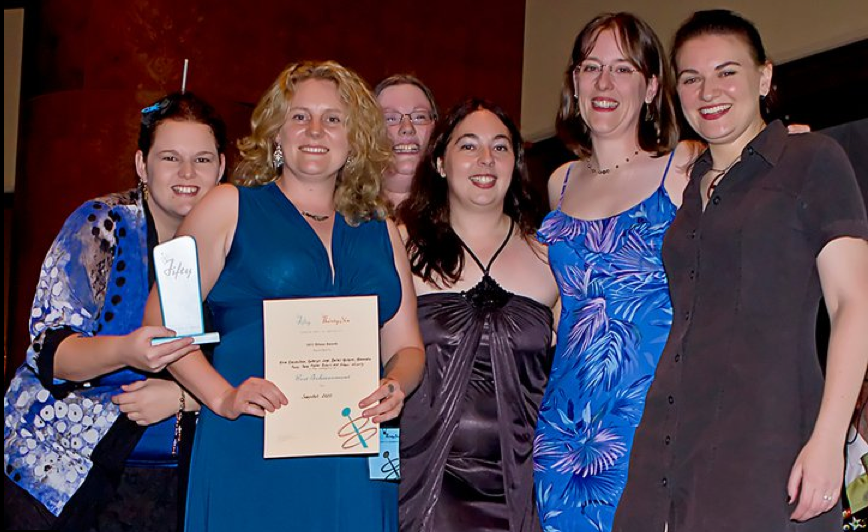
Best Achievement – Snapshot 2010 (which DID win! Well done to the Snapshot team, spearheaded by Kathryn Linge).

Full ballot and winners can be found here. (Photo of the Snapshot team by Sandra/Wing Chung)

The Tin Ducks were also very good to us, with the following works on the ballot:

Best WA Professional Short Written Work – “Little Arkham” by Martin Livings (from Worlds Next Door)

Best WA Professional ProductionAustralis Imaginarium and Worlds Next Door

Best WA Fan Written Work – Tehani Wessely (and I was so delighted – and shocked! – to win this category and take home one of the beautiful trophies).

Best WA Fan Production – Snapshop 2010

Full ballot and worthy winners found here.

That was April! In May we saw the announcement of the Aurealis Awards in Sydney. I was a judge again in 2010 and decided to do a flying visit to Sydney for the awards. I’m really glad I did and it was a wonderful night. Congratulations not only to the nominees and winners but also to SpecFaction NSW, who took on a big job and did it well!

FableCroft had two stories in the Young Adult short story shortlist, “Inksucker” by Aidan Doyle and “Nine Times” by Kaia Landelius and Tansy Rayner Roberts (from Worlds Next Door). Sadly they missed out on the gong but when the winner is Margo Lanagan, it’s a good way to lose! 🙂

Full Aurealis shortlists and judges reports here. (Photo of the Fantasy Short Story judges, Tehani, Simon Petrie and Natalie Maddalena, by Cat Sparks)

There is one more Aussie awards batch yet to come, with the Chronos Awards (the Victorian equivalent of the Tin Ducks) in Melbourne early in June. Shall look forward to more great Australian works being celebrated there!

Swancon: the conversational con

(Photo via Cat’s camera but pretty sure Alan Baxter took it!)

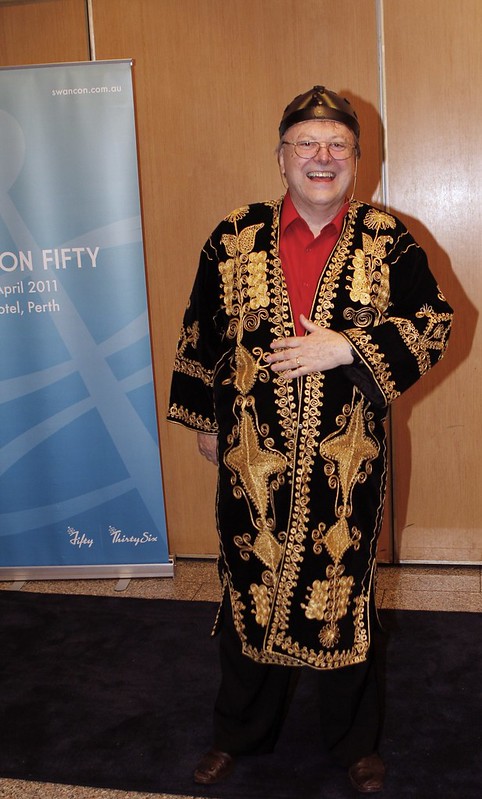
Swancon Thirty Six | Natcon Fifty is over. Actually, it finished on Monday, but I’ve needed a couple of days to become almost human again! Tuesday also saw us have a major car breakdown which meant Dirk Flinthart and I spent three and a half hours on the side of the Kwinana Freeway instead of enjoying the company of kids and friends on a lovely Rockingham beachfront, but anyway! Helen Merrick came to the rescue, taking kids home and then bringing food once we eventually MADE it home (after the most interesting tow truck ride ever!). Terri Sellen then provided more rescue, taking the Flinthart to meet his evening flight. I have good friends!

(Photo at pre-awards party by Cat Sparks) But Swancon, yes. It was a bit of a blur. We worked so hard in the lead up to the con, and during, that it was hard to actually enjoy it! Too busy I guess. Having said that, I’m glad I picked up people at the airport because it meant a little quiet conversation time. I enjoyed the guest luncheon on Thursday for the same reason, the room party in Terri’s room Friday night, and being the holder of the glow sticks for the Orbit | Gollancz sponsored pre-Ditmars cocktail party. All for the same reason – I got to chat with people. When I eventually spent some time on the TPP/FC table in the Dealer Room (which was as great as I wanted it to be!) I got to have more conversations, and if I didn’t get much time hanging out in the bar with peeps, I did still manage a few snatched minutes here and there. It was a very busy con, but it makes it worthwhile to know that the vast majority of people attending really did enjoy it!

I’ve rounded up as many con reports as I could below. Email me at fablecroft at gmail dot com to let me know of those I’ve missed or which are posted after! Happy to add them 🙂

Some entries may be friend locked, so my apologies if you can’t access those.

Ellen Datlow (photo by Cat Sparks):
http://ellen-datlow.dreamwidth.org/339174.html
http://ellen-datlow.dreamwidth.org/339444.html

Con-goers

http://philosophicallydisturbed.wordpress.com/2011/04/23/my-first-time-at-swancon/
http://prizedandreviled.blogspot.com/2011/04/swancon36natcon50-so-much-squee.html
http://www.alanbaxteronline.com/2011/04/26/swancon-36-natcon-50-report.html

http://www.alanbaxteronline.com/2011/04/29/swancon-36-natcon-50-followup-post.html
http://yiduiqie.dreamwidth.org/168504.html

http://yiduiqie.dreamwidth.org/168718.html
http://catsparx.livejournal.com/230607.html
http://mortonhall.livejournal.com/680796.html
http://randomalex.net/2011/04/26/reflections-on-natcon50/
http://petermball.livejournal.com/280745.html
http://paulhaines.livejournal.com/168191.html
http://mynxii.livejournal.com/816431.html
http://www.stephaniegunn.com/2011/04/23/swancon/
http://catundra.livejournal.com/160481.html
http://swancon.livejournal.com/188317.html
http://tansyrr.com/tansywp/the-con-of-conversations/

http://tansyrr.com/tansywp/on-awards-at-length/
http://roberthoge.com/archives/573
http://gemfyre.livejournal.com/1097337.html

http://alias-sqbr.dreamwidth.org/393834.html

http://alias-sqbr.dreamwidth.org/394029.html

http://alias-sqbr.dreamwidth.org/394384.html

http://alias-sqbr.dreamwidth.org/394533.html

http://alias-sqbr.dreamwidth.org/395247.html

http://alias-sqbr.dreamwidth.org/395268.html

http://flyingblogspot.com/2011/04/in-which-i-learn-things-about-safe-spaces/

SwanCon, MegaPodcasts and Ditmar Awards

http://stephbg.livejournal.com/610310.html

http://stephbg.livejournal.com/610618.html

http://arcadiagt5.livejournal.com/368569.html

http://flinthart.livejournal.com/144190.html

Swancon, Ditmars and a darn fine time

http://blog.martinlivings.com/?p=254

http://electricant.livejournal.com/122922.html

http://battersblog.blogspot.com/2011/05/glad-i-dont-live-there-but-nice-place.html

http://waqem007.livejournal.com/36485.html

Swancon and Perth (well, quokkas mainly)

http://kaelajael.livejournal.com/92978.html

http://networkedblogs.com/hkG1W

http://yiduiqie.dreamwidth.org/169022.html

And then there was Swancon

Swancon – Part Deux (or Stop Nagging Me, McDermott)

Swancon Booty

http://swancon.livejournal.com/191290.html

http://champagneandsocks.com/?p=39

http://kaaronwarren.livejournal.com/131222.html

http://kaaronwarren.livejournal.com/131474.html

http://kaaronwarren.livejournal.com/131653.html

On the Romance Writers Stream:
http://waxings.wordpress.com/2011/04/24/finishing-the-story/
http://waxings.wordpress.com/2011/04/25/lets-write-about-sex/

http://waxings.wordpress.com/2011/04/28/the-structure-of-a-novel/

On the EduStream and more:
http://tokenskeptic.org/2011/04/26/episode-sixty-six-on-swancon-interview-with-sean-williams-and-scifi-meets-education/

http://philosophicallydisturbed.wordpress.com/2011/04/28/mad-scientists-using-the-science-in-science-fiction-in-the-classroom/

Resources from the EduStream here.

Nicole R Murphy:
http://tillianion.livejournal.com/141811.html
http://tillianion.livejournal.com/142000.html
http://tillianion.livejournal.com/142186.html
http://tillianion.livejournal.com/142510.html

http://voyagerblog.com.au/2011/04/28/voyager-and-swancon-%E2%80%93-a-happy-combination/

Leece:
http://leecetheartist.dreamwidth.org/256170.html
http://leecetheartist.dreamwidth.org/256289.html
http://leecetheartist.dreamwidth.org/256657.html
http://leecetheartist.dreamwidth.org/256936.html
http://leecetheartist.dreamwidth.org/257251.html
http://leecetheartist.dreamwidth.org/257384.html
http://leecetheartist.dreamwidth.org/257551.html
http://leecetheartist.dreamwidth.org/258024.html
http://leecetheartist.dreamwidth.org/258086.html
http://leecetheartist.dreamwidth.org/258317.html
http://leecetheartist.dreamwidth.org/258694.html

Damian Warman on the Peter McNamara Award:
http://dmw.livejournal.com/152693.html

Ditmar, Tin Duck and Special Award winners:
http://www.locusmag.com/News/2011/04/ditmar-and-other-australian-awards/

Photos

At Swancon
Artisanat

Swancon2011-2

Tom Bicknell

http://www.flickr.com/photos/42956650@N00/sets/72157626579053570/with/5655884174/
Cat Sparks

Justina Robson
_MG_7895

http://www.flickr.com/photos/27513027@N06/sets/72157626479661075/with/5667457941/

IntotheSunJan02

The Chungs (many more to come!)

http://www.flickr.com/photos/orph3u5/sets/72157626449553187/with/5662998279/
orph3u5

http://www.facebook.com/media/set/fbx/?set=a.10150183070022649.316049.53346962648
Beyond the Trapdoor

http://www.lympago.com/rdm_galleries/Swancon2011/index3.html

Leece

Natcon Committee and Guests

Tin Duck and Ditmar Winners

Lisa L. Hannett and Kate Eltham

Ellen Datlow