On indie press: Marianne de Pierres

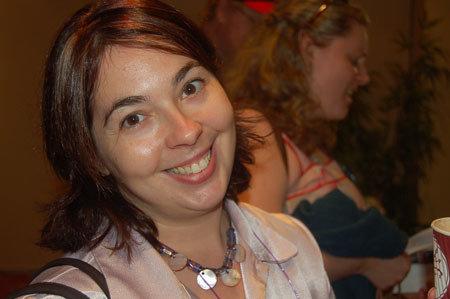
I’ve invited a number of people who have published in indie press and gone on to become professionals in the field to write about their experiences. Today, Marianne de Pierres shares her experience.

Like hundreds of writers, I owe a lot to small press. My first ever stories were published with Eidolon, and Cat Sparks Agog! series, magazines which are all now a part of Australia genre history. I know for a fact, that without those opportunities, I would never summoned the confidence or the inspiration to try and become a novelist. That knowledge solidified my opinion that indie publishers are not just welcome in publishing but are a complete necessity for the continued existence of story in written form. They are part of writing ecology.  And frankly, I’d hate to see where would be without them.

Many years after my first stories were published I was approached by an up and coming young publisher called Twelfth Planet Press who wished to compile a boutique collection of some of my short fiction. The journey I embarked on then was one of the most, enjoyable and enriching that I’ve had in my career as a writer. You can read my article about the experience here.

There was something so intensely personal and rewarding about being able to be more closely involved with every aspect of the project – from design right through to sales and marketing. It left me with a true sense of ownership and a lasting creative afterglow. I would do it again in a flash given the right publisher and circumstance.

All hail the Indies!

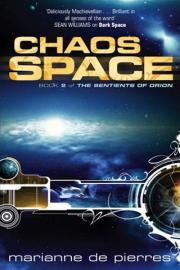
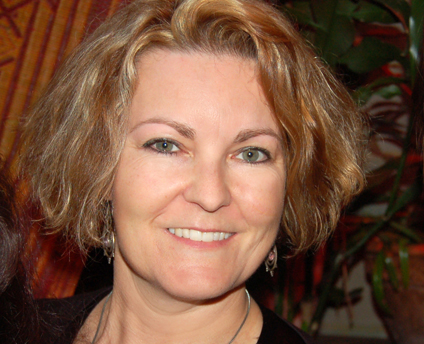
Marianne de Pierres is the author of the acclaimed Parrish Plessis and award-winning Sentients of Orion science fiction series. The Parrish Plessis series has been translated into eight languages and adapted into a roleplaying game. She’s also the author of a teen dark fantasy series and has a collection of interlinked short stories from Twelfth Planet Press.

Marianne is an active supporter of genre fiction and has mentored many writers. She lives in Brisbane, Australia, with her husband, three sons and three galahs. Marianne writes award-winning crime under the pseudonym Marianne Delacourt. Visit her websites at  www.mariannedepierres.com and www.tarasharp.com and www.burnbright.com.au

On indie press: Richard Harland

I’ve invited a number of people who have published in indie press and are professionals in the field to write about their experiences. In today’s post, Richard Harland considers the differences between indie and pro publishing.

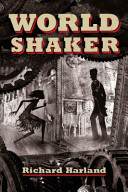
Most of my novels have been published by pro publishers (Pan Macmillan, Penguin, Scholastic, Allen & Unwin, plus Simon & Schuster and other overseas publishers for Worldshaker and Liberator), while most of my short stories have been published by indie publishers (in Australia, US, Canada and France). But The Vicar of Morbing Vyle and The Black Crusade were two novels that came out from indie publishers, Karl Evans and Chimaera; and I’ve had three stories that came out first in anthologies from HarperCollins, Penguin and Harper Voyager (as distinct from stories reprinted in pro anthologies). So I guess I’ve seen publishing from all sides—except one. I’ve been very very lucky with all my publishers and editors. I’ve heard some scary tales about high-handed, unsympathetic pro publishers, but I’ve never copped rough treatment myself. And I’ve heard scary tales about erratic, incompetent indie publishers, but I’ve escaped that too. Maybe there are differences that come out when things get ugly, but that’s outside my experience.

I guess the basic principle is that the more people pay you, the more you have to listen to them! Only my very biggest advance for a pro short story — novella, really — comes anywhere near my smallest advance for a pro novel, and that was for “The Heart of the Beast” in Tales from the Tower, Vol 1, published earlier this year by Allen & Unwin. And yes, in that case I did have to take in quite a few structural revision suggestions, as many as for my pro novels. But I’ve never encountered a pro editor who was unreasonable: suggestions are only suggestions, and while you’d be mad to turn them all down (for the good of your book, quite apart from the good of your future career), there’s always room for negotiation. American editors tend to be more blunt, Australian and British editors more
tactful, but nobody just lays down the law in my experience.

Indie publishers can sometimes be blunt, bull-in-a-china-shop blunt, but they’re not usually in a position to lay down the law. I think a good indie publisher tries to work with the writer; a pro publisher is more likely to say, we see a problem here, can you think of a way to deal with it?

I can’t remember a time when an indie publisher has said to me, this is great, but we can only publish if you make such-and-such major revisions. I guess that might be because my indie experience is mostly with short stories, and a short story either works or it doesn’t.

When it comes to copyediting and proofing, most indie editors really aren’t far behind most pro editors. Maybe I’ve been lucky, but I’ve found most indie editors very painstaking. Though nobody compares with the Americans — or at least Simon & Schuster in America — for sheer amount of care and trouble. Unbelievably thorough!

The worst thing about pro publication are the deadlines. Not so much the big first draft deadline as the little, later ones—for the various levels of revision to be completed, for checking, incidental material, etc etc. Everything is always needed by yesterday. I pride myself on never having missed a deadline, but hey, I can work all hours of the day only because I don’t have a second job.

The worst thing about indie publication — I suppose it’s the other side of the coin — is that publication schedules get changed and all sorts of unexpected things happen. I had one year when four magazines that had accepted my short stories all went down the gurgler, one after the other. I had almost nothing published that year. It’s nobody’s fault when publication gets postponed or axed altogether — it’s just the different conditions that indie publishers work under.

Actually, I wouldn’t blame any publisher, pro or indie, for anything—at least, not when I’ve had time to calm down and reflect! Indie publishers work for love—as an author, you just have to thank God they exist. For me, they’re my only means of getting SF and horror ideas out in the world. As for pro publishers, well, the people in the industry are there for love rather than money too, because no one in their right mind would put in so many hours of work for so little pay!

Richard Harland is the author of many fantasy, horror and science fiction novels, including Liberator, Worldshaker, the Eddon and Vail series, the Heaven and Earth trilogy, and the Wolf Kingdom quartet (winner of the Aurealis Award.) He lives in Australia. Visit him at richardharland.net.

On indie press: Cat Sparks

I’ve invited a number of people who have published in indie press and gone on to become professionals in the field to write about their experiences. Today’s post comes to us from Cat Sparks, who not only knows small press publishing as an author, but as an editor and publisher too. 

In 2005 I had the great privilege of attending a prestigious writing workshop in the US. One of the tutors was a writer I hold in great esteem but I had cause to argue with one piece of advice he offered the class. Never go with small press, he told us. Small press is below the professional writer, or words to that effect.

I argued. I pointed out that in Australia, if small presses didn’t publish SF short stories, no one would. Back then the internet was not the golden gateway it is now and cracking US markets via snail mail was a lengthy and troublesome process for my countrymen & women.

Years later the esteemed tutor approached me at a World Fantasy Convention room party with the express purpose of reminding me of that moment when I challenged him in class. You were right, he said. I’ve just signed to do a collection with a small press and I’m very happy with the arrangement. This author’s star was – and still is – on the rise, so he wasn’t settling for less than he was worth. Rather, the playing field had changed.

The term ‘small press’ can be misleading. The US’s Nightshade Books is considered a small press, yet it has produced titles with print runs of 80,000+. Most people would be shocked to learn how few books an Australian print run for a new author actually contains.

Small press fills a niche and as the publishing landscape continues to morph and evolve, those niches are getting bigger, wider and more varied. Major publishers are not the only major players any more. Readers are increasingly taking power for themselves and the industry is being forced to adjust itself accordingly.

I’m employed three days a week by a small press which is still in the process of adjusting itself to the e-book revolution. A couple of years ago it became starkly evident that we would have to tailor our products to suit a readership that wasn’t yet certain what it wanted. E-books? What formats? What distribution systems? How do these factors affect copyright permissions? We’re surviving OK, probably because we’re a small press rather than in spite of it. We were able to act quickly, reskill, adapt, think on our feet because we did not have committees to explain things to, boards to appease, shareholders to convince, etc. We just learnt what we needed to know, applied the knowledge and got on with it.

The age of the stately publishing gatekeepers is coming to a close. New auxiliary industries will spring up as navigating the oceans of unfettered self-published crap become the primary challenge for eager readers. How do I find the stuff I like to read? Power bases will shift, empires will fall, new ones will rise from the ashes. One thing amongst so many others seems a sure bet: small presses with identified readerships, myriad delivery systems and quality merchandise are certain to survive the flames.

Cat Sparks is fiction editor of Cosmos Magazine. She managed Agog! Press, an Australian independent press that produced ten anthologies of new speculative fiction from 2002-2008. She’s known for her award-winning editing, writing, graphic design and photography.

 http://en.wikipedia.org/wiki/Catriona_Sparks

http://www.catsparks.net

On indie press: Patty Jansen

I’ve invited a number of people who have published in indie press to write about their experiences. Today’s post comes to us from Patty Jansen, whose stories have been finding homes with many indie publications, and who has recently started self-publishing some of her work.

New authors and indie press: a few thoughts on publishing venues

When Tehani asked me to write about my experiences with indie press, it occurred to me that the term ‘indie press’ is the most incorrectly-used and loaded in publishing at this point in time.

As far as I’m concerned, indie press means small press not associated with any of the big guns in publishing.

Indie – small – press in Australia is very healthy. Not only do small presses publish almost all Australian SFF short fiction, they also publish the majority of new writers before they make it big, and often continue to do so afterwards, with special collections and boutique editions and fun projects that aren’t commercial enough for the big guys. I’ve sold a number of stories to Aussie small presses, most of them to Russell Farr at Ticonderoga Publications. Australian and overseas indie presses gave me my first sales.

Lately, the term indie press has become a euphemism for self-publishing as a way for an author to say that they’ve self-published without saying so. What are those authors afraid of, really? Do they want to sound bigger than they are? I will say it out loud: my name is Patty Jansen. I have self-published. OK, that wasn’t so hard. Where is the stigma?

The pro market for SFF in Australia is miniscule. If you write short fiction, you will need to go overseas for the vast majority of submissions at this level. Ditto if you write Science Fiction novels. I’ve sold enough short fiction at pro level to be a full member of SFWA, but none of it in Australia. When you submit at this level, you’re competing with many, many people and your chances are small, even when you’re an established writer.

I mention these three avenues – small press, major press and self-publishing – because I think they’re all valuable tools in a new author’s toolbox. Much as you may dislike the marketing lingo, the words audience and platform are mere synonyms for readers. Which sensible writer would willingly ignore opportunities to get more readers?

People who primarily buy their mass-published books at brick-and-mortar bookshops are different from those who will buy many of their, small press, books at cons or mail order them from the small press’ website, and both of those groups are very different from people who buy most of their books as ebooks. Like a Venn diagram, there are overlaps, but each group reaches into demographics the other groups don’t.

Small press in Australia is uniquely excellent. Small press can give you a leg-up or can give life to projects no one else wanted to tackle. Small press wins awards. Good small presses aren’t grabbers of rights. You may sell print or e-rights only, or rights revert back to you after a certain period. Small press often puts out books that are really beautiful, crafted with love and not conforming to a single publisher’s template.

My experiences with small presses worldwide have been mixed. For an author, it is definitely a try before you buy situation. Small presses are often run by single individuals and, being human, they overcommit, get sick, develop a severe hatred for accounting and lose enthusiasm. They don’t tend to warn their authors if this is going to happen. They may be skilled in certain areas and not-so-skilled in others. They may be simply too busy to give your work enough attention. Or they may be wonderful and do none of these things.

There are a lot of overseas e-presses springing up, and while as new author it may feel good to say I’ve been published by so-and-so-[never heard of]-press, it definitely pays to do some legwork and check out the press’ editing and marketing efforts. You probably won’t be the first person asked to sign a crap contract asking for rights the minuscule press will never use, for a crap return, with crap marketing and no efforts from the publisher to get reviews. And that is if the press honours all its commitments and actually publishes your material. I suspect that in some cases you’d be better off publishing the manuscript yourself.

Apart from the fact that self-publishing is a great way to keep out-of-print material available, and that it’s simply a lot of fun if you like the hands-on approach, I have discovered that the greatest advantage of self-publishing is the ability to give stuff away in formats that, with a bit of effort, resemble professionally published ebooks. You can do this for promotion or fun or whatever reason. Industry people can – and do – check out these give-aways. The chance that anything self-published will make it big is probably the same as landing a major publishing contract, but an upcoming author no longer risks damage to a future career by self-publishing. It is all about–and I’ll use another hated marketing term–exposure. In other words: readers.

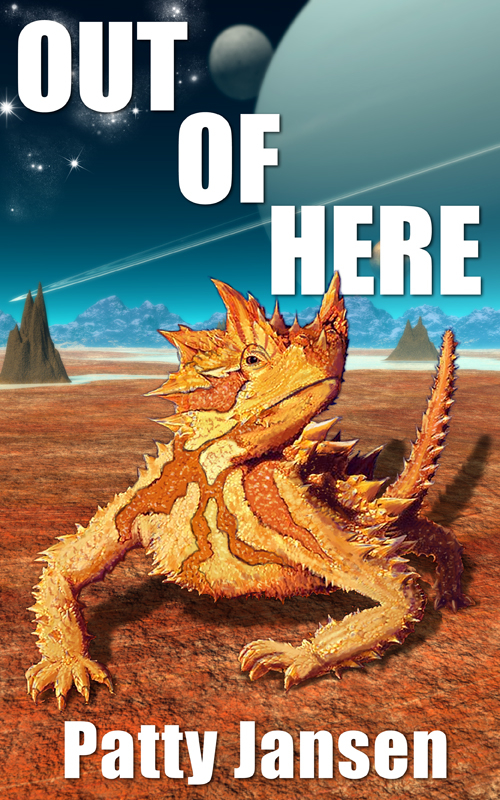
Patty Jansen is a writer of hard Science Fiction and daft fantasy.  Find information about her fiction and the science behind her stories at http://pattyjansen.com/  She is currently giving away free e-copies of her collection Out of Here, which contains short stories which have been published in various small presses. Patty is a member of the Science Fiction Writers of America and her story “This Peaceful State of War” won the second 2010 quarter of the Writers of the Future Contest, for which she recently attended the annual workshop in LA. She has also published in the Universe Annex of the Grantville Gazette and Redstone SF. In Australia, she has most recently published in Dead Red Heart, Midnight Echo, Belong and Andromeda Spaceways Inflight Magazine. While she continues to seek traditional venues for her short stories (watch this space), she has temporarily abandoned the agent search in favour of self-publishing novels, because it is a heck of a lot more fun.

On indie press: Simon Haynes

I’ve invited a number of people who have published in indie press and gone on to become professionals in the field to write about their experiences. Today’s post comes to us from Simon Haynes, an author who has experienced success professionally and is also experimenting with self-publishing. 

I’ve had a long association with small press. My first paid publication was an SF/horror story in issue one of Ben Payne’s Potato Monkey. “Sleight of Hand” won the Aurealis Award for horror that year, which I’ll put down to beginner’s luck.

From 2000 to 2003 I self-published three novels, which put me into contact with editors and artists active in small press. I chose self-publishing because I was writing for a niche market, one which trade publishers weren’t interested in. My goal wasn’t to sell lots of books, it was to prove there WAS a market, and then snag a deal with a publisher.

I helped set up Andromeda Spaceways in 2001/2002, and I spent almost ten years assisting in the running of the magazine. As a writer, if you ever get a chance to read slush … take it! Learning to evaluate stories – to decide which are publishable and which aren’t quite ready – was a massive help when it came to my own work.

In 2004 my self-pub gamble paid off, and I was offered a contract by a trade publisher. Over the next four or five years I worked with industry professionals to get four Hal Spacejock novels edited and released to bookstores. I absorbed as much knowledge as I could, and enjoyed every minute of the process.

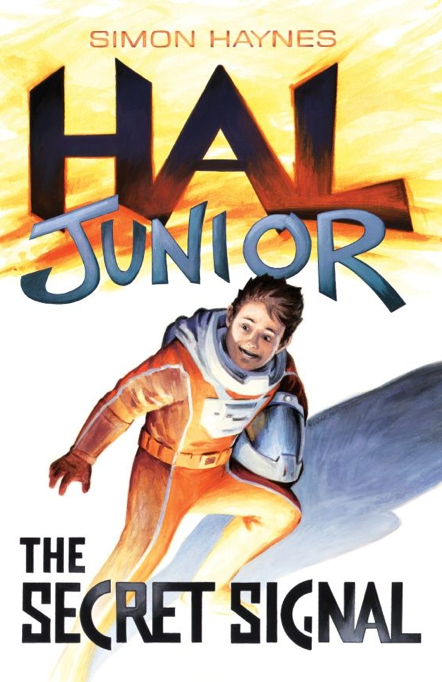
Fast-forward to 2011, when my next niche project was ready for submission. This time I’d written – of all things – a hard science fiction comedy novel for readers aged 9+. Okay, ‘hard sf’ is probably an exaggeration, but I tried for something as realistic as I thought I could get away with for that age group. (Hal Junior features a young lad living aboard a space station in the distant future. It’s the opposite of the kids-flying-spaceships scenario you get in movies like Jimmy Neutron).

Why did I write junior science fiction? I’ve always loved kids’ books, and it seemed a natural progression to me: mix things up a bit, graduate from writing for adults, and publish something to fire up younger readers. Plus I do a lot of school and library visits, where I usually speak to upper-primary kids about the magic of science fiction. It always seemed a shame to get them interested in SF, then explain all my books were for adults.

I submitted Hal Junior to a couple of publishers, but I was already debating whether to self-publish. When a certain someone familiar to readers of this blog (thanks T!) informed me Lightning Source had just set up in Australia, I wrote to the publishers I’d queried and asked them to delete my submissions.

Yes, I was that keen on self-publishing.

The term ‘indie-publishing’ appears to be fashionable these days, but I don’t think the terminology matters. I just think it’s important to write a decent book and employ professionals to bring it to market: especially the cover artist and editor.

Working with small press gave me the confidence to publish my own work. Without Andromeda Spaceways and the odd science fiction convention I’d never have met the network of contacts which are so vital to the future of small press in this country.

Here’s one example: Last night, at well past midnight EST, I had a three-way email exchange with several people involved in next month’s Conflux SF convention. On the spur of the moment they organised a launch for my new novel, agreed to hand out signed bookplates, and gave me the address to deliver copies of my book. Ten minutes later, via Facebook, someone else attending Conflux agreed to do a reading. (Thanks Gillian, Mary, Karen and Devin!)

That’s why small press is strong in this country. We all work together.

Simon Haynes was born in England in 1967. He moved to Spain with his family in 1976, and enjoyed an amazing childhood of camping, motorbikes, mateship, air rifles and paper planes. His family moved again in 1983, this time emigrating to Australia. 

From 1986-1988 Simon studied at Curtin University, where he graduated with a Bachelor of Arts in Film, Creative Writing and Literature. Simon returned to Curtin in 1997, graduating with a degree in Computer Science two years later. An early version of Hal Spacejock was conceived during the lectures.

Simon divides his time between writing fiction and computer software, with frequent 25-40km bike rides to blow the cobwebs away. His goal is to write fifteen Hal books (Spacejock OR Junior!) before someone takes his keyboard away. Find out more at www.spacejock.com.au

On indie press: Martin Livings

I’ve invited a number of people who have published in indie press to write about their experiences. Today’s post comes to us from Martin Livings, a well-known name in the Australian speculative fiction field. 

My bookshelf is filled with mammals!

Sixty five million years ago, the world was dominated by enormous coldblooded creatures. These mighty beasts roamed the lands and swam the sea, and even flew the … airs? At any rate, they, like, totally ruled the Earth. But there were other creatures there too, small, furry animals that mostly lived underground. They may have been minuscule compared to the kings of the world, but they were fast and smart and nimble and, importantly, adaptable.

Then the thunder lizards died out. Nobody knows exactly why. Some say climate change, others a comet striking the planet. A few even suggest the rise of a Justin Bieber-style dinosaur, and the rest simply lost the will to live. At any rate, the enormous reptiles faded into pre-history, and we mammals rose in their place. Small and adaptable defeated huge and restricted. We were the kryptonite to their Superman, the paper to their rock.

Sixty four million, nine hundred and ninety nine thousand, nine hundred and eighty one years later, I was published for the first time. And by a mammal, not a dinosaur.

I keep a shelf of books and magazines that I’ve been published in, right here on my computer desk. They’re arranged there to remind myself why I keep writing; it ain’t for the cash or the chicks, after all. And you know what? All bar one were put out by indie publishers. My first two stories appeared almost concurrently in 1992, fighting one another for precedence, one in Aurealis and one in Eidolon, both published by independents. Glancing across the spines of the publications on my shelf, I see indie press after indie press; Agog, Mirrordanse, CSfG, Altair, Brimstone, Ticonderoga, Twelfth Planet, Morrigan, Eneit, Fablecroft, Tasmaniac, Blade Red, Apex … it’s like a who’s who of local independent publishers, with one or two internationals thrown in for good measure. I look at these books, almost twenty years of working with indie presses, and I see … yes, furry little creatures hiding in burrows.

Stretching the metaphor a bit? Maybe, but let’s take a look at indie versus mainstream. Firstly, indie presses are small. Which would seem like a disadvantage, but it really isn’t. Smaller can mean that you can take chances, experiment with form and content in a way that the large mainstream publishers simply can’t afford to do. When you have a print run of a million books, that book had better sell a million copies, and thus appeal to a million people. Lowest common denominator becomes an absolute business necessity. When your print run is a hundred, you can publish things that are less generic, more daring. Tightly themed anthologies like, for example, Morrigan’s Scenes from the Second Storey, based around songs off an album by the God Machine, could never have been published by a mainstream dinosaur. Morrigan have done not one, but two excellent anthologies on this theme. Two books we’d never have seen, if it wasn’t for the mammals. I could go on; Agog’s Daikaiju books, Ticonderoga’s Scary Kisses, Fablecroft’s Worlds Next Door all thanks to small furry animals. The most adventurous, challenging and fantastic fiction comes out of the indie presses, simply because it can. And long may it continue to do so.

Another advantage the mammals have over the dinosaurs is adaptability. The larger you are, the harder it is to cope with change. With the recent rise of the e-book, mainstream publishers are struggling to adapt to a whole new market, a whole new way of selling books. But the indies have taken to it like a duck to water. After all, taking paper out of the equation must be a godsend to the average independent publisher, no longer having to deal with the dramas of print runs, the costs involved, the postage, occasional stuff-ups (I absolutely treasure my contributor’s copy of Twelfth Planet’s New Ceres Nights, which has the entire book bound upside down! I tell you, it’ll be worth a fortune one day!). E-books are becoming not just an acceptable alternative for indie publishers, but in many cases it’s becoming the standard form, with a print run as a secondary option. What threatens the dinosaurs provides nothing but opportunities for the mammals.

But you know what I think raises indie presses above the mainstream ones the most? The fact that they’re not doing it to make money (though it’d be nice if they did!), but because they’re entirely passionate about what they do. Why else would crazy, wonderful people like Alisa Krasnostein, Russell B. Farr, Tehani Wessely and Mark Deniz, just to name four, continue to put themselves through the pain and suffering? Why would new publishers, like Craig Bezant’s Dark Prints Press, go into it with their eyes wide open, filled with horror stories from the existing presses? These people are clearly dedicated to what they do. They must love it, or else they wouldn’t be doing it, it’s as simple as that. And thus their editors are quite simply the finest I’ve ever worked with. I’ve learned more about writing by having my work covered in red pen by editors like Jeremy G. Byrne and Angela Challis than I ever did through reading or writing or, heaven forfend, attending some sort of creative writing course. With broad crimson strokes, the editors pretty much taught me everything I know today. Even my one mainstream dinosaur of a book, my novel Carnies from Hachette Livre, was painstakingly edited by the amazing Sarah Endicott from Edit or Die and ex-publisher of Orb Magazine, so it still inevitably arcs back to the indie presses. And so that’s the third advantage of these mammals over the dinosaurs. They’re warm blooded.

(What? Oh yes, I know dinosaurs were probably warm blooded as well, but, y’know, for the sake of the metaphor, let’s say they weren’t, okay? Geez…)

Indie presses are, in my opinion, the most fantastic place for writers to grow and develop, because they’re allowed to there. The shoehorning into genres, the stereotyping into particular kinds of writing, the pandering to a public with apparently-severe attention deficit disorder and an obsession with anyone called Kardashian … none of this is present in the indie press. What we have instead is freedom, and creativity, and support, and a genuine camaraderie that warms the heart in an increasingly cutthroat world. I look at my shelf, and the mammals that inhabit it, and I feel privileged and proud to have worked with them, and hope and pray to continue to do so in the future.

Of course, I wouldn’t mind a couple of dinosaurs up there at some point to make things interesting. Everyone loves dinosaurs, after all.
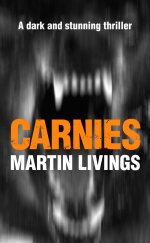
Perth-based writer Martin Livings has had over sixty short stories in a variety of magazines and anthologies. His short works have been listed in the Recommended Reading list in Year’s Best Fantasy and Horror, and have appeared in both The Year’s Best Australian SF & Fantasy, Volumes Two and Five, and Australian Dark Fantasy & Horror: 2006 and 2008 editions. His first novel, Carnies, was published by Hachette Livre in 2006, and was nominated for both the Aurealis and Ditmar awards.

His next book will be Living With the Dead, a collection of short stories, to be published by indie publisher Dark Prints Press in 2012.

http://www.martinlivings.com 

(c) Martin Livings 2011
On indie press: Alan Baxter

I’ve invited a number of people who have published in indie press in its various forms to write about their experiences. Today’s post comes to us from Alan Baxter, an author who has experienced some different aspects of indie publishing. 

When Tehani asked me for a guest post on indie press I was happy to oblige. I’m a huge fan of the small and indie press scene for a lot of reasons. The people involved are invariably passionate about their work. As a writer that’s very satisfying, as you know those people are buying your work because they love it and they want to share it with others.

The indie scene also gives authors a chance to get things into print or published online that would otherwise never find a home. Indie press can take chances the bigger publishers won’t risk. They can put together themed anthologies that people enjoy but larger presses avoid due to the work involved in getting stories, producing and marketing them. I love to write for that kind of project.

I know for a fact that being published in the small and indie press has directly helped my career. I’ve had people tell me they bought and enjoyed my novels because they had already enjoyed my short fiction. And vice versa, people have sought out my short fiction after reading my novels.

It’s also true that success with indie press helps to generate success in other areas of writing. Bigger publishers will pay more attention to people who have run that indie gauntlet. It’s hard to get noticed otherwise. After all, if an editor of a publication, however small, has bought a story from someone, that author must have some skills worth considering. And the better reputation the indie press has, the more vicarious credibility is passed onto the writers whose work they buy.

I’m still enjoying a slow build in my career. I’m becoming a better writer all the time by practicing my craft and I’m finding success with higher profile publishers as a result. But all this is built on the back of indie and small press success. I’ll never forget that and will always try to write for indie press as often as time allows. They produce quality stuff, from talented authors and their publications are always worth reading. They support authors at all stages of their careers, but especially emerging authors. It’s certainly how I got my start. They deserve our support in return.

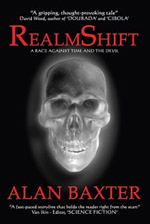
Alan Baxter is a British-Australian author living on the south coast of NSW, Australia. He writes dark fantasy, sci fi and horror, rides a motorcycle and loves his dog. He also teaches Kung Fu. His contemporary dark fantasy novels, RealmShift and MageSign, are out through Gryphonwood Press, and his short fiction has appeared in a variety of journals and anthologies in Australia, the US and the UK, including the Year’s Best Australian Fantasy & Horror. Alan is also a freelance writer, penning reviews, feature articles and opinion. Read extracts from his novels, a novella and short stories at his website – http://www.alanbaxteronline.com – and feel free to tell him what you think. About anything.

Recent publications include Murky Depths, Wily Writers, Pseudopod, Midnight Echo and a variety of anthologies from publishers like Coeur De Lion, Ticonderoga Publications, Dark Prints Press, CSFG Publishing, Seven Realms Publishing, eMergent, and Kayelle Press. Also, the non-fiction writers’ resource, Write The Fight Right.

On indie press: Alisa Krasnostein

I’ve invited a number of people who have worked in indie press to write about their experiences. Today, Alisa Krasnostein of Twelfth Planet Press talks about her ongoing indie journey.

I fell into indie publishing by accident. A friend of mine where I was doing postgrad, Barbara Robson, was getting her first publications in places like AntiSF and ASIM and that was how I first found out we even had a scene here in Australia. After finding out more about it, I joined the ASIM cooperative. I’d been noodling around writing and editing science nonfiction and was really interested in learning how to edit fiction and also to see how a magazine worked. I slushed for about a year at ASIM before I coughed up my entry fee to the cooperative and spent another year seeing the backroom secrets of running ASIM. In the meantime, I’d started up ASif! as a means to provide more dynamic criticism of the local scene.

I always look back nostalgically at the time I spent at ASIM. I made some lifelong friends in the cooperative, several of whom have had large roles and influence in the founding and evolution of Twelfth Planet Press. After learning the ropes and the obstacles for small press during my time at ASIM, I wanted to have a go at it myself and see what was possible. And so without ever having edited an issue of ASIM, I had a go at publishing myself with two electronic projects – New Ceres and the YA magazine Shiny (coedited in various combinations with Tansy Roberts, Ben Payne and Tehani Wessely). I learned a lot from both of these projects and I’m very proud of the work that they produced. But back then epublishing, whilst promising to be something, was still too out on the cusp and didn’t really get much circulation.

And so the Twelfth Planet Press label was born and our first anthology 2012 which I coedited with Ben Payne, was printed. And from there it has been one wild ride. In a blink of an eye we’re now working on getting our 15th book in four years to the printers! I think a major highlight for me was having a booth at Worldcon last year in Melbourne and having so many of my friends, mentors and supporters come by to say hi and stand in under the Twelfth Planet Press banner. Because it hasn’t just been my labour of love. And that’s probably what I love most about small press – it’s so personal. I love the synergy of working with other editors, designers and writers and interacting with our readers first hand at the sales end.

I have made so many lifelong friends and found so much to energise, inspire and challenge me in indie publishing. I love the freedom I have to take an idea and run with it. And I am always humbled by how generous people are with their time and expertise. Because without the in kind investments that others have made, and continue to make, in Twelfth Planet Press, it wouldn’t be where it is and wouldn’t have produced what it has.

Sure there’s the downer parts of indie publishing – I’m still yet to see most of the money I have invested come home again. Distribution is hard. It’s a bumpy and challenging time for publishing as an industry. And the short story is a niche market. But those also work to make better products, sharper plans and a clearer vision. And, I love a challenge.

Alisa Krasnostein is an environmental engineer by day, and runs indie publishing house Twelfth Planet Press by night. She is also Executive Editor at the review website Aussie Specfic in Focus! and part of the Galactic Suburbia Podcast Team. In her spare time she is a critic, reader, reviewer, runner, environmentalist, knitter, quilter and puppy lover.

On indie press: Lee Battersby

I’ve invited a number of people who have published in indie press to write about their experiences. Today’s post comes to us from Lee Battersby, a well-known name in the Australian speculative fiction field. 

I’ve always loved short stories. My first SF book — which I still own, thirty mumble mumble years later — was a collection called SF Stories for Boys put out by Octopus Books in the 70s. I met Asimov for the first time in that book, and Harry Harrison, and began a thirty year obsession with a just-about-forgotten Australian author named Frank Roberts, whose story “It Could Be You” freaked the bejesus out of me, as well as foreseeing the logical extrapolation of reality TV forty years before the proliferation of shit-awful Mastersurvivorbrotherloser clones forced me to join Murdoch’s evil Pay TV empire.

When I began writing, properly, because I wanted to be a writer, I wanted to write short stories above all. My first publication — a poem — was in 1989, and I’ve written just about everything in the last 20 years: poetry, stand up comedy, jokes, advertising copy, educational material, interviews, reviews, articles, theatre, film scripts, late notes, apologies, novels, death threats, legislation, instruction manuals… But I always come back to short stories. I love to read them, I love to write them. I love to edit collections of them. And when I’m gone, and nobody remembers who I was, and those who do remember are pretending not to so people won’t pity them, I want just one “It Could Be You” left behind to fuck up the mind of someone young in my name. Consider it my black-hearted little gift to the Universe.

Somewhere, whilst I was growing up in small-town Australia, the publishing world changed when I wasn’t looking. The SF magazines that had been the bastion of alternative expression during my youth — all those second hand copies of If and Galaxy and New Worlds I’d been sniffing out — went broke, and those that remained became increasingly conservative. By the time I hit Uni aged 18, every copy of Analog I read felt like every other copy of Analog, and so did Asimov’s, and F&SF, and they were the only ones I could find on a newsstand. Conservative ideas expressed with the most conservative words, in ABC plots where nothing was wild, nothing was untamed, and the ghosts of Sladek and Aldiss and Bester were long forgotten. I’d grown up with the understanding that art existed to push the envelope of what was conceivable, and even if I couldn’t yet articulate it, I could point to Gahan Wilson, to Spike Milligan, to Alice Cooper and HR Giger and David Bowie and Charles Addams and Rene Magritte and shout, “Them! It’s meant to be like them!”

Art is not comfort food. Art should never be comfort food.

But everything I read tasted like the literary equivalent of a microwave cheeseburger: glaggy, half-cooked, and deeply, deeply unsatisfying. And soon enough, you end up sitting on the couch wondering why the hell you spent money on something so awful when, if you’d expended a little bit of effort, you could have made something much more enjoyable from scratch.

In 1990 I bought the first issue of Aurealis in a little newsstand in the centre of Perth because my bus home was late and I ran out of reading material. And promptly had an “It Could Be You” moment. For the first time since I was nine years old, SF fucked me up again.

Not because the stories were at the cutting edge of brilliance (although I remember them as being, on the whole, pretty good). But because they were Australian. There was no internet in 1990, no online ordering, no e-zines, no way for me, as a poverty-stricken student (And I was poor. Bloody poor. Ask me about it sometime) to connect with an SF community: I couldn’t even afford the membership dues for my university SF club. So all I had to go on was what I read, and there was nothing, not a bloody thing, to indicate that Australians wrote SF. Like acting careers and joining the space program, it was just something other people did. In my world, in my family, you didn’t hold such hopes for yourself. My family and I, well, these days the best you can say is that we share the same basic genetic structure and we live on the same continent.

It took me eleven years of doing other things, but when I started writing SF with a sense of purpose in 2001, I aimed for Aurealis. And in doing so, I connected with an SF community that shared my passion for that mad, wild, alternative SF style that had fuelled my childhood imagination (I discovered The Goon Show the same week I was given that first SF book. And people wonder…). One of the writers from that first issue of Aurealis is now a good friend, one is a peer I look up to and whose works continue to inspire me, and one I still see at the occasional convention. But we know each other, and can sit and share a drink should we so choose. It’s hard for people within our genre, I think, to understand how special that is, to be able to form a relationship with an artist outside the scope of their work: we take it for granted because the SF genre has created a tradition of conventions and intimate contact, but there’s still something visceral for me, as an artist who still aspires in so many ways, to share space with those who serve as pathfinders for my own artistic ambitions. And those writers I first read in 1990 are all still writing short stories, and all still stretching the boundaries of what they can accomplish in the short form, in their various ways.

But why the fascination? Why do I still write and read so much in the indie press? For the same reason why my workmates have never heard of the bands I listen to, or the comics I read. Because the core of the genre has become conservative, and the government of our thoughts has become centralised, and the walls of the establishment have become higher, and thicker, and more soundproof. Outside, where the barbarians live, in the small presses, the chances of failure are greater, and the readership is smaller, and an artist can look at the world in a way that scares or damages or inspires the wild thoughts of others, and find a home for those thoughts without worrying what effect it will have on their market penetration. Because the fringe is where the fun is. Magazines live and die like mayflies. Entire careers flourish, flower, and die without a single book deal being struck. Chaos is part of the dynamic. Chaos is part of the charm.

And I love it. I love it all. I love it to the detriment of my career: my peers, those who sold their first stories at roughly the same time as me, and whose careers have similar time lines, are striking those book deals, and publishing their novels, (And good on ’em, too. Just because I love shorts, doesn’t mean I don’t want one of my own) and I have, in many ways, fallen behind them. But I keep turning on the computer to find the guidelines for an anthology of gay-werewolf-pilot stories staring me in the face, and as much as I don’t want to, as much as I know I should be adding another 10 000 words to the novel-in-progress instead, still I wake up one morning and think, “If he’s only gay when he’s in wolf form…” and off I go again.

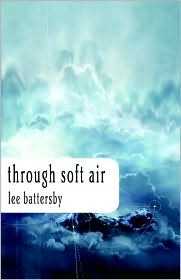
Lee Battersby is the multiple-award winning author of over 70 stories, in markets throughout the US, Europe and Australia. A collection of his work, entitled Through Soft Air, has been published by Prime Books. He currently lives in Mandurah, Western Australia, with his wife, writer Lyn Battersby, and an ever-changing roster of weird kids. He currently divides his writing time between novels and short stories, and tutors the SF Short Story course for the Australian Writers Marketplace Online. He can be found at www.leebattersby.com and is unhealthily addicted to Lego and Daleks. 

On indie press: Tansy Rayner Roberts

I’ve invited a number of people who have published in indie press and gone on to become professionals in the field to write about their experiences. Here, Tansy Rayner Roberts shares her experience.

Indie press caught me when I fell.

We didn’t call it indie press so much back then, in the early days of the new millennium. Before a firm rebranding, it was small press and proud. But after my first professionally published novels sank, crashed and burned and I found myself having to reassess whether I was a writer or not, it was small press that gave me a community to belong to while I built my skills up to the next level.

I embraced the short story, and wrote a bunch of them, mostly published in tiny little ‘zines that few people had heard of then, let alone now. I also joined the Andromeda Spaceways collective and learned about publishing a magazine from the ground up (spoiler: it’s really hard work).  Later I edited YA e-zine Shiny and played in the New Ceres paddling pool, two projects that were integral to the launch of (World Fantasy Award nominated) Alisa Krasnostein’s indie publishing house, Twelfth Planet Press. My goals kept shifting: I wanted to make sure I had something published somewhere, every year, and then it was all about getting that novel career back, and one of the things that had to be sacrificed was my involvement in making small press happen for other people.

Also, there were babies. Actual babies that needed my time and attention. (spoiler: they are hard work too. Who knew?)

Then, finally, the novel career came back, and contracts were signed. Deadlines. Real books with actual distribution and publicists and that sort of thing. I was playing in the Big Kids Playground again.

But just because I had promised myself not to get involved in the making of small or indie press again didn’t mean that some of my work didn’t have a place there. As Alisa built up Twelfth Planet Press into something that was attracting global attention, my stories found a home there, one after the other, until I realised that what with all my novel deadlines and baby juggling, I was pretty much only writing short fiction when Alisa asked me to. And it seemed, I had finally got good at it – after years of writing short fiction that sank without a trace, the stories I sent to Twelfth Planet Press started to get attention. Award nominations. Positive reviews. When you haven’t had those things for a long time, they make you giddy!

I wrote a story I loved, “Siren Beat”, for a friend’s charity anthology project, and when that didn’t get picked up by a publisher, Alisa gave “Siren Beat” a home. It won me my first international award. When she asked me to produce a four story collection for her Twelve Planets project, I knew that I had to do it, even if it meant taking a chunk of precious time out of my novel deadlines, which had become a little bit deadlier upon the birth of my second daughter.

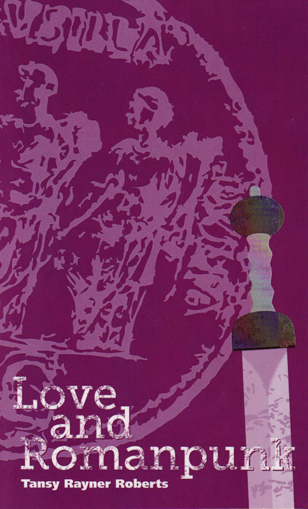
Without the existence of Twelfth Planet Press, I wouldn’t have written those stories, into which I poured all of my love and obsessions and annoyances with Roman history, the other career path that I had been passionate about, a decade ago. Love and Romanpunk is a beautiful book, and one that has absolutely no place with a big pro publisher. It also gave me a breath between big fat fantasy novels, and serves as a wonderful introduction to the kind of work I write, for those people who are likely to balk at a big fat fantasy novel or three.

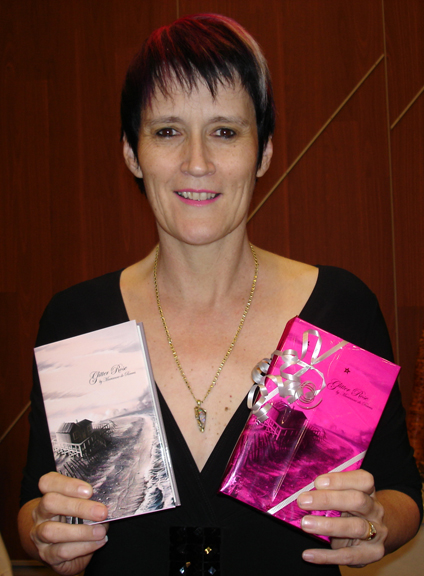
I get so irritated that the current wave of self-publishing has taken on the label ‘indie’ and devalued it. To me, indie publishing involves a publisher who finds the work that will appeal to a niche audience, the editor who hones it and makes it better, the cover artist and designer, the proof readers. And sure, some of those are the same people, and it’s very likely none of them are getting paid for their work (yet) but it’s a business that contributes some amazing work to the field. To me, indie publishing is the field that brought me the gorgeous restaurant novels by Poppy Z Brite, the collections of Kelly Link, Glitter Rose by Marianne de Pierres, and the WisCon Chronicles. Maybe I’m just some grumpy old pedant railing against the internet, but I don’t see why self-publishing needs to take terminology that means something else, not when the stigma is peeling away from the self-publishing process in big wet chunks.

Self publishing is hot right now. But it’s not indie publishing, to me.

All this is not to say I haven’t had my dramas and disasters with indie publishing. Contracts to e-publish with no end clause, and a publisher who refused to negotiate any detail of said contract, forcing me to remove the work for publication. A publisher who dropped out of contact more than half a decade ago and yet still think they have the rights to put my work on the Kindle. Publishers who never produce the actual product, editors who don’t understand how the editing process works, and on one particularly awful occasion, a friendship lost because the author-publisher relationship became so deeply damaged.

But it’s a rare author who has a career longer than a decade and hasn’t picked up some horror stories along the way, and I can tell you that I have quite a few traumas attached to my experiences with pro publishers too (though not, thank goodness, recently).

Indie press doesn’t offer the big money, and it doesn’t offer major distribution, especially not in Australia. But for those works that are never going to appeal to the big business side of major publishing, it can lead to beautiful books, and the promotion of work that helps to build a writer’s reputation. For me, at a time when my pro novels are still confined to Australian and NZ territories, it’s rather glorious to have a little book that can fly to every corner of the world. Also, it’s purple.

I love Harper Voyager for everything they have done to relaunch my career, putting my heart and soul (and falling naked men, and frocks, and shapechanging animals, and magical cities) on bookshelves around the country, but they never gave me purple.

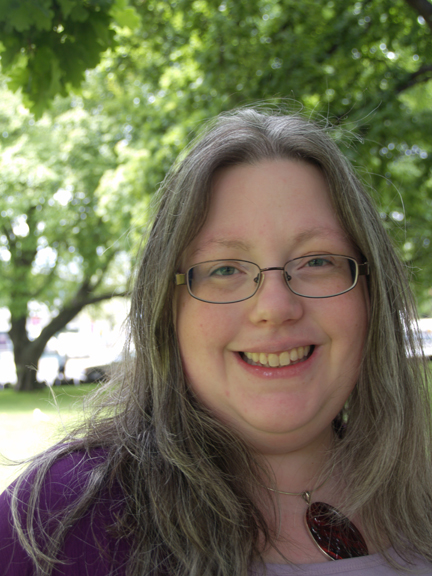
Tansy Rayner Roberts is the author of the Creature Court trilogy (HarperCollins Voyager) and short story collection Love and Romanpunk (Twelfth Planet Press).  In the last year she has won the Washington SF Association Small Press Short Fiction Award, the Ditmar for Best Novel, the William Atheling Jr Award for Criticism and Review, and the Aurealis Award for Best Fantasy Novel, among other awards.  It’s been that kind of year.  Tansy blogs at http://tansyrr.com and can be found on Twitter at @tansyrr.  You can hear her every fortnight on the Galactic Suburbia podcast.