I’ve invited a number of people who have worked in indie press and gone on to become professionals in the field to write about their experiences. Today, internationally-renowned editor Jonathan Strahan shares his journey.
Photo by Cat Sparks
I first encountered small presses in the mid-80s when I stumbled across The Space Merchants, Perth’s first specialist science fiction bookstore. The shop carried stock from all of the usual publishers, but occasionally something different would show up. An odd magazine, a rare book. The pages of Locus, which I only ever saw in Space Merchants and was the shop bible for news on what was happening in SF, often featured ads for books from Dark Harvest, Phantasia Press, Underwood Miller. Fine editions of exciting books that I wanted, and wanted quite badly.
I also became aware of an Australian small press scene around that time. Presses like Cory & Collins, Void, and Norstrilia were actively publishing science fiction by Australians that couldn’t find a home at major publishing houses. The 1985 WorldCon was held in Melbourne, and that led to slew of titles being published (well “slew” by the standards of the time), and directly inspired the Australian small press boom of the ’90s.
By the end of the decade I was eagerly reading small press magazines like Mark V. Ziesing’s Journal Wired and Stephen Brown’s Science Fiction Eye, and seeking out small press and hard to find books and magazines. It didn’t seem like such a large conceptual leap to become a small press editor and publisher myself.
Most of my friends attended the 1990 Swancon where we were strongly encouraged to “pub our ish”, to become fanzine publishers. It seemed like a fine idea, but when Jeremy Byrne, Richard Scriven, Robin Pen, Chris Stronach and I sat down to publish a fanzine it quickly evolved conceptually into a mix between Interzone and Journal Wired, a fiction magazine with cutting edge nonfiction as well (we hoped).
It was an exciting time. We worked ridiculous hours, became even better friends, made many new ones, and published a couple dozen issues of Eidolon to some acclaim. At the same time Dirk Strasser and Stephen Higgins started Aurealis, and Peter McNamara launched Australia’s only real professional independent SF press of the last 25 years, Aphelion. It paid real advances, had print runs in the thousands and its books were distributed nationally. It was the real deal, and was the link from the days of Australian small pressdom and the rise of the modern field dominated by Harper Voyager.
My own small press journey took several unexpected directions as the nineties drew to a close. Eidolon was running out of steam, and I’d travelled to the United States to work for Locus in 1997/98. That lead to my leaving Eidolon in 1999 and working exclusively for Locus for a while. I’d co-edited two anthologies with Jeremy Byrne in Australia, and that experience led to me editing anthologies in the US for Night Shade Books, Subterranean Press, and for Locus Press.
My experience with each of those small presses was different. When I first met Jason Williams and Jeremy Lassen at Night Shade they were young crazy pirate publishers who were willing to take a chance on my ‘Best of the Year’ aspirations and who helped to cook up ‘Eclipse’. I’ve always felt that their own indie-spirit was what made those books possible, and I continue to be grateful for that. Subterranean was quite a different thing, which started with my suggesting various projects to my good friend Bill Schafer, and slowly evolved into my editing or co-editing a whole bunch of books for him. And as for Locus Press – I’d edited two books for the late Byron Preiss where were suddenly orphaned. Locus Press was an act of kindness by Charles Brown and Liza Trombi, which saved them and had them see print.
I’m not sure if that really tells you the most important things about my two decades working with small presses. They were important to me because they provided a chance for different voices to flourish and because they were accessible. They were something I could be a part of and could contribute to. I am very sure I would never have become an editor without small presses and I’m equally sure I’ll never stop working with them.
Jonathan Strahan has co-edited The Year’s Best Australian Science Fiction and Fantasy series of anthologies for HarperCollins Australia, co-edits the Science Fiction: The Best of . . . and Fantasy: The Best of . . . anthology series with Karen Haber for Simon & Schuster/ibooks, edits theBest Short Novels anthology series for the Doubleday Science Fiction Book Club, and co-edited The Locus Awardsfor Eos with Charles N. Brown. He is also the Reviews Editor for Locus: The Magazine of the Science Fiction and Fantasy Fields, and reviews for the magazine regularly. He is currently working on The New Space Opera II.
I’ve invited a number of people who have published in indie press and gone on to become professionals in the field to write about their experiences. In today’s post, the amazing Shaun Tan, perhaps Australia’s most well-known author/illustrator, shares his incredible journey.
Photo by Jophan - licensed under Creative Commons CC BY-NC-SA 2.0
My career as an illustrator, writer and film-maker can all be traced back to very humble origins in small press Australian science ficiton.
My first illustration was published when I was 16, the cover of a small press SF magazine Aurealis, which I had discovered at my local newsagency in outer suburban Perth (now that I think about it, if it hadn’t been for than newsagency, my life may have taken a different direction!). I was very interested in SF at the time, and ended up being invited to illustrate many stories for different small press publications on the strength of early unsolicited submissions, including the stylish Eidolon, (which I eventually came to art direct some years later, since it was based in Perth). Lots of strange concepts came through the mail box that proved very challenging to illustrate, which was very good experience, especially as I had no formal illustration training. All of the artwork I produced was A4-sized, black and white, and paid a rather token $20 each, $25 if I was lucky. But I would have done them for nothing at the time because they were a great opportunity to be published, get to know other writers and artists with similar interests, and also be granted a certain license to develop novel illustration styles without any real commercial pressure or client briefing. Perth had (and continues to have) a fairly distinct community of some of the best SF writers, artists, academics in Australia; and I made many new friends through editorial meetings and annual conventions.
For me, the process of producing about two hundred story illustrations for small press magazines throughout the ’90s sharpened my interest in illustration as a conceptual practice, not simply a clever way of furnishing written words with attendant visuals. For instance, I became increasingly attracted to images that were independent from text in some way, and told their own story. As I moved further and further from literal depiction, I started to draw things that were not necessarily described by writers, and the experimental, non-commercial environment of small press SF meant that I could do this without much fuss; I don’t think I had a single rejection (although I did for my writing, which is a whole other story!). It’s much harder to be innovative when working in professional publishing as I later found out, because they need predictable outcomes, hence more conventional painting styles.
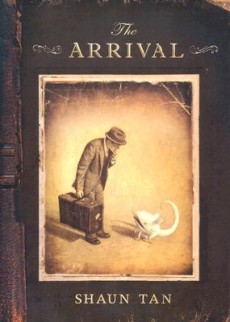
I occasionally produced illustrations that accompanied no story, other than what was impressed upon the reader’s imagination; stuff that was irreducibly mysterious, inviting (if not demanding) explanation from the viewer, given some stimulating clues. This inevitably fed into my later picture book work, and bigger projects like The Arrival and The Lost Thing.
When I finished an Arts degree at UWA, I was not sure how to go about getting work, and for a while had limited success. Eventually, I got a few jobs and my foot through the door – one was illustrating some books in a series of short young adult horror stories put together by Lothian Books in Melbourne, who have since become the publisher of all my picture books. Notably, I was hired on the basis of recommendations from the writer Steven Paulsen, a guy I had worked with pro bono on small-press SF newsletters – it’s a good example of how unpaid work can lead to paid work. Other writers such as Sara Douglass, Greg Egan and Sean Williams also helped me secure book cover commissions, with a good word put in by fellow illustrator Nick Stathopoulos, who I had also met through work in Eidolon, along with our mutual editor Jonathan Strahan. That commercial work ended up paying my rent, and allowed me to commit time to more experimental picture book projects, which have since become internationally recognised, leading to work with the likes of PIXAR, Blue Sky Studios and Passion Pictures (the latter resulting in an Academy Award this year). The Lost Thing trailer
So all in all, it’s fascinating to consider that all of this was seeded by a dodgy drawing of a robot kangaroo (folded into an envelope!) sent to Aurealis, back when I was still in high school. I can thank both my training as an illustrator, and the slow creep up the professional ladder, on a decade or so of small press work, and the support of everyone else behind these small experimental magazines, many of whom have gone on to international acclaim as authors, illustrators and editors.
Shaun Tan grew up in the northern suburbs of Perth, Western Australia. In school he became known as the ‘good drawer’ which partly compensated for always being the shortest kid in every class. He graduated from the University of WA in 1995 with joint honours in Fine Arts and English Literature, and currently works full time as a freelance artist and author in Melbourne.
Shaun began drawing and painting images for science fiction and horror stories in small-press magazines as a teenager, and has since become best known for illustrated books that deal with social, political and historical subjects through surreal, dream-like imagery. Books such as The Rabbits, The Red Tree, Tales from Outer Suburbia and the acclaimed wordless novel The Arrival have been widely translated and enjoyed by readers of all ages. Shaun has also worked as a theatre designer, and worked as a concept artist for the films Horton Hears a Who and Pixar’s WALL-E, and directed the Academy Award winning short film The Lost Thing with Passion Pictures Australia. In 2011 he received the prestigious Astrid Lindgren Memorial Award, honouring his contribution to international children’s literature.
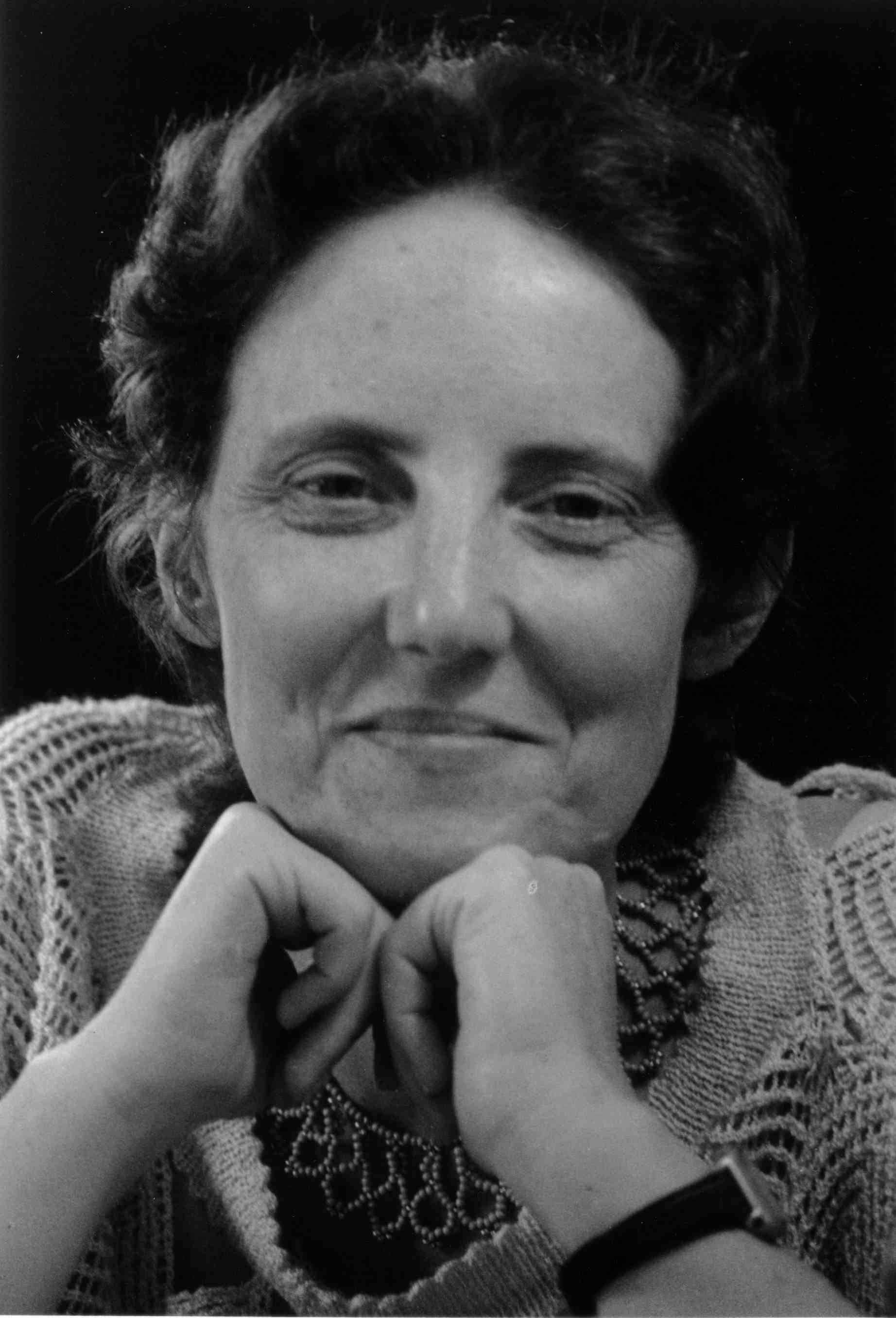
I’ve invited a number of people who have published in indie press and are professionals in the field to write about their experiences. Today, Angela Slatter shares some tips.
Introductory Caveat
Let me start out by saying that over the past six years I’ve worked with and encountered a lot of small and indie presses, both in the Land of Oz and overseas. So, this is not directed at anyone in particular – although if you happen to recognise yourself in any of this … well, maybe consider pulling your socks up … or pat yourself on the back, as the case may be.
I’ve had good experiences and I’ve had bad experiences and I think the most useful thing I can do is outline some traps for young players. Even though I no longer work for a writers centre, I still have a burning proselytising zeal to make people understand that an informed writer is a responsible writer and vice versa. So, I give you information; convert it to knowledge and use it wisely.
The Good
The good stuff about small/indie press? This has included:
fast turnaround times
lovely interactions with people who are not faceless drones in a giant corporation
the chance to have a lot more input on the appearance of my books than I would otherwise have had with a big publisher
I’ve made friends
Small/indie press is the home of the anthology!
in the case of my two short story collections, I have two books that are beautiful and of which I am very proud.
One really good reason why the small/indie* publisher is a good place for a newbie author to start is that they will take the short story collections that the big publishers won’t unless your name is Miéville. Big publishers have an economic imperative – they need to make money and experience has shown that no-name authors with short story collections very seldom make money (at least not for trade publishers). I’m sorry it’s true – deal with it. No one gets to buy their beers with artistic credit.
A small/indie press is most likely run as someone’s night job – it’s a matter of passion rather than economics. So, there’s a good chance that a small/indie press will be more willing to take a chance on you than one of the mega-publishers.
Here’s another thought: in the current economic climate where the biggies are having trouble (a) making their business pay and (b) coming to terms with the ebook threat (cue dah-dah-dah music, attach twirly waxed moustache to ebook), the savvy small/indie publisher can find a warm cosy home with a fireplace, two wing-back chairs and several tortoise-shell cats purring loudly.
The Bad
These are the highlights, things to be aware of, not an exhaustive list.
Appearance
A book is a product. It is designed to be sold. It should look like something for which someone will willingly part with their hard-earned cash. There are still some small/indie presses who don’t get this. A book from a small/indie press should look no different to one produced by a trade publisher. No different.
It should not look self-published. It shouldn’t have tacky stock images on the cover with the world’s ugliest font over the top. The binding should not be wonky, the margins and spacing should look exactly like those in a book from Hachette or HarperCollins. The book should be proofread professionally – “infelicities” in the text must be taken care of – and if an author supplies a list of amendments to make because they’ve found spelling mistakes, then please, please, please for everyone’s sake, those changes should be made.
And a publisher should never, repeat NEVER, add typos in.
Marketing
Small/indie presses don’t, by their very nature, have access to large sales and marketing departments, so you – I mean you ‘the writer’ and you ‘the publisher’ – need to work with what you’ve got. That’s pretty much word of mouth, social media, networking, launches and sales at cons, and your author’s efforts. Unless you want the book to sell to no one other than your mum, your author’s mum and your collective mates, then learn to market. Know how to write a press release. Work out what social networking channels can be of use to you – but please don’t blanket email everyone in the entire world to buy the book. (Can you say ‘alienating the marketplace’?)
Marketing doesn’t just happen. Authors and publishers need to take responsibility for the promotion and sale of the book. Authors, be prepared to do readings, interviews and appearances – and be prepared to organise a lot of these yourself. Even if you’re with a big publisher you’re probably not going to get a book tour. But you can do things to promote yourself and your book.
Publishers, if you’ve got a motivated, smart, talented, highly presentable author who is willing to go and do interviews, blog regularly, make appearances and basically pimp themselves out to promote their book then, FFS, take advantage of this situation. Thank all the gods, dark, light and plaid, that you have someone who is doing some of the hard yards and, here is the important bit, HELP THEM OUT. Make sure books are available if needed; send review copies to the places that can do the most good (yes, postage costs are an issue, so think carefully about a targeted rather than scatter-gun campaign); send the books to awards and competitions in a timely manner. Why is this under the Bad section? Because a lot of small/indie presses fall down here because they refuse to understand that the days of the Gentleman/Gentlewoman Publisher, when one did not stoop to anything as vulgar as marketing, are over. This may be your passion, but if you don’t run it like a business your passion will bite you on the arse.
Professional behaviour
Professional behaviour goes both ways and I’ve seen bad behaviour from authors and publishers. Small/indie press needs to be a collaboration betwixt author and publisher – it’s the only way it works properly. Why am I mentioning the below? Because it’s happened; all of it.
Authors: any time you feel a need to say ‘Don’t you know who I am?’ bite your tongue – go and sit in a corner and think about what you’ve done. You don’t get to demand cartons of Perrier or freshly peeled strawberries to be eaten off the stomachs of virgins. If you use the word ‘artist/e’ then go back into the corner and hang your head until I tell you to come out.
Publishers: do not stress your authors out by telling them ‘Maybe the books will make it, maybe they won’t’ a week before a book launch. Pay advances and royalties on time. Don’t try to “keep your authors in line” by belittling them. If you say you’re going to do something, fucking well do it.
Be a professional: if you want to stay afloat, if you want your business to grow, then behave like a professional.
Beware of the publisher who is a frustrated writer – this person will try to rewrite your story into the story s/he would have written if only s/he could write. Or they will tell you the story is great – but just add another 1500 words to it and change the ending a bit. In this case, run, run far away from this small/indie publisher.
In this arena, everyone gets to see everyone else’s psychoses. This is close quarters, baby! The thing is, your psychoses, your publisher’s psychoses, should not interfere with the business at hand: publishing books.
You may be a noob but there’s no need to get pwnd
If you want to try the small/indie press scene, here are some tips:
Who else do they publish?
If you’re thinking of approaching or have been approached by a small/indie publisher (or indeed a big one), then do some research. Who do they publish already? Check the internet; look at their site. Do you recognise any names? Do you fit in this list? Are you targeting them properly? Are they targeting you properly? Do your research.
Ask around
What experiences have other authors had with this particular publisher? Good? Bad? Indifferent? Keep in mind the sanity levels of the person you’re asking, of course, and take everything with a grain of salt. However, if five out of five authors say ‘Worst experience of my life, haven’t been paid a thing, the book was pulped and the publisher ran over my cat’, then thinking to yourself ‘Oh that won’t happen to me’ is probably a sign you deserve everything you get. Be wary!
How do their books look?
Look on the website and go into bookstores – what do this publisher’s books look like? Indistinguishable from a trade publisher’s product? Thumbs up! Indistinguishable from a Grade 5 art project? Thumbs down.
In conclusion, Watson
You will not become rich with small/indie press, but it can be a great starting point in your career. And the small/indie press is not hurt by having been the first home of an author who goes on to win awards and makes deals with big publishing houses. So, publishers, try to stay on good terms with all your authors (professional behaviour again!). They may remember you kindly, and in later years you may ask them for a story and they may say ‘Sure!’ and having their story in your anthology may well increase your sales, and help keep your press going along. Better that than for them to say ‘No, screw you. You inserted typos into my MS, you did no promotional work whatsoever, sent no books to reviewers/awards – I still haven’t seen a payment from you and am beginning to wonder if you did indeed publish my book!’
At the moment, the small/indie press is a hub of activity in Australia. It’s picking up the stuff the trade publishers are ignoring. The books are getting better and better as products, both in terms of content and appearance. The pond is small and I would like to see Australian small/indie presses working together to take over the world rather than just fighting amongst themselves over the small market we have here. If ever there was a portable genre, it’s spec-fic. We are stronger if we stand together.
I’m just saying.
* Gods help me, I just want to write ‘smindie’.
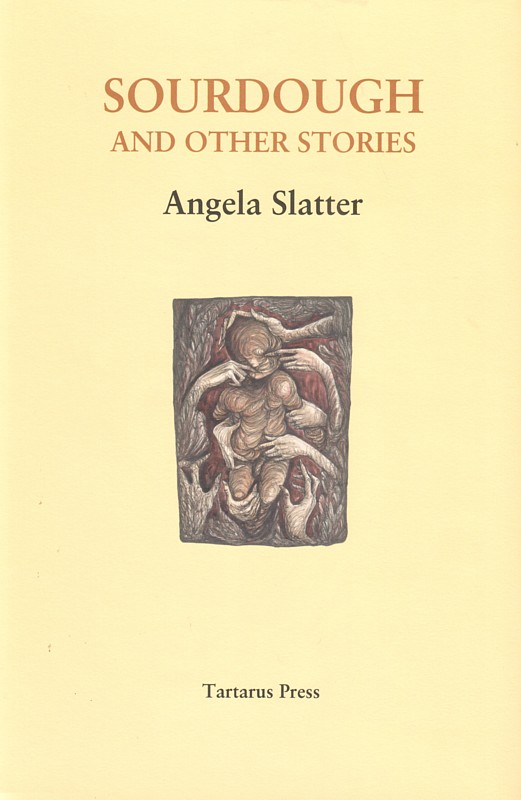
Angela Slatter writes speculative fiction. Her short stories have appeared in Dreaming Again, Steampunk Reloaded, Strange Tales II & III, 2012, Lady Churchill’s Rosebud Wristlet and Shimmer. Her work has had Honourable Mentions in the Year’s Best Fantasy and Horror anthologies and has three times been shortlisted for an Aurealis Award. She is a graduate of Tin House 2006 and Clarion South 2009, and she blogs at www.angelaslatter.com. She had two short story collections out in 2010:Sourdough and Other Stories (Tartarus Press, UK), which has been shortlisted for a World Fantasy Award for Best Collection, and The Girl with No Hands and Other Tales (Ticonderoga Publication, Australia), which won the Aurealis Award for Best Collection. In 2012, Ticonderoga Publications will publish her collaboration collection Midnight and Moonshine with fellow author Lisa L Hannett.
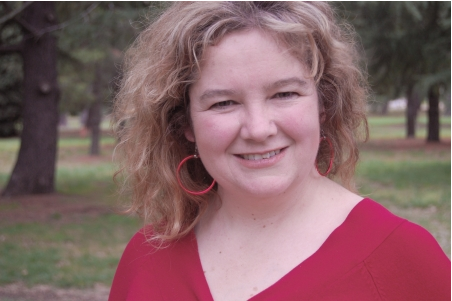
I’ve invited a number of people who have published in indie press and are professionals in the field to write about their experiences. Today, Sue Bursztynski shares her thoughts.
I’m on the ASIM co-op and have sold a few stories to other small presses – one to Tehani’s Worlds Next Door, of course, and one more recently to Specusphere, which is doing an anthology on the theme of myths and legends, to be published next year. I’ve decided to concentrate on my short fiction for a while and will be submitting to small indie presses, which are, right now, the best markets for short fiction.
But the one with which I have been most involved is Paul Collins’s Ford Street Publishing.
Paul, as most SF fans will know, has been writing and publishing for years. I remember when he was running the publisher Cory and Collins from his second-hand bookshop in St Kilda back in the 1970s and I was a customer, hoping to sell him a story or two for his magazine Void. It was, to the best of my knowledge, the first small press in Australia to publish SF/F novels and the first in Australia to publish heroic fantasy novels (Norstrilia Press came about six months later). Some of the Cory and Collins writers are still well-known today – Wynne Whiteford and Russell Blackford, for example. Keith Taylor was another of his writers.
These days he is running Ford Street Publishing, a small press which has published some big names as well as some new ones. The big names often write the sort of books they couldn’t do for a big publisher.
Dianne Bates, a well-known children’s and YA writer, for example, had written a book called Crossing The Line on the theme of self-harm, which the bigger companies hesitated to take. And who else but a small press was going to publish a book like F2M, co-written by Hazel Edwards, on the theme of sex-change? It was a delightful, funny, charming book which was as much about punk rock as about a girl who has decided she’s really a boy and wants to do something about it, yet who would have bought it but an indie press?
Sean McMullen has had the chance to write YA fiction for Ford Street, something he isn’t known for but does extremely well. George Ivanoff, best-known for his short fiction and education books, has written two novels for Ford Street. There is a new novelist, Foz Meadows, doing a trilogy that’s basically “vampires meets X-Men”.
And then there was my book, Crime Time: Australians behaving badly. Paul actually commissioned that. The original idea was Fifty Infamous Australians as a companion volume to Meredith Costain’s Fifty Famous Australians, but it ended up as a lot more than that. How many over-the-top children’s books about crime are there these days? The few I have seen are meant to help with homework, not to entertain, like mine. In fact, most of the big publishers just aren’t publishing kids’ non-fiction books right now, even though children often prefer non-fiction to fiction, because bookshops never know what to do with them. But Ford Street gave it a go.
Like other small presses, Ford Street has published short fiction. I persuaded my school to buy several copies of Ford Street’s Trust Me!, an anthology of multi-genre stories, because it give teachers a chance to use a story on a theme that will be useful – crime, humour, historical fiction, romance, SF… I wrote a piece of historical fiction, something I don’t often do, and loved the challenge.
Few large companies publish anthologies and when they do it’s usually by commission. Ellen Datlow said, at Swancon 2011, that her anthologies are by invitation only these days because she just doesn’t have time to read unsolicited work.
Small presses can afford to keep their submissions open, so new writers are discovered. That has to be a good thing.
Sue Bursztynski grew up in Melbourne’s beachside suburbs, where she still lives. As a child, she used to sit on the beach to write, but later learned to write anywhere she could sit down with a pen and paper. She was thrilled to get her first computer, which meant she could make changes without having to re-write or re-type the whole story. She was even more thrilled when the Internet came along and made research much easier. Sue sold her first book, Monsters and Creatures of the Night, in 1993 and has sold many more books, short stories and articles since then. Her book Potions to Pulsars: Women doing science was a CBCA Notable Book. Sue works in a school in Melbourne’s western suburbs, where she tests out her writing on the students. She reviews children’s and young adult books for January Magazine and reads story submissions for Andromeda Spaceways Inflight Magazine. When not writing, Sue enjoys reading, music, blogging, great movies and handcraft. She also loves history, but has no problem fiddling with it for her fantasy fiction.
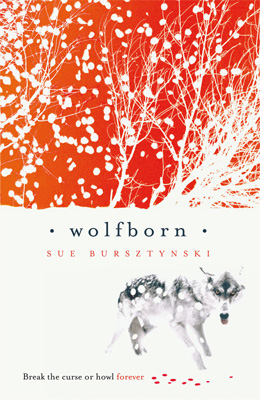
Her most recent book, Wolfborn, was released from Random House in 2010.
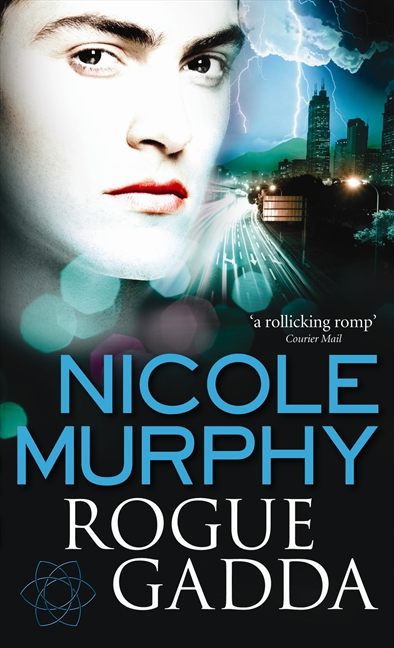
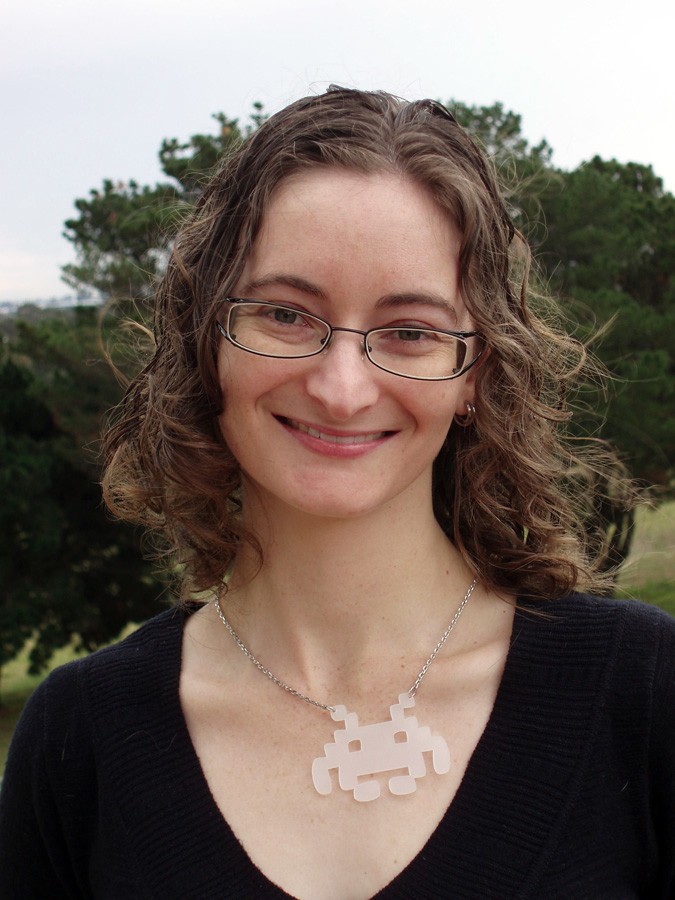
I’ve invited a number of people who have published in indie press and have gone on to become professionals in the field to write about their experiences. Today, Nicole R Murphy shares her journey.
Photo by Cat Sparks
What indie publishing has taught me.
My involvement with indie publishing started in 2002, when I discovered the Canberra Speculative Fiction Guild. The CSFG had been formed following the ’99 Melbourne Worldcon, and had already put out one anthology – the award-winning Nor of Human. The second, Machinations, was being put together and I decided to sub a story for it.
That story was published, and seeing that the CSFG offered an opportunity for me to learn more about this magical beast that is publishing, I volunteered to do the slushing for the next anthology, Elsewhere.
My involvement in indie publishing across Australia has been fairly consistent since then. I slushed for Elsewhere and the next CSFG anthology Encounters, then actually edited the fifth, The Outcast. I had a story in the sixth, Masques and for the seventh, Winds of Change (just released), I not only had a story in but as a member of the CSFG committee was responsible for the printing of the anthology and organising the launch.
In 2004, I joined Andromeda Spaceways. I was a member for a couple of years and edited Issue 25, which came out in 2006. I haven’t been a member since 2007, but to this day I still slush read for them.
Some of my favourite publications have come through indie press. I’ve loved being involved in the Scary Kisses books from Ticonderoga, and this year finally cracked publication in ASIM. Getting Alisa Krasnostein at Twelfth Planet Press to accept a story is one of my career goals. If only Cat Sparks wasn’t solely editing science fiction, she’d be on my to crack list as well. And yes, Tehani, one day I’ll target you too.
So what have I learnt from my nearly ten years in Australian indie publishing?
a) What makes a great short story. Honestly, slushing and editing shorts really hones your instincts and understanding of what a good short story is. My tolerance level for a bad story is now very low.
b) That putting an anthology together is a lot of work. Apart from the hours of editing, there’s the art of choosing stories that will work well together (particularly when doing a themed anthology, like the CSFG ones are) and then the art of how to order them in the book so the reader takes the most interesting journey through the ideas presented.
c) How to deal with stress. There’s few things more stressful than putting together an anthology and getting it to print. Just this week, I had a major heart attack when the fear arose that we wouldn’t have the books for the launch of Winds of Change. That’s a few minutes lost off the end of my life. But you learn to think about challenges, to work out what’s important and what’s not and how to act quickly to fix things.
d) That the most interesting stuff is happening in indie publishing. It eventually filters up to traditional publishing but if you want to know what the next trends or ideas or writers are going to be – go indie.
e) That if you want to find the most passionate and enthusiastic people in the industry – go to indie publishing. Not that I’ve got anything against major publishers – I’ve been published at the top of the business and met some incredible people there – but the sheer bull-headedness of indie publishers, the lengths they’ll go to to make their dream come true is extraordinary – I tip my hat to them.
One day, I hope to get into indie publishing myself – because I love seeing new writers come in, established writers get the opportunity to experiment that sometimes novel length doesn’t give you and I love to learn. More about writing. More about the industry. More about myself.
I’m Nicole Murphy and I LOVE indie publishing.
Nicole has been telling stories for as long as she can remember and been writing them down since primary school.
Her two main occupations thus far in her life – teaching and journalism – have taught her a great deal about writing. As a teacher, having to explain the nuances of story to young children helped to hone the information in her mind. As a journalist, Nicole has won awards for her writing (in particular a series of articles on mental illness) and has interviewed people such as Gary McDonald, Noeline Brown and Roy Billing. She quit journalism in 2008 to focus on her fiction writing.
Nicole has had more than two dozen short stories published, the most recent in Winds of Change, the new anthology from CSFG Publishing. She has worked in the speculative fiction industry as an editor and edited The Outcast for CSFG Publishing (including the Aurealis Award nominated horror short “Woman Train”) and Issue 25 of Andromeda Spaceways Inflight Magazine, both published in 2006.
Nicole is also active in fandom. She has been on the organising committee for six of the past seven Conflux conventions, including chairing Conflux 4 in 2007 and programming Conflux 5 in 2008. She was involved with the organising committee for Aussiecon 4, the 2010 Worldcon in Melbourne (quitting when she got the deal for her urban fantasy trilogy The Dream of Asarlai) and is a long-time member of the Canberra Speculative Fiction Guild (CSFG). Along with Donna Hanson, she is co-chairing the 2013 Conflux convention, which will be the Australian Natcon for that year.
Nicole lives in Queanbeyan with her husband Tim, a computer programmer who happens to be one of the top croquet players in Australia and has just captained NSW to victory in the interstate cup. Her trilogy The Dream of Asarlai is out now from Harper Collins.
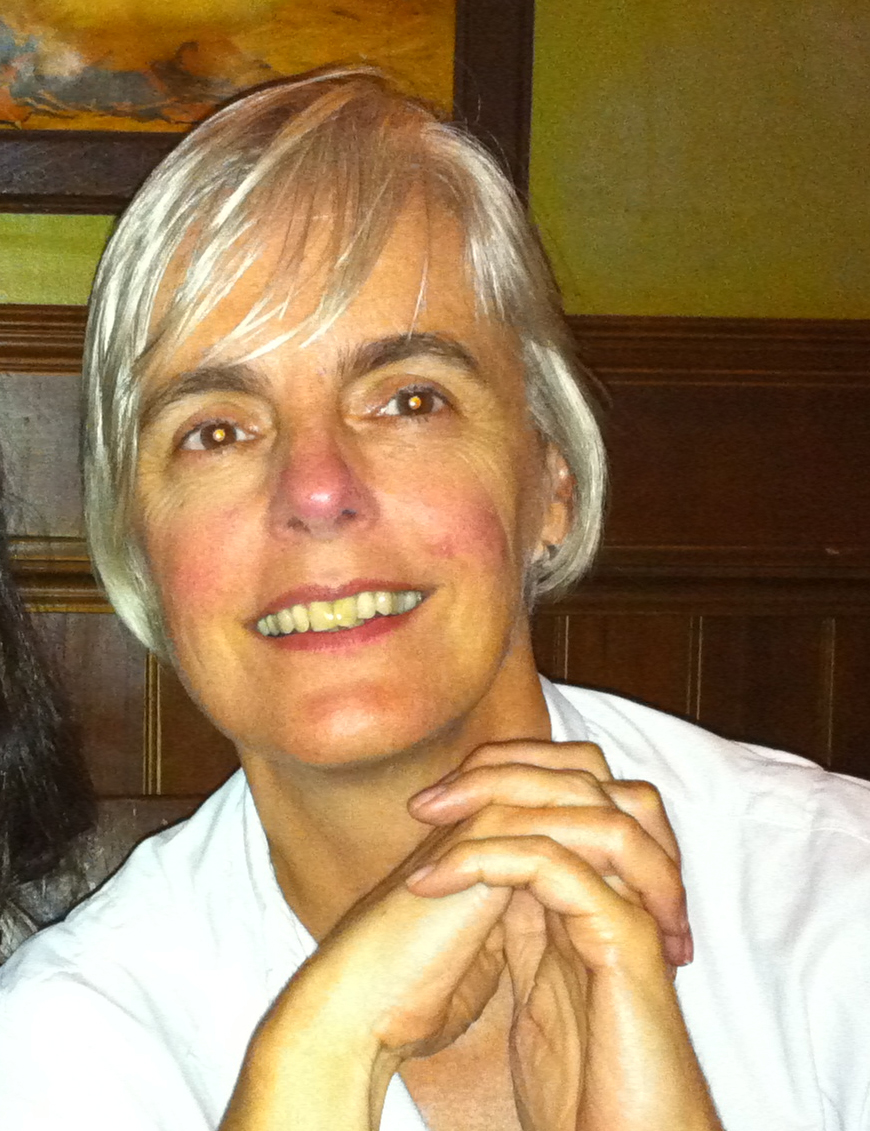
I’ve invited a number of people who have published in indie press and are professionals in the field to write about their experiences. Here, Margo Lanagan shares her thoughts.
Indie presses—an extremely author-centric view
The recipe for building a career in speculative fiction publication is as follows:
You write your half a million apprenticeship words.
You send out shorts to magazines and anthologies large and small, with gradually increasing likelihood of being published in higher and higher-status publications and even, sometimes, paid.
When you’ve racked up enough hits, you put together a novel, or a collection.
You send it out, listing all your credits in your covering letter.
The publisher sees that other people besides you think your work is okay, and takes a second look instead of slipping a form rejection in the envelope and shunting it back to you.
My publishing history, from a speculative fiction perspective, looks as if I did the exact opposite. My first spec fic publication was White Time, a collection of the stories I wrote for Clarion West in 1999, with a few additions. It came out, it got some good reviews, it quietly sank beneath the waves. Having published ten teen romances, two junior fantasy novels and two gritty realist YA novels before this, I decided that this writing lark was never going to work as a reliable money earner. I might as well stop trying to second-guess markets, I thought, and write purely for the reward of the writing itself.
Black Juice came out in March 2004. In October it started winning prizes, and it didn’t stop for about eighteen months.
At some time in 2005 Jonathan Strahan said in an email that I must be madly busy with writing stories for every magazine and antho under the sun. I wasn’t. I hadn’t sent out a single story, and I hadn’t been asked for one by a single editor. Any short stories I was writing (let’s not mention the crash-and-burning novels) were towards my third collection, Red Spikes. I was an iland, intire of my selfe.
This sounds as if I was pigheaded, possibly snobbish about where I’d put my work. But in fact I’d already done the rounds of a different series of indie presses—although we didn’t call them that, back in my day, she says toothlessly.
I’d spent my teens and twenties posting out poems to Australian literary magazines of various sizes, mostly small—Saturday Club Book of Poetry (that was my first, in 1976), Compass, riverrun, Post Neo—but some bigger, like Overland, Poetry Australia, Scripsi. I had about a dozen credits, enough to look okay on a Literature Board grant application. I’d played the rejections-slips-collecting game, I’d read and thought about and acted on the editors’ kind letters; I’d banked cheques amounting in total to, ooh, about $75?
And I was over this elaborate form of being ignored. I still loved poetry, but I wished I could pour out reams of prose. I wanted to produce whole books, not just a page at a time of compressed meaning, half-strangled by its own allusions. I was a reader of novels and stories, and I wanted other readers, not just other poets, to feel towards my writing what I felt towards books that I loved. When I heard, at Clarion West, that magazines-then-books was the way to climb this spec fic tree, I thought, Been there, bugger that.
‘A Pig’s Whisper’ was my first published story that wasn’t a reprint from the collections. When Cat Sparks published it in Agog! Ripping Reads people asked her, ‘How did you get a Margo Lanagan story?’
‘I asked,’ she said.
And there I was, perfectly happy to be asked, but not willing, with work and children and everything else in my life, to move into the hit-and-miss world of magazine and antho submissions. I didn’t have time to read them, let alone create the spreadsheet and have the 12-stories-out-at-any-one-time that some of my fellows at CW99 claimed to be aiming for.
Since ‘A Pig’s Whisper’ I’ve published two more story collections, and a couple more collections’ worth of stories that have come out in anthologies by mostly independent presses. Most requests for stories I’ve fulfilled; of those I’ve passed on, some have been on themes I don’t relate to, or the deadlines have been wrong for me, or, as lately, the requests have come in when the well is dry from my having said yes too often.
But when that well fills up again, I’ll go on. Publishing with small, or smaller presses, seems to me the most useful, relevant publicity a writer can do. After all, you can only visit so many schools, festivals and workshops before you get sick of the sound of your own voice. You can only travel so far and connect with so many people in person. But you can send individual shorts out into the world (or packets of shorts, like the Twelve Planets boutique-collection series). Who knows where they’ll end up, or who’ll open them, and happen on your work, and like it and look out for more?
If you’re not much of a con-goer, or a blurber, or a critique partner, publishing with small-presses also keeps you in touch with the genre communities your work makes you part of. In the course of the editorial, publishing and launching processes, you can keep up with the gossip that doesn’t make it online. It can be the way you support those communities; in some ways it’s the best and most direct form of support outside of buying their publications.
Margo is the author of award winning short story collections like Spike, White Time and Black Juice which won two World Fantasy Awards. Her novel Tender Morsels won the Printz Honor Award. Her latest collection is Yellow Cake and she is one of the Twelve Planets, forthcoming from Twelfth Planet Press.
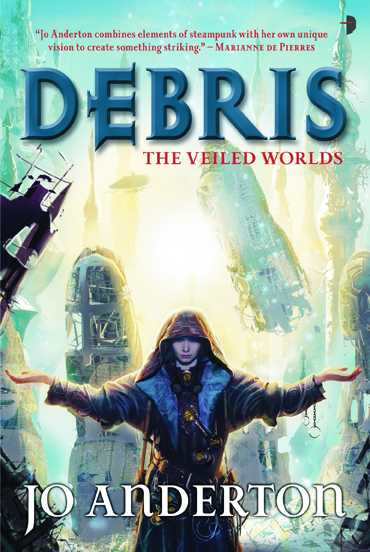
I’ve invited a number of people who have published in indie press and gone on to become professionals in the field to write about their experiences. Today, Joanne Anderton, whose first novel, Debris (Angry Robot Books) was released just this week, shares her journey.
Indie press has been many things to me, and still is. It is opportunity, passion, and community. I also believe it’s the future, or at least a very big part of it.
Like so many writers, I started my publishing journey with Indies. My first fiction sale was flash fiction to an online horror publisher, and most of my short fiction has since found Indie homes. Opportunity, right? Opportunity to see my name in print, to cast my words out into the great story sea and help them swim. This in turn helped me create an identity as an author (being someone who can answer the inevitable ‘oh, what have you published?’ question at parties, rather than mumbling about novels tucked away in dusty drawers) and the all important publishing history. Indie publishing also offers opportunities to different kinds of stories, ones that don’t fit neatly into genre categories or marketing plans. I’ve always thought this puts them ahead of the trend, and parallel to the trend, and on a totally different but much more exciting planet than the trend, all at the same time. Indie publishers create this opportunity for writers like me by publishing short fiction in the first place, by opening their doors to unsolicited manuscripts and wading through the slush they get in response, and by working hard – damned hard – to promote their stories far and wide. And that’s where passion comes in.
It takes passion to be a publisher of any kind. Trust me, I spend my day job hours in an office across the hall to several publishers, I sit in meeting with them, I chat to them around the water cooler/coffee machine/packet of Tim Tams. Publishers live and breathe their books, they fight for them, they sing praises, and pick up the pieces of their nervous authors when necessary. Despite this, it still takes something special to be an Indie publisher. It not only involves a massive commitment of time, and energy, and emotional wellbeing, but more often than not it involves an injection of funds. You’ve got to love something a lot to volunteer so much of your life and yourself to it, and throughout my dealings with Indies I have found that love – that passion – to be inspiring and infectious. They love what they do, and when my stories have been fortunate enough to become what they do, I’ve seen them with different eyes. Indies have helped me see my words and worlds differently, they’ve helped me fall back in love with them, and be inspired to work to make them as good as they can be. This leads me to community.
All the Indies I’ve worked with have had a wonderful way of making me feel included. They are not distant,scary dictators controlling all your hopes and dreams from afar. I was also a part of the Andromeda Spaceways Inflight Magazine Co-operative for a time, and there my sense of community grew. Reading slush was an invaluable learning experience for me as a writer (I can’t recommend this enough!), as was editing my own issue of the magazine. Both broadened my view of writing and publishing considerably. Just as important was the connections I made, the community I found, and that found me, of authors, editors, and publishers.
This combination of opportunity, passion and community have meant that Indie publishers have been an integral part of my writing career. But add these together and you realise that Indies have one other, seriously important, thing going for them: flexibility. We all know the publishing world is changing, big time. It’s hard, but Indies are in a good position. Passionate about their stories and eager to tell them to as many people as possible, they are quick to take advantage of the opportunities created by changes in technology, and truly establish themselves in the global community of readers.
See what I did there?
Honestly, though, Indie publishing has been vital to my past. I believe they will be key to all our futures.
Joanne Anderton lives in Sydney with her husband and too many pets. By day she is a mild-mannered marketing coordinator for an Australian book distributor. By night, weekends and lunchtimes she writes dark fantasy, horror and (according to some people) science fiction. Her short fiction has appeared in all sorts of Indie publications, but most recently in Andromeda Spaceways Inflight Magazine, After the RainandDead Red Heart. She was a finalist for the 2009 Aurealis Award for best young adult short story.
Her debut novel, Debris (Book One the Veiled Worlds Series) will be published … well, right now … by Angry Robot Books, followed by Suited in 2012.
I’ve invited a number of people who have published in indie press and are professionals in the field to write about their experiences. Here, Jason Nahrung shares his thoughts.
Small press, indie press … the nomenclature is changing with the boom in self-publishing and the subversion of the established tag of indie press. So at the pub the other day, where all great decisions are made, my writing buddies and I reached consensus that “boutique press” was a cooler, more accurate name for those who publish the works of others on a cottage industry basis. Or something like that. We were, after all, at the pub.
It’s not just the tag that’s changing. The production quality is lifting, too. With e-publishing and print on demand slicing the up-front costs, indie publishers can put more of their cash and their effort into quality: well-designed covers, decent paper stock, attention to detail in the editing. Some still don’t quite get it – the internet is littered with ugly covers, so muddy and obscure the image is barely recognisable, the spray of multi-fonted, rainbow-hued text damn near unreadable. Hold the outer glow on the Photoshop, dude: I wanna read that spiel!
And proofreading. For pity’s sake, whether you’re a multi-national publishing conglomerate or some keen mogul wannabe establishing your empire out of your home office, is it really so hard to proof the bloody thing before you throw it at the publishing wall to see if it sticks?
There, rant done. Don’t let the cowboys put you off, that’s all I’m saying.
There are plenty of publishers beavering away with the spare change from their day jobs who manage to make the effort: they put their money where their heart is, draw up contracts, pay their writers, send them proofs, send them galleys, publicise the end product, hawk it to book sellers and convention goers and awards. It exhausts me, just looking at how damn professional they are. How passionate they are.
I, as a relatively recent newcomer to the writing-for-publication game, am in their debt.
More than that. I love them. The new chums, the old hands, the pros and the amateurs: I relish the opportunity they present for dweebs like me who have the temerity to think someone else wants to read the narratives dribbling from brain onto keyboard. I love that they love what they do and they do it as well as they can. And I really love an editor who can make me look good. Hell, yes.
The money, however much or little it might be, is secondary. It’s nice – very nice, very affirming – but the real warm and fuzzy comes from that acceptance letter, and then the byline on the shelf: the pretty. I luvs it. I am, as it turns out, an egotistical prick. But then, why else would you write? It sure ain’t the money!
Short stories this year have saved my ego, have maybe even given me the confidence or at least the small flicker of hope, to keep hammering out the words. To persevere. You bet I feel a big debt of gratitude. Hey, I finally got a story into Aurealis this year, man. That’s a big deal for me; that’s a big box ticked off.
How fortunate that there is such a vibrant community of boutique publishers, of independents, in this country prepared to put their time and money and all that frustration into giving Aussie writers a place to learn their craft, to find some exposure, to make a mark, to build some confidence. A proving ground to foster home-grown talent and take it to the world.
With the changes turning the publishing world on its ear, this could be a new era for boutique publishers. As book as artefact becomes even more pronounced, as technology opens new formats and delivery systems, the indies are in a unique position to exploit niche markets and, indeed, to access a global niche market.
So, indie dudes, thanks for being there. Thanks for giving me something to aim at. May you keep on fighting the good fight, and may you make your money back.
Jason Nahrung grew up on a Queensland cattle property and has worked as a newspaper journalist for more than 20 years. He is the editor for Queensland Writers Centre’s magazine Writing Queensland and also does freelance editing and manuscript appraisal.
Jason’s writing has won the William Atheling Jnr award for Criticism or Review, been highly commended in the Aurealis Awards, and been shortlisted in the Ditmars and the Australian Shadows.
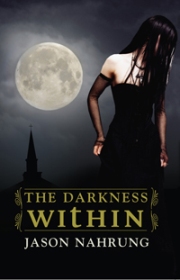
His debut novel, The Darkness Within (Hachette Australia), is based on a novella written with his then girlfriend Mil Clayton by email when they were living two states apart. It has also sold to Germany.
Jason now lives in Melbourne, Australia, with his wife, and fellow writer, Kirstyn McDermott.
I’ve invited a number of people who have published in indie press and gone on to become professionals in the field to write about their experiences. Today, Michael Pryor shares his experience.
Very early on in my writing career, indie press was vital to me. One of my first short story sales featured in the first issue of Aurealis, which kicked off a long association with that publication. I’ve had nine stories published in Aurealis, two of which picked up Aurealis Award shortlisting. I’ve also done a fair bit of behind the scenes work with Aurealis, working on submissions and story selection, writing articles, carrying boxes and generally helping out. I’ve been an Associate Editor and now I’m one of the three publishers behind the scenes.
This experience has been crucial to my writing career. For a start, it’s let me see behind the scenes of magazine publishing and how it works. I’ve seen the passion and the enthusiasm of all those who work on a small press publication. I’ve seen the hours put in. I’ve seen the keenness of the writers out there, published and unpublished. I’ve seen the joys, the disappointments and the misunderstandings.
All this means that I approach my own writing career with a level of insight. I understand the rejection process and how it works. I know how much time it takes to work through submissions. I jump to it when an editor asks for a rewrite. I adhere to deadlines, because I know of all the concomitant arrangements that are dependent on that story coming in on THAT date and no later. Coming to terms with the concrete demands of publishing emphasised to me that small doesn’t have to mean amateurish. A professional outlook and approach is something that most indie press strive for, so I was determined that as a writer I could do no less.
As genre publishing began to boom, I also had stories published by Wakefield Press, Ford Street Publishing and FableCroft Publishing. Behind each one I saw the people involved and their dedication. It’s both affirming and inspirational to see how they appreciate a good story, and I admire the way they put a collection together.
I firmly believe that it was my track record as a successful writer of short stories that helped my first novel get published. Partly it was the contacts I’d made after breaking out of the ‘unpublished writer’ rank and into the ‘published writer’ rank, but also it was the contacts I’d made once I’d made this step. The people looking at my first novel submission knew who I was, and that never hurts.
Now, twenty-eight novels later, I work with Random House, a major international publisher, but I maintain my contact with the world of indie publishing. Why, just a few weekends ago I was with the other Aurealis people, stuffing envelopes, making sure the mail went out on time…
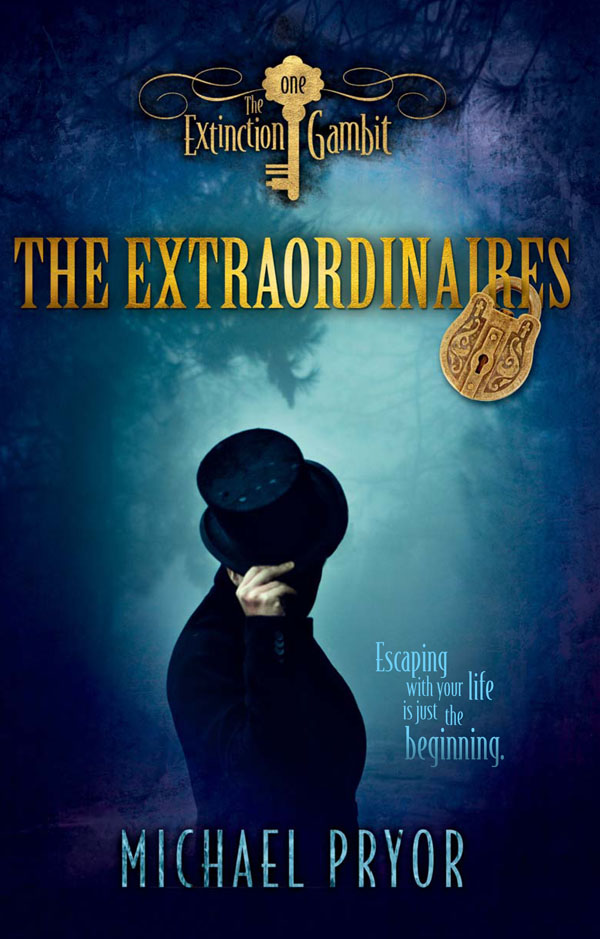
Michael Pryor is a best-selling author of fantasy for teenagers. He has published over twenty-five novels and more than 40 short stories. He has been shortlisted for the Aurealis Award six times, and five of his books have been CBCA Notable books. His current and new releases include Hour of Need (Laws of Magic 6), published in May this year from Random House, and the first book of his new series, The Extraordinaires, is calledThe Extinction Gambit and will be released in December, again from Random House.
Find out more about Michael and his works at his website.
I’ve invited a number of people who have published in indie press and are professionals in the field to write about their experiences. Today’s post comes to us from Robert Hood, who considers some of the differences between small press and the pros.
Photograph by Cat Sparks
Independent vs Mainstream Publishing
In some ways, issues of small-press vs mainstream publishing have been a bit moot in my own writing history – and I think it’s fairly typical. In part it’s the difference between being a short-story writer and being a novelist. For genre short-story writing (in particular), small presses are inevitable, at least in the long term.
My writing career was undoubtedly forged in the cash-strapped world of the small press. In those early years, though story publication sometimes came via well-paying mainstream markets (such as the National Times, a Century Hutchinson anthology, The Bulletin, Rolling Stone), small-press literary journals and more left-field non-genre markets such as ABC Radio, The Australian Way inflight magazine, Woman’s Day and a Campbelltown Council-funded anthology of ghost stories offered more consistent publication than the mainstream book publishers. This was the 1980s, when simply getting manuscripts into the hands of US magazine editors was logistically difficult and virtually no professional SF/horror markets existed at all in Australia. Few, maybe none, of us were sufficiently well-known for overseas editors to offer invitations to submit to the bigger anthologies.
For me, winning a crime story competition led to publication in a series of Allen & Unwin crime anthologies and then UK editor Karl Edward Wagner chose to include a story originally published in a small literary journal in his prestigious Year’s Best Horror series. But even then single author short story collections weren’t high on the to-do lists of the big publishers, certainly not when they were the demanding progeny of little-known authors. It was inevitably a small press that gave me that opportunity.
A group of (mainly) poets centred on the University of Wollongong foolishly decided to create a co-operative press, as the mainstream presses were even less interested in publishing poetry than they were in publishing short stories. To avoid it being an exercise in vanity or mere self-publishing and to ensure a certain level of independent critical evaluation, anyone wanting to be part of the cooperative had to subject their manuscript to a general cull. Full agreement from prospective members was necessary to get in, so the large number of applicants was gradually weeded down to a few. Eight writers ended up forming Five Islands Press. My collection of genre/semi-literary stories – Day-Dreaming On Company Time – represented the only prose involved. Of course, being published by Five Islands Press felt a little like self-publishing even so – though when the book went on to be shortlisted in the Best Collection by a Single Author category of the 1990 Readercon Awards in the US, it went some way to convincing me that taking the right approach to “self-motivated” publishing (that is, a critical one) was a viable option in the production of quality work. After the first round of publications, however, the co-operative nature of Five Islands Press evaporated and the press, under the auspices of poets Ron Pretty and Deb Westbury, went on to become (for a time) one of the most significant and prolific poetry publishers in Australia.
Before morphing into a solely poetic enterprise, however, FIP managed to produce two other genre anthologies – Crosstown Traffic (edited by Stuart Coupe, Julie Ogden and myself) and Intimate Armageddons (edited by Bill Congreve). The latter, appearing in 1992, was arguably the first anthology of original horror stories ever published in Australia. It also introduced me to Bill, who became a life-long friend and later established MirrorDanse Press – one of the first and most successful genre-focused independent presses in the country.
This was in the early days of generally available computer layout programs – the same ones the “mainstream” used, now accessible to all. It was a form of democratisation brought about by the spread of the home computer that has continued to today. Suddenly “amateurs” could produce books that looked identical to those produced by the Big Publishers, if they had the talent and critical ability, and at a fraction of the cost (because they didn’t have to absorb corporate overheads into their budgets). Available talent and editorial skill, and issues such as how to get good artists and designers to work for peanuts, remained a problem, but it was no longer impossible. Only distribution (and consequently payment levels) remained as a major difference between small and mainstream press.
Since Day-dreaming on Company Time I have had two further collections of short stories published, both through small presses. Still today the likelihood of a “mainstream” publisher being interested in a single-author genre collection is minimal. As always they don’t mind considering “literary” story collections, being generally willing to forego high sales for respectability and the prestige value of good reviews and mainstream awards. They’ll consider collections by bestselling novelists, too, if only to keep them happy while they’re writing their next bestseller. But generally, the answer is, “No thanks!” to everyone else, top-quality writing notwithstanding.
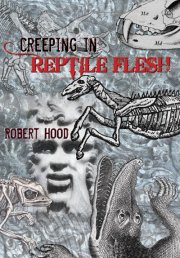
My highest selling collection, Immaterial: Ghost Stories, was published by MirrorDanse Press, put together and edited effectively with the expert help of Bill Congreve. Creeping in Reptile Flesh followed in 2008, published first by small-press Altair Australia and then reprinted (and re-edited) by Morrigan Books (Sweden) – released in both book form and as an e-book last month. I’m interested to see how being readily available on Amazon affects the sales of this one.
During the 1990s I found myself getting published more often in “mainstream” (that is, “professional”) publications (such as Leigh Blackmore’s Terror Australis anthology from Hodder & Stoughton, Paul Collins’ Strange Fruit anthology from Penguin, even the Sun-Herald) and in the odd significant overseas publication (Dark Voices 3: the Pan Book of Horror Stories, edited by David Sutton and Stephen Jones for Pan UK, Alfred Hitchcock’s Mystery Magazine and the US magazine Aboriginal SF), but meanwhile the small-press in Australia loomed ever larger. Who among my generation of writers could avoid the influence of Aurealis magazine and its Western Australian compatriot Eidolon? At the time, getting published in these two small-press publications was a major aim of Australian genre writers and both fostered many of the older writers still working today.
At this time, too, Bloodsongs, the first ever “professional” and widely distributed Australian horror magazine, appeared on the scene, emerging from a group of enthusiasts rather than any of the big magazine publishers. Bill Congreve and I managed to get the very first issue slapped with an “R” rating and subsequently banned in Queensland. It was an odd high point in my publishing career – a good anecdote to tell at parties. Bloodsongs was in reality a small-press publication, but it paid reasonably well, offered effective and discerning editorial oversight and achieved good distribution through specialist bookstores and newsagents. Then, as now, the difference between “professional” and “small-press” markets for genre short stories in Australia was more-or-less insignificant – at least at the high end.
These days most of my short-story sales are made to anthologies – sometimes produced by the “mainstream” (such as recent sales to Zombie Apocalypse! edited by Stephen Jones, and a major franchise tie-in anthology, Zombies vs Robots, edited by Jeff Conner for IDW Publishing in the US), but mostly “independent publishers” in Australia and overseas. Some of these small presses, being located in the US, have print runs equal to or exceeding those of Australian mainstream publishers. The books, too – as artefacts – are the equal of those produced by the Big Guys. Often they exceed them in quality and sheer beauty, even in Australia. Take a look at the products turned out by Twelfth Planet Press or Ticonderoga Press, for example: award-winning, internationally recognised work in books that are beautifully produced.
As has been the case for as long as I’ve been in the game, the market for short stories still tends to be dominated by the small press, except for Big-Name Authors. If anything, current technological trends have given independent presses a definite edge over their “legitimate” mainstream rivals, certainly in terms of anthologies and collections. And let’s face it: there’s not that many “professional” genre magazines still in business these days. Some of the most prestigious of the genre magazines are in effect small or semi-professional in business mode.
My first novel, however, was definitely a “mainstream” publication, and usefully so. Hodder Headline editor Belinda Bolliger contracted Backstreets on the basis of a proposal. I already had a relationship with Hodder through the publication of a series of short children’s horror/comedy novels under the franchise title CREEPERS, co-written with Bill Condon. Belinda was a great example of a professional editor; her input and oversight helped make Backstreets a significant and successful publication. It wouldn’t have been nearly as effective without her. My experience with the editorial aspects of the subsequent SHADES series of YA supernatural thrillers was equally effective – though the marketing of the books illustrated the fact that the Big Publishers could be just as clumsy and ineffective at selling and distributing a book as the small press was generally reputed to be (and often isn’t).
The future? I have no doubt that small and independent publishers have played a vital role in the development of genre fiction, and, I believe, are increasingly important to its survival, at least as an innovative medium. As book publishing undergoes significant changes and mainstream publishers struggle with profit margins, independent presses represent a viable option for writers and creators generally.
In the past, ensuring production quality, adequate distribution and significant market impact were almost impossible goals for small presses to achieve. However, changes to technology and more importantly to the way readers access product have given small presses a chance to flourish. Mega bestsellers may still be outside their purview (though I think that will change) but at least the level of available financial resources and the expensive technology it provides play a lesser role in book production. The mechanics of publishing have become more “democratic” and quality product is now only hindered by the same sort of quality issues faced by all publishers – finding and recognising the best work, having talented artists and designers available, and gathering personnel with editorial skill to whip authors’ work into its best shape. All hard enough to achieve, but in a marketplace where mainstream publishers are becoming more and more conservative – restricted by the cost levels they are forced to maintain by the nature of their corporate structures – their independent brethren can afford to be and are generally more willing to embrace risk. Innovation and imagination require risk. Also as mainstream publishers dump their mid-list authors in favour of the instant profit gratification of the bestselling celebrity, many of these dispossessed authors are looking to small presses as a source of artistic survival, if not continued full-time employment.
Small presses are here to stay. All they have to do is make sure they maintain editorial standards and design/production quality, and find the best way to get their books to the general public – just like the mainstream publishers. Both struggle with marketing and distribution. The mainstream publishers still offer the best hope of gaining “bestseller” status, of course, and hence a full-time writing career, but beyond that it seems to me there’s little difference between them.
Robert Hood’s many stories, which have appeared in major Australian and international genre magazines and anthologies, range from crime to science fiction to dark fantasy, often mixed. Some of these are in his three collections to date: Day-Dreaming on Company Time (Five Islands Press, 1988), Immaterial: Ghost Stories (MirrorDanse Books, 2002) and Creeping in Reptile Flesh (from Altair Australia Press in 2008 and as a second revised edition from Morrigan Press in 2011 – in both physical and digital formats). His novel, Backstreets, was published by Hodder Headline in 1999 – and is soon to be re-issued by Hachette Australia as part of its proposed e-book program. The Shades series – four connected YA supernatural thrillers – appeared in 2001, also from Hodder Headline. He has co-edited five anthologies, including the award-winning Daikaiju! Giant Monster Tales and its two sequels (Agog! Press, 2006-2007), and has published many short children’s books and stories.
Often nominated for Aurealis and Ditmar Awards (most recently for ‘Wasting Matilda’ from Zombie Apocalypse! from Robinson Press/Running Press and for Creeping in Reptile Flesh – both as collection and a novella), he has won several Ditmar Awards, the Canberra Times National Short Story Competition, the Australian Golden Dagger Award for short crime fiction and two William Atheling Awards for genre commentary and review.
Coming up, he has stories in Anywhere But Earth (edited by Keith Stevenson for Coeur De Lion), In the Footsteps of Gilgamesh (edited Karen Newman and Pete Kempshall for Gilgamesh Press), Exotic Gothic 4 (edited by Danel Olson for PS Publishing) and in a major anthology of stories based on the Zombies vs Robots comic franchise (edited by Jeff Conner for IDW Publishing). Hood’s website is: www.roberthood.net. He also has an award-winning blog, Undead Backbrain (www.roberthood.net/blog/), which he posts to with varying frequency, as time permits.

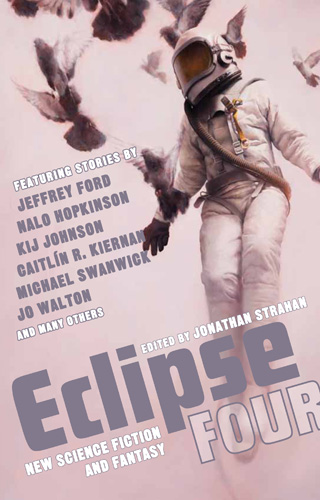 Jonathan Strahan has co-edited The Year’s Best Australian Science Fiction and Fantasy series of anthologies for HarperCollins Australia, co-edits the Science Fiction: The Best of . . . and Fantasy: The Best of . . . anthology series with Karen Haber for Simon & Schuster/ibooks, edits theBest Short Novels anthology series for the Doubleday Science Fiction Book Club, and co-edited The Locus Awardsfor Eos with Charles N. Brown. He is also the Reviews Editor for Locus: The Magazine of the Science Fiction and Fantasy Fields, and reviews for the magazine regularly. He is currently working on The New Space Opera II.



 FableCroft